Will it be the scientists or anti-vaxxers who stop us getting a vaccine?
For the first time in the last 18 weeks of lockdown I found myself agreeing with Boris Johnson. He was visiting a GP surgery in London to promote the importance of flu jabs in the upcoming winter. Referring to the opponents of vaccinations he called them ‘nuts’. Ever since (the then doctor) Andrew Wakefield persuaded many parents 20 years ago not to give their children the measles, mumps and rubella (MMR) vaccine following some ‘research’ linking it to autism and inflammatory bowel disease (IBD), the use of vaccines has been called into question.
Researching the claims by (now struck off doctor) Wakefield I learned the following facts from the General Medical Council (GMC) fitness to practice hearing of 2006 published in 2010.
- A good study will include many participants, and Wakefield’s study included only twelve children.
- Wakefield lied in the Lancet paper when he wrote that the participating children were referred independently after being diagnosed with IBD or other major gastrointestinal issues. In fact, many of the children were chosen specifically by Wakefield, and others were recruited with the help of the same lawyer who was paying him to conduct the study.
- Even before publication of the study, Wakefield was working on patenting his own version of a measles vaccine, which he would sell at a great profit as a supposedly “safe” alternative to the MMR vaccine. The father of one of the children in Wakefield’s study was a cofounder of the planned business that would market this product.
The problems caused by Andrew Wakefield were in the news last August. Children who didn’t get vaccinated as their parents listened to him and not their doctors were now students, and an outbreak of measles was happening leading to serious side effects. The UK along with other parts of Europe has lost its status of being ‘measles free’.
The cofounder of Microsoft, Bill Gates and his wife Melinda are an example of people who have acquired enormous wealth, but are trying to use that to help others. They have been victims of terrible social media attacks and conspiracy theories as a result of pledging literally billions of dollars to vaccination programmes for children. They are partners of Gavi a global alliance of the WHO, UNICEF, The World Bank and donor countries with the aim of funding vaccination programmes for children in all areas of the world. This will improve health, prevent needless deaths and lead to less poverty. In June a little-reported summit of world leaders was hosted by the UK and pledged over $8billion over the next five years to the programme.
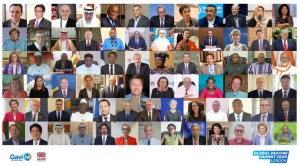
The UK can be proud of being the largest donor pledging £330million a year. As Bill Gates said at the time
To beat the COVID-19 pandemic, the world needs more than breakthrough science. It needs breakthrough generosity. And that’s what we’re seeing today as leaders across the public and private sectors are stepping up to support Gavi – especially Prime Minister Johnson. When COVID-19 vaccines are ready, this funding and global coordination will ensure that people all over the world will be able to access them.
In recent weeks Russia (who pledged no new money in addition to the $4milion per year share from a previous campaign) have been accused by the UK of trying to steal scientific secrets on the development of a Covid-19 vaccine. China, who also only pledged $4million per year, are still being accused as a possible source for the current outbreak.
To be clear, the pledges are for vaccinations of all types and not just Covid-19. Since 2000 over 760 million children have been vaccinated against polio, pneumococcal disease, typhoid, MMR, meningitis and rotavirus (that causes diarrhoea). However, the lockdowns in various parts of the world and the WHO advice to temporarily suspend vaccination programmes, to prevent people from spreading Covid-19, could lead to an estimated 6,000 children dying every day from lack of protection that vaccination provides. It’s a terrible dilemma for many countries’ health systems.
Their personal $1.6 Billion pledge hasn’t stopped the conspiracy theorists putting false information out about Bill & Melinda Gates, accusing them of wanting to use the programme for mass sterilisation to control world population, and even implanting a microchip as part of the programmes, to track everyone in the world.
This week DHSC announced that eligibility for the programme of flu injections for the coming winter has been extended to 30 million people in an attempt to prevent the NHS being overwhelmed by a flu pandemic and a second wave of Covid-19. We have had years of creating vaccines for seasonal influenza which is a slightly different strain each time, but even these aren’t always fully protective, but can lessen the severity of symptoms and reduce the rate of infection.
We have never succeeded in getting an effective vaccine against any of the coronaviruses. Even with about 150 programmes to develop one and almost 25 starting human trials, there are questions to be answered before getting one. Here are seven according to an article I read this week.
-
Is the vaccine safe? Early results suggest that there can be mild side effects from the vaccines, but more worryingly these can we worse in those more likely to be affected by the actual virus – the elderly and those with comorbidities. It is possible that a vaccine could make the disease worse in those who have it already.
-
Does the vaccine work? The general view is that it is unlikely to be completely effective and Professor Chris Witty has said that at least 50% would be a good result.
-
Will protection from a vaccine fade over time? There was some excitement when the vaccine being developed at Oxford produced the type of reaction expected, but it could be that this fades after a few weeks or months. However, there is also a theory that some element of ‘immune memory’ could result that helps the next similar infection.
-
Can we mass-produce it? Whilst the UK Government claims to have pre-ordered 100 million doses and be investing £150 million in new production facilities, there will be a long timescale. Some vaccines need to be stored in specials conditions such a low temperatures before being given. This could also be a challenge both in transportation and worldwide in countries with poor facilities and health systems.
-
When will we really have a vaccine? Are we talking about when we have a proven vaccine after clinical trials, when it is approved by regulators, when we have enough to give it to key workers in clinical settings and then those at greatest risk, or when we have enough to inoculate the whole world?
There is a danger that if supplies are strictly limited only those who can afford it, or have the political leverage to get it will be treated. This will only exacerbate conditions in the rest of the world who can’t afford it – and the virus will be around for even longer. -
Once we have a vaccine, will people want to get it? So we come back to the anti-vaxxers or even those who are just cautious. In a recent poll about one in five Americans said they don’t plan to get a coronavirus vaccine, while half said they would. The rest were unsure. The US has a system where people need to pay or have insurance, so even in the richest country in the world cost could be a barrier.
-
What about booster shots? It is likely that any vaccine could need more than one dose to maintain effectiveness, so all the points about cost and organisation of healthcare systems come back into play.
There was an appeal for volunteers to take part in the clinical trials for vaccines produced by Oxford University and Imperial College London, so I thought I might offer – but although I am fairly fit and healthy I am over 55 so that was the end of that.
Vaccines aren’t the only treatment and this week again there have been trials of a new therapy based on a protein called interferon beta that have shown promising results when given as an inhaled dose. This was previously shown to have been effective for the treatment of SARS.
Other news this week.
- A couple of months ago when the government was recruiting 25,000 people to train up to ‘track and trace’ contacts of those who had a positive test for the virus, there were newspaper stories of them having so little to do that they were watching Netflix movies. A story emerged this week that could have been interpreted in a way that could have suggested these people were making their own work. It was an ‘international’ story too.
The English NHS ‘test and trace’ system has been outsourced to a US company that uses call centres based in Scotland. Eight of the Scottish workers there tested positive for coronavirus, meaning that the Scottish system, called ‘test and protect’, had to get involved to trace their contacts – you couldn’t make it up! - In an interview on the anniversary of taking over as leader of the Conservatives and moving into 10 Downing Street, Boris Johnson admitted that there were some ‘open questions’ to be answered about the handling of the crisis in relation to timings of lockdown and protecting care homes. There was a less than generous video doing the rounds on social media claiming that as the virus was spreading across the world Boris missed several COBRA meetings, was uninterested in briefings and more interested in throwing a party to celebrate ‘getting Brexit done’.
- Whilst the school holidays had started and some people were enjoying time in Spain, on Sunday morning all four UK governments brought back measures for people returning from the country to isolate for 14 days on their return. Despite FCO advice that travel to the Balearic and Canary Islands was still allowed, and only that to mainland Spain was not recommended, people returning from the islands still had to isolate. Such measures had been on the cards, but the suddenness and extent caused some controversy with many people again unsure of their holiday insurance situation. Many will also lose money as not all employers will be sympathetic to them taking more time away from work.
- The number of cases is still falling very slowly with average daily deaths at 64 by the end of the week, down 8% from last week. The number of daily cases was averaging 662, which is up over 6% from last week. We are definitely plateauing but possibly to a sustainable level to live with as a trade off for an economic recovery. Total deaths reported for the outbreak was 45,752.
- At the same time as gyms and swimming pools are allowed to open, the government was trailing an old idea of getting doctors to focus on reducing the levels of obesity in the country. This is one of the key factors that makes people particularly susceptible to severe symptoms of Covid-19, as well as being bad for general health. Laws on advertising junk food will be brought in and GPs will be allowed to prescribe 12-week health plans and exercise.
How was week 18 for us?
It was back to work for me with planning for the project I am doing with the accountants in Manchester. The pressure is on to complete the first stages of the system in the next three months. We are not planning to be away on holiday any time soon so this should be manageable.
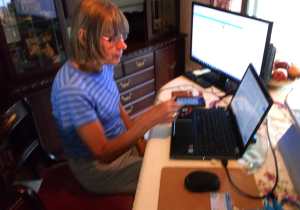
Alyson continued to come close to getting a first shift with NHS 111 pharmacy advice service. She had more technical problems but at the end of the week all appeared sorted and this is a photo of her ‘mobile call centre with a laptop with connection to the NHS systems, two screens, a smartcard and a mobile phone system that allows her to call patients using an NHS number.
In the week more sports opened up, I was pleased to be able to follow some Major League Baseball (MLB) as the team I support the Toronto Blue Jays started a shortened season in empty stadiums. As the only team in MLB outside the US, the Canadian authorities would not give them permission to play home games in Toronto as it would mean them crossing the border to play away games and US teams crossing to play at Rogers Centre in Toronto. Right up to Opening Day on 23rd the team had no base, but then it was decided to play games at their minor league team’s base in Buffalo in New York State. Their first series was away in Florida, so they need to get the stadium ready for the first home series, which was to be next weekend but has been put back until 11th August.
My other sports team, Middlesbrough football club managed to survive in the Championship on the last day of the season on Wednesday – ironically away at Sheffield Wednesday. Two teams previously managed by World Cup winner Jack Charlton, whose funeral was the day before.
Keep safe everyone and let’s see what the next week brings.
I am thinking about stopping this blog for a few weeks as the situation in the UK appears to be in a steady state.
 Skat's Chat
I hope your last sentence does not come back to bite us all!!
Sent from my iPad
>
LikeLike
Me too – but currently at least in the UK the stats are not too bad…
LikeLike
Hi Thanks for another good read. You sum up the Covid info and news so well, especially now I don’t read every bit on BBc website etc. If you don’t think it’s worth doing every week now good if you do occasional ones, e.g when some major changes or events, hopefully not a bad second wave though. Or maybe a monthly summary if that wouldn’t mean info too out of date.
But Enjoy the extra time you’ll have if you don’t carry on weekly. Don’t think we will have big family gathering/ walk as most seem in favour of meeting up with just one or two,other households at a time. And as has been said, hard to socially distance on Roseberry Topping Or other such walk. When is it you go over that way again? I was thinking we might have a few days in Yorks Dales or Yorks coast if things stay calm and can find somewhere self catering to stay.
Wednesday we are over at Peter’s for Lily’s 5th birthday garden party, just grandparents and Nikky’s bro and sister but good for,us.
Maybe we can meet up for a walk with you and Aly at some point when we all have time.
Margaret
>
LikeLike