Why (and how?) Rachel Reeves should fix the broken tax system.

There has been much comment over recent weeks on what should happen and my two-pen’orth won’t add much to the debate. However, the ideas I put forward are ones raised at a fringe meeting at the Labour Conference I attended as a delegate all those weeks back in early October. The meeting had a panel consisting of a chair from ‘Nesta’, a charity trying to stimulate debate on topics in this case finance, two Labour MPs, and two economists who had been advisors to the treasury in previous governments. I was allowed one of the first question and had been desperate to put my idea to a wider audience to see how it landed. This was what I said (paraphrased).

Does the panel think that combining Tax and National Insurance into one type of ‘Income Tax’ allied to a graph where the rate of tax starts off low and curves up in very small increments, such that the more you earn the higher relative percentage of tax you pay, could be a way forward?’

I was amazed that this landed extremely well particularly with the economists and I justified it by saying this had been proposed by the IFS in an article over ten years before. It has the beauty of overcoming the ridiculous cliff/edges/boundaries between the rates as shown below:
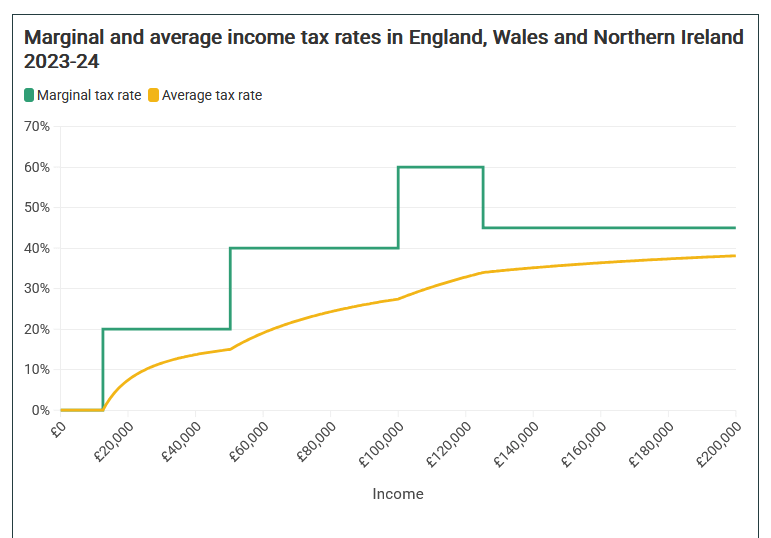
In my proposal the yellow line would not ‘tail off’ but increase steeply as earnings increase and keep going up even to about 80% or more when you get into individual earnings of £Millions. This graph is just for current income tax rates and doesn’t include NI and it’s various thresholds and bands – which is even harder to understand!

It is clear that most people don’t really understand why we have National Insurance – many think it relates to paying for the NHS/Pensions in some way that is not understood, and certainly the ‘stamp’ as it was called even when I started running payrolls in the mid-80s was a thing. The links are still there to benefit payments but in reality it all goes into the general taxation pot.

You can watch the event on this link.

https://www.nesta.org.uk/event/autumn-budget-2025-what-would-you-do-to-tax-and-spend-labour/

My question comes 23 minutes 30 seconds in and after some discussion on pensions from another questioner the panel come back to my question after three or four minutes. They discuss simplifying the whole tax system and later taxing unearned income in the same way as earned income.

Employers Contributions would be set as a percentage -say 5% of the curve amount -so also increasing with earnings. You could add to it things like minimum state or private pension contributions as per auto enrolment currently.

The reason most chancellors won’t do it is because it allows the press to say that the basic rate of ‘Tax’ has jumped from 20% to 28% and for higher earners it will go from 40% to 50% and for very high earners from 45% to 55%. But this over-simplification misses my point. That may be the rate for some of a person’s earnings but the ‘effective rate’ taking into account tax free earnings and different bands varies considerably. With some middle earners paying a higher actual rate than those on very high wages.

This brings me to my second ‘idea’ as prompted by the event at Conference. Why do we tax ‘unearned income’ and wealth differently to wages/salaries. The arguement goes that business owners and ‘entrepreneurs’ put in capital to start business and need to be rewarded for that risk. I agree, but when taking dividends or shares or capital gains adds to wealth but is taxed at lower overall rates, is that fair?

Why, as someone with a high state pension and a good private pension – which increases annually via the ‘triple lock’ – just because I am over 66, do I stop paying National Insurance on my earnings? This point was put by Tim Leunig, one of the economists on the panel (Visiting Professor in Practice at the London School of Economics’ School of Public Policy), who, like me lives in a high value house that is paid for, and has savings which keep growing year on year with little effort. Meantime our children and grandchildren some of whom are relatively well paid as IT professionals or teachers are struggling to get on the property ladder and finding day to day spending on children’s education and clothing and household bills tough going? As older people our cost to the NHS for instance grows every year. The old saying ‘..well we have paid our contributions for 40 years..’ may be true but why does that mean we stop?

While we were discussing with the panel Tim suggested that if you wanted to be really radical you could look at our ‘Tax Code’ and all the various regulations and minor taxes we have and scrap most of them which tinker around the edges and put it all on income/wealth. He has argued this in this week’s Substack blog’ he wrote along with another good idea of getting everyone together to design a system whereby we in the UK can become an ‘average tax-level’ nation comparing us with other countries. Follow this link for more detail – What should the Chancellor do this week?

Clearly there are many implications and details to be worked out, and wholesale changes in payroll systems will be needed. Better brains than mine will be able to work out exactly how the curve grows and how it relates to the actual tax receipts given the earnings spread. The advantage of this method is that at each budget the Chancellor will increase or reduce by a small percentage the rate at a point on the curve – say the mean salary level – depending on whether it has been a ‘good’ or ‘bad’ year. This flows ‘up and down the curve to the actual percentage paid on esrnings. The actual scale would increase with inflation.

So, rather than fiddling around the edges and the so-called ‘Smorgasbord’ of small taxes that has been trailed, Rachel Reeves could be known as a reforming chancellor who changed the debate on tax and came up with a system which is much more transparent and truly ‘progressive’. Wealth inequality is a serious issue in this country and I believe this will go some way to levelling the issue.

It would also mean that the whole industry of ‘tax accountants’ advising people which scheme to hide their money in, would go, to be replaced by one focussed not on ‘compliance’ but helping business grow their companies by systemising, getting some real increased productivity and growth.

VAT and ‘consumption taxes’

A quick point on another of Tim’s ideas we talked about in October was to reduce the rate of VAT but widen the scope. The example he used, was ‘Children’s Clothes’ – Zero Rated at present. But this means that a one pound babygro from Primark and a more expensive one from M&S and an even more expensive one at £190 from Burberry are all zero-rated…is that right? The pooerst households pay more in indirect taxes such as VAT and Council Tax as they ‘have to’ spend rather than save.

Some quick figures to provoke you while you are thinking about this. How do you compare…?

  • Average Earnings excluding bonuses in September 2025 in the UK were approx £35,000 for a full-time worker.
  • The Minimum wage will increase to £12.71 per hour from next April. £24,785 for a 37.5 hour week.
  • The Real Living Wage – as calculated by a foundation is £13.45 per hour outside London from next May. £26,226 annually for a 37.5 hour week.
  • 10% of people in the UK have no cash savings and another 21% have less than £1,000. Nearly half of 18-24 year olds have less than £1,000 saved.
  • There is ‘pensioner poverty’, with 11% having no savings at all.
Life & Death – Coronavirus week 6 – light at the end of the tunnel.

Two narratives, but which do you believe?

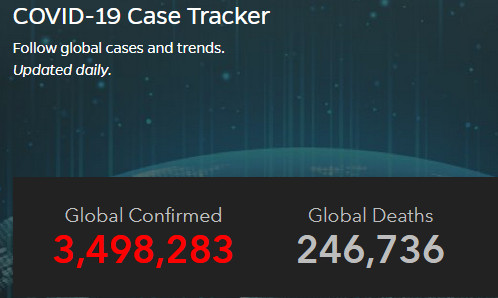
This week’s total deaths has risen quite sharply as it now includes all deaths in the community (including care homes) and not just hospitals. At the end of the week the UK total is 28,446.

As I have gone through the last few weeks in this series of blogs, I note down topics that interest me and jot them down on my computer with some initial thoughts.  On the Saturday I just start to write my blog and usually an idea comes to the fore, sometimes I write too much or go off in a particular direction and have to scrap large sections or keep them for another time. Often I am up against my own ‘deadline’ of Sunday evening and end up ‘rushing’ the last part.   As I sit here this Saturday I am conflicted.

I have one narrative of the week’s events and my thoughts which some would describe as the ‘mainstream view’ as reported by the BBC and some on-line articles or extracted from large circulation newspapers. This view is dubbed by users on social media as ‘MSM’ or Mainstream Media.  MSM as a term is often used in a pejorative sense as either left- or right-wing bias, depending on the political view of the person passing comment. In that sense it could be described as ‘balanced’ given that some agree, and some disagree. Coronavirus has taken over from last year’s key word ‘Brexit’ as a topic that divides the nation. The division appears not to be the same extent, but there are plenty of people asking hard questions of the government, and much finger-pointing at individuals or institutions/organisations who they consider don’t represent their particular viewpoint or stance.

I am also preparing this weekend for our Bible study group on the sayings of Jesus from the Gospel of Luke, under the title ‘A New Society?’. One of the main reasons I value my faith is the way that Jesus offers a ‘counter-cultural’ challenge to the accepted norm, and is not afraid to take the issue to the ‘powerful’ in society. As it says in the introduction of the book we are using:

Roman, Greek and Hebrew societies were heavily stratified. Fine, if you were a healthy wealthy, educated, well-mannered, pure-blooded male of noble descent and free citizenship; beneath that you were second class or worse all the way down to worthless slaves at the bottom…Samaritans and Gentiles were scum, the poor, the sick and the deformed, the tormented, well, they must have offended God so you avoided them; prostitutes and tax collectors were beneath contempt.

Jesus not only ignores these divisions but takes special delight in raising the status of the poor…..all may come irrespective of their status. The parable of the great banquet reveals that the self-satisfied will be excluded while the poor needy, the rejects of society, will be welcomed in.

Jesus came to abolish the man-made divisions of race, sex and class.

My second version of the review of the week takes is an alternative more ‘radical’, some would say political angle.

The ‘accepted/acceptable’ view…

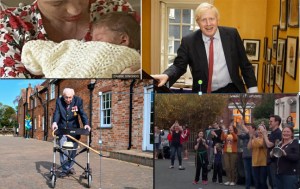
The week started with Boris Johnson giving a speech on the steps of Downing Street, addressing the nation on his health and the possible steps that would be taken. Apart from being a little breathless he was full of his usual optimism and stressing words and phrases like ‘good’, ‘amazing’, ‘can-do’, heroes and ‘pressing on’. He said that the government were working ‘full-tilt’ to protect the NHS and save lives. He mentioned that it had been 50-50 at one point but that he was back to lead. The analogy he used was of having been in an alpine tunnel to avoid the peak and we could see the bright sunshine and the green pastures at the end of the tunnel.

Lots of people said he was the best communicator that the government have, and it was good to see him back. Things would get better and later in the week he would announce the next steps.

On Tuesday we had a special one minute’s silence to remember the heroes who had died at work in the NHS and care sectors.

Boris didn’t appear at Prime Ministers Questions on Wednesday when Keir Starmer asked searching questions of Dominic Raab. The press and social media were full of posts stating it was good that ‘the other lot’ hadn’t won the December election, and imagined the chaos that a Labour party, led by Jeremy Corbyn, would have made of the current crisis. We learned that Boris and Carrie had a baby boy and Boris had been by their side all the way through. Again, there was great rejoicing and congratulations and many political opponents wished them well.  MPs across the spectrum suggested this joyous occasion would give a lift to the country.

Meanwhile Captain Tom, the war hero, managed to raise over £30 million for NHS charities in time for his 100th birthday. He got an honorary promotion to Colonel along with his card from the Queen and 120,000 from members of the public. Boris recorded a special message. Keeping the war theme going he had a flyover from the RAF of two WW2 fighter planes.  Tom was even number one in the music chart. Tom has inspired many other people to raise funds for the NHS and Virgin Radio DJ Chris Evans held a ‘garage sale’ of a huge amount of expensive memorabilia and items from his self-admitted ‘excess times’ over the last 25 years. This raised just short of £500,000. The money will be going directly to the ‘Scrubs Glorious Scrubs’ who are coordinating the voluntary efforts from seamstresses making much-needed scrubs for NHS frontline staff or, the ‘heroes’.

The daily briefings continued and there was focus on the promised 100,000 daily test target which, by a huge effort and extending the range of people who could get the test, was met when 122,000 were done on Thursday 30th.

That evening Alyson and I joined in the weekly ‘clap for carers’ with most of the people on our street. Drums, pots and wooden spoons, hooters, whistles were used. We talked in slightly derogatory terms about those who have not been out for any of the five times we have done it.

The daily briefings feature a new section whereby members of the public could write or record a question to be put to the briefing. This was welcomed as often these questions cut through the ‘gotcha’ questions often put by the press to try and catch ministers out or show up errors or misjudgements. The first one from Lynne in Skipton simply asked, ‘When will I be able to cuddle my grandchildren, who I am missing terribly’. The minister said he understood the question but reinforced the need to ‘continue with the measures in place’.

When the journalists tried to ask about PPE and a BBC Panorama programme that exposed a shortage in the national stockpile, and an emergency exercise from 2016, the minister said he didn’t believe any of that and that we just needed to carry on.  The press wanted to know more about the R-number and what value it needed to be for lockdown to be released. Professor Whitty was asked when we would learn the lessons of what had gone wrong. He said that would happen, but you don’t start in the middle of trying to focus on fighting the current crisis. When asked why our death total seems to be so much higher than the other European countries and second in the world, he pointed to what he described as a brilliant article in The Guardian by a professor of statistics on the difficulty of comparing countries.

Jeremy Hunt, former Health Secretary was very defensive when asked about the lack of PPE and ventilators. He said that President Macron had apologised for the lack of preparations but that he didn’t think Matt Hancock should and ‘now is not the time for the blame game’.

Rishi Sunak, Chancellor of the Exchequer was praised for putting in place a compensation scheme for the families of NHS and other frontline staff who had died as part of their duties dealing with Covid-19 patients. He also increased the guarantee for business loans from 80% to 100%. The week before he announced help for charities including foodbanks. On Saturday, a package of £76million to support vulnerable children, victims of domestic violence and modern slavery who were ‘trapped’ at home during lockdown. Pharmacies, who had previously been given £300Million to help with extra stock and deliveries, were to use consultation rooms as save havens for victims of domestic violence.

The ‘alternative/critical view’…

I can only imagine the Daily Mail headlines if Boris was the head of a taxpayer funded project managing an emergency caused by not taking the advice of experts from a few years before. Finding out that he had now fathered at least six children during two marriages and one extra marital affair, was not married to his current partner and had to deny several other similar allegations. He wrote a piece for The Spectator  in 1995 where he attacked single mothers saying it was “outrageous” that married couples “should pay for ‘the single mothers’ desire to procreate independently of men”. Not only that but in two months he had taken several weeks paid sick leave from his £150,000 a year job, and now was going on paid paternity leave. He went to his paid for country mansion set in 1,000 acres of Buckinghamshire countryside for a couple of weeks.  His bluff and bluster of a ‘Churchillian’ speech with its talk of light at the end of a tunnel might have been turned on him, and the question asked, ‘are you sure it’s not just an express train coming towards us…’?

The NHS is not a charity and should be fully funded by the government, the clue is in the name. It shouldn’t need Captain Tom or celebrities to get the general public to raise money for it during a ‘special season’. Of course there may well be a need to have a few ‘extras’ like toys/video games for the children’s wards or special luxury equipment for people in rehab or entertainment packages, but not vital equipment or PPE.  Well done Captain  Tom – only another £320million to go in order to fulfil the Brexit bus promise of £350million for the NHS for a week. It needs long-term guaranteed funding.

The NHS staff aren’t ‘heroes’ they are professional trained people who are willing to treat people in a system that has been underfunded and cut during 10 years of austerity.  Some of the work they do is extremely stressful.

Some people are asking the question whether, once this is all over will the government be willing to continue to give the funding needed, and will those people who gave their donation to Captain Tom still be happy if they have to pay an equivalent amount of increased National Insurance every year? Will celebrities who earn tens or even hundreds times more than a nurse or senior doctor be willing to buy less ‘trinkets’ and support their heroes?

Certainly the pharmacy contractors, something I know a little about, will have their £300Million ‘gift’ (actually a loan) clawed back out of future payments. The sunk cost of all the PPE and extra staff they have had to take on and the small profit lost from reduced counter sales, will not be recovered. No doubt they will have to go back to providing unfunded services for quite some time yet.

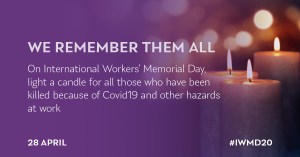
The minute’s silence last Tuesday was on the annual International Workers Memorial Day. An initiative setup by trades unions worldwide to fight for safe working for people whose employers make them work in dangerous conditions or with hazardous substances. The 28th of April is officially recognised by the UK government as a day of remembrance around the world. So should we have an official act of remembrance on the 28th of April every year, not just 2020?

Now is the time to be challenging the government on how it was that emergency supplies of PPE were not replenished after Exercise Cygnus in 2016. Now is the time to make sure the government sets up a suitable commission to investigate and learn the lessons.  A good question to the daily briefing might be;

If now is not the time to start learning the lessons of this crisis, is now the time to commit to setting up a wide-ranging independent group to look at it and report 6 months after the crisis is declared by the WHO to have ended. And is now the time to commit to ‘getting done’ all the recommendations and to fund them whatever it takes?

Those ‘Masters of the Universe’ the bankers, who don’t appear to have changed much since they were supported after the 2008 market crash, will continue to control the supply of much needed loans. Some managed to bring forward their bonuses paid early, despite the Bank of England asking them to delay. Despite being given huge guarantees by the government (again) they will charge huge fees and take a lot of security from the owners of small businesses.

Returning briefly to Jesus, there was a time when people wore badges emblazoned WWJD, meaning ‘What would Jesus do?’ I think the first thing Jesus might have done was to ask the question ‘who are the people that will suffer most from this crisis and the long-term aftereffects?’ He might have decided the following priority list;

  • Take the homeless off the streets and put them all in hotels not currently being used for tourists, give them health screening and mental health support.
  • Before panic buying, make sure the supermarket stocks of food and necessary essential supplies go to foodbanks.  Or better still, miss out the food banks and give £5,000 to every person or family with less than £1,000 of savings in the bank, along with guaranteed delivery of essential food and other items for the duration of the crisis.
  • Guarantee a payment of the average weekly wage to anyone on a zero hours or part-time flexible contract.
  • Provide support to the people who care for our most vulnerable people in care homes or their own homes.
  • Make sure every child living in a poor household is taken to school every day, given a full education, access to technology and two free meals.
  • Pay for all the care needed to support children or adults with a range of special needs for the duration.

Only after that has been done and ‘maximum effort’ has been given to them, and others identified as in danger of potential harm, can civil servants start to plan and implement the type of support package given by the treasury early in this crisis.

So, which narrative would you choose to believe…?

Thoughts at the end of week 6.

The relatively wet weather has confined us indoors. Alyson has been reading Terry Waite’s book Taken on Trust, sewing masks for us all and going for long walks every day.

I have had many more Zoom meetings and took part in an online quiz for Christian Aid. I have two quizzes to write in the coming week. I attended my weekly streamed service from Methodist Central Hall.

We had a family Zoom with 15 of us who should have been at a large house in Ross on Wye for the weekend.

Alyson practiced her skills as a home hairdresser on me with clippers and special scissors I had bought from Amazon.

I managed to put another shelf in my shed and am confident I can now do the last one in under an hour!

Stay safe everyone.


Theology Everywhere

Discuss theology today to transform tomorrow

verbalising

ruminations on life at fifty ... or so ...

Discover WordPress

A daily selection of the best content published on WordPress, collected for you by humans who love to read.

The Daily Post

The Art and Craft of Blogging

WordPress.com News

The latest news on WordPress.com and the WordPress community.