It has been said that a person only truly dies once somebody mentions their name for the last time. When we visited the Tutankahmen Exhibition in London in February, I remember this phrase coming up as we walked around. Many of the pharaohs erased the names and monuments of their predecessors in the hope that people would forget them.
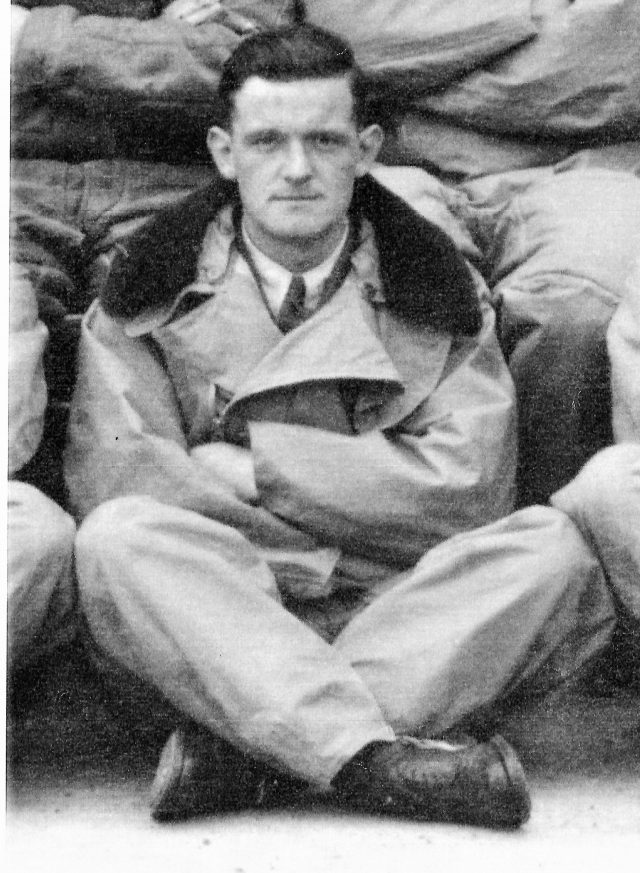
Uncle Wilf would have been 106 if he was alive today. I never met him or even knew of his existence until about 15 years ago. But this blog is to keep his memory alive. My mum showed me a letter she had received from the Museum of D-Day Aviation in Shoreham about her brother Wilf. This blog is published 80 years to the day that Wilf died. The researcher at the museum found that Wilf was a member of 43 Squadron and he wrote
43 Squadron was a front line fighter squadron flying Hurricanes and rated the best, and was to give cover during the Dunkirk Evacuation.Your brother was killed flying back after another sortie – the third that day – by a sneak and chance attack by German fighters and his Hurricane N2615, crashed 4 miles south of Shoreham. His body washed ashore at Shoreham on June 15th…..his body was sent for burial at the family’s request to Middlesbrough
We have just celebrated the 80th anniversary of the Dunkirk Evacuation between 26th and 31st May 1940. We don’t know how many sorties my uncle flew during that time, but we know that only 9 days later he was dead. He was just 26 years old.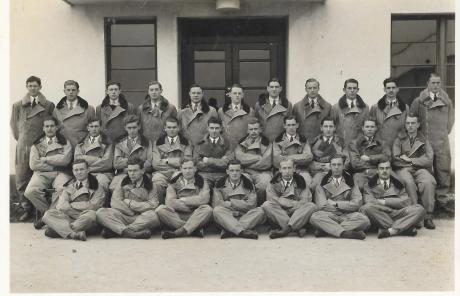 I never knew why my mum would get upset on Remembrance Day but I think it was because she remembered the sacrifice of her brother. When we were clearing my parents’ house after dad died in 2017 I found a note of a talk mum had given to her local church on Remembrance Day when she spoke about her brother Wilf. She had written
I have in my possession a little book that was among Wilf’s returned belongings and given to him in 1931 by the leader of the Young Men’s Class at our church, called ‘The Greatest Thing in the World’….It is based on 1 Corinthians Chapter 13: The Greatest Thing being LOVE…I never heard my mother utter a word of bitterness, and just after the war my brother who was 17yrs old died suddenly of painless pneumonia. She used to say ‘Laugh and the world laughs with you. Cry and you cry alone.’ It was only when I had sons of my own that I realised how she must have felt. When they went to university/college I missed them but reminded myself that at least I wasn’t sending them to war.
I am one of those sons, and I had talked with mum a few years before she died, about the letter from the museum. She started to cry. She told me that she loved her older brother and looked forward to the times he would come home from the RAF and play with her. She called him ‘my Wilfy’. He bounced her on his knee. It must have been difficult for a seven year old to comprehend what had happened when she learned of his death. Then to lose another brother a few years later, a week after her 12th birthday, was hard. I am not certain but I think her dad, my grandad who I also never met, died as a result of being gassed in the Great War. All three are buried with grandma at a family plot in Linthorpe Cemetery. After mum died we took dad to try and find the grave, but didn’t succeed. I have found a document in mum’s possessions about it and know the plot number so will go and put flowers on it one day.
Wilf left Middlesbrough and his job as a ‘Storeman’ aged 16 to join the RAF as an Aircraft Apprentice, or as a ‘boy’ 5ft 3ins with a 31 inch chest as his record states. By the time he was commissioned as an 18 year old man he had grown in height by 2 inches and put an extra half inch on his chest. I have a copy of his service record or ‘Service and Discharge’ as it is called. This was all the family got as there were so many killed at that time, Commanding Officers didn’t have time to write details of how their men died. I am not sure grandma ever knew, and it was only mum visiting the museum, on the way to a holiday, that led to the research being done. I know she didn’t get anywhere at first and it was only on receiving a follow-up letter asking for more details, that the story came to light.
Wilf was trained as a Flight Rigger, someone who worked on the airframe and cables, not the engines. He rose through the ranks and started a year’s pilot training due to a shortage of pilots as the build up to war started. He passed the training on New Year’s Eve 1939. He was with several other squadrons in Hornchurch in Essex and then Manston in Kent. In the run up to what would become The Battle of Britain he was posted to 25 Squadron based at North Weald, Essex, using a new type of radar for night interception. As losses of fighter pilots became high, pilots like Wilf in lighter bomber squadrons were moved to fill the gaps. Wilf’s final posting was to 43 Squadron based at Tangmere in West Sussex where later Wing Commander Douglas Bader would be stationed in 1941.
I am now the keeper of Uncle Wilf’s possessions and there is also Bible inscribed ‘With best wishes from mother to Wilf 1930‘. I suspect it was for his 16th birthday, or perhaps as he left to join the RAF. Mum’s family, like my dad’s were Methodists and worshiped at Woodlands Road church. Mum and dad met at the youth club and were married at the church. We hoped to visit Shoreham to see the rose that the museum promised to plant in Wilf’s honour, but that will have to wait until next year – once the current ‘war’ against Covid-19 has ended.
Rest in peace Uncle Wilf. We will remember you.


 Skat's Chat