Coronavirus week 14 – Not ‘the new normal’ but ‘a reorientation…’

‘So what’s the story?’….time for change

This week’s blog will be a shorter one (who shouted hurrah!) as I am busy this weekend taking part in a ‘virtual Methodist Conference’ along with 300+ other people from all over the country and the world.  The Conference met for the first time with founder John Wesley in the chair in 1744, and has convened annually in the 275 years until 2019 when I attended for the first time in Birmingham. It would be easy to characterise our church as ‘old fashioned’ and living in the past, but the first thing we did was spend half an hour voting electronically via ‘raised hands’ and Zoom polls to put aside our ancient rules designed for a physical gathering. This had taken a great deal of work by our Law & Polity team in conjunction with the Charity Commission. It could have been a very short conference if we hadn’t voted unanimously to do so. Who says our church is stuck in its ways?!

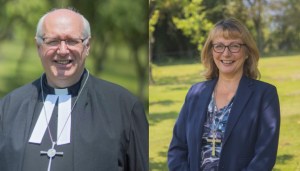
A casual glance at our new President Rev Richard Teal, dressed in black robes with a white collar, the 60+ year old white male that he is, might have reinforced the old-fashioned tag. But his message that this time of lockdown must lead to a time of ‘reorientation’ – to see people and do things differently in the future, shows we are rooted in the present not the past. He used the word ‘oriented’ to describe the way we felt just a few months ago, comfortable in our situation, and the example of his feelings seeing his new grandchild for the first time to emphasise the emotions that existed at the time. Next he talked about feeling ‘disoriented’ during the last three months, unsure of what it means, and without many of the things which make our lives stable, including family and being part of a local church with all its traditions and routines. What we need to do next is ‘reorientation’ as a church, with the things we have learned. We are finding more people than ever wanting to be part of on-line services and gatherings, we have reached out to those who live in our area most in need – particularly those who are lonely and isolated. We need to value those who do vital work and have been underappreciated in the past.

Richard follows a President in Rev Barbara Glasson who exemplified the diverse talents we have in our ordained ministers. Barbara has spent her ministry working with people ‘on the margins’ or outside our church. In Liverpool city centre she started a group of people including those with learning disabilities, from the LGBTQ community, the homeless, and young people, who came together every week to make two loaves of bread, then gave them away to whoever wanted it. Never the same group two weeks running, the ‘Bread Church’ is still going strong. She currently directs the Touchstone Project in another city centre, Bradford, that works from a terraced house in a Muslim-Pakistani heritage area on interfaith relations. They are about to move into a refurbished pub. Barbara is a blessing in our church. With 2019 Vice President Clive we were encouraged and challenged to tell our story of faith – hence many of my blogs using their phrase ‘So what’s the story..?’.

Our new Vice President Carolyn, in her 50’s, described herself as an introvert, activist, impatient, easily bored and liable to make flippant remarks – an honest assessment of her humanity. She confessed to being uncertain about taking on such an important role, but the testimony she gave on how she got here was powerful. She described the church as part ‘mad’ – some of our members can get very worked up if people use the wrong cups, wear the wrong clothes, put papers on, or take them off, the noticeboard.  There is a whole potential for trouble around anything to do with setting out, stacking or moving chairs!  It is also part ugly – this ranges from telling visitors off when they sit in ‘someone else’s seat’, we can say the cruelest things to each other, have inappropriate comments and touching, bullying and controlling behaviour. Ministers from our overseas churches can be subjected to racist comments from our members, and homophobia is not uncommon.  This ugliness extends to some extremely serious cases of abuse, which we need to continually guard against.

Carolyn’s hope is that the best of the work we do is really good and awesome; helping the weakest in society, and through our overseas relief and development charity, All We Can, those in poorer countries. She wants to use the year meeting with local churches and encouraging us to use our gifts to the utmost.

It is a very different conference this year, but our group of 8 local Chester & Stoke District representatives are keeping in touch, and helping each other during debates via a WhatsApp group.  We won’t be able to hold the deep and passionate debates where speakers come forward to give different views, but we will be reviewing some important reports and committing millions of pounds of funding to important mission and outreach projects. We will also do the ‘mundane and routine’ business such as approving accounts, membership of committees and working parties. There is a sadness that the vital debates we held last year, and the provisional legislation needed, to make us a more inclusive church that recognises a wide-variety of relationships as valid, will not be completed as it was felt the format would not allow the ‘deep personal conferring needed’. Those in single sex relationships are already welcomed, and can hold any position in Methodism, but will have to wait until the conference of 2021 to find out if they can marry in our churches.

Our ministers in training are usually ‘ordained’ on Conference Sunday, but this year they had to make their promises on Saturday via Zoom as the first part, but will have to wait until we can get back into churches to have the physical ‘laying on of hands’ in the special service with friends and family. After one of the candidates made her promise from home our chair Helen sent a message on WhatsApp saying ‘we need to get Natalie into our district’, prompted by a framed message on the wall in Natalie’s house that read ‘Gin is my saviour’!

In the conference last year we learned that language is so important, not only in what is said but how it is said. Hence my wish not to use the term ‘new normal’ for our post-Covid society but the hope that, using Richard’s word we will ‘re-orientate’ ourselves. This week with the ‘White Lives Matter’ banner flown over a premier league match we learned again this lesson of use of language.

With cases not falling as fast and the death rate levelling off to about 150 per day, there is concern that the ‘welcomed’ easing of lockdown has sent the message that ‘it’s all over, we can have a party’. Scenes at ‘block parties’ in London, the celebrations in Liverpool after their team won the Premier League title after a 30-year wait, and overcrowding on the beach at Bournemouth during a very warm spell, raised fears of a second spike of infections. And all that before the pubs open on 4th July. Add alcohol to the mix and arguments over what constitutes ‘one metre plus’ in crowded pubs will lead, as one punter said, ‘to even more fights on a Friday night’! 

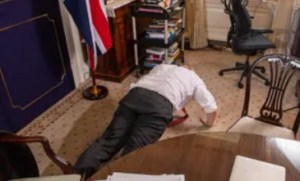
I understand some of the reasons, but in my opinion it says a lot about our country that we work hard to get the pubs open, but not the gyms and swimming pools. Judging by the photo on the front page of one newspaper this morning, Boris Johnson clearly thinks an office floor is all that is need to become ‘as fit as a butcher’s dog’. Although I am not sure wearing a suit and tie is recommended gym wear?
We really are at a ‘turning point’ or maybe looking over a precipice with the virus. Infections are reducing, deaths at least leveling out, and there are signs of hope. Yet scientists keep telling us that there is no sign of the virus just dying out and it will be with us at some level for ‘years to come’. The next three months and how we as individuals react will be critical to the future path of the virus, even more than the past 14 weeks of lockdown.

We need to re-orientate our country if there is not to be a pandemic of unemployment. In my less optimistic times I worry about a complete breakdown of society as those in work continue to regain wealth, but those in lower paid jobs or no jobs get poorer and poorer – or am I kidding myself, as that has been the case for decades?

Other news this week

  • The daily briefings came to an end on Tuesday with the announcement of the next stage of easing, adding to the ‘its all over’ feeling. Those who are shielding were told that they could leave the house at the same time. There is uncertainty and real fear among some. It may be that the presence of the virus is such that on average you need to meet 1,700 people before you interact with someone who carries the virus, but the effect if you are the unlucky winner of that particular lottery is no less devastating if you are vulnerable.
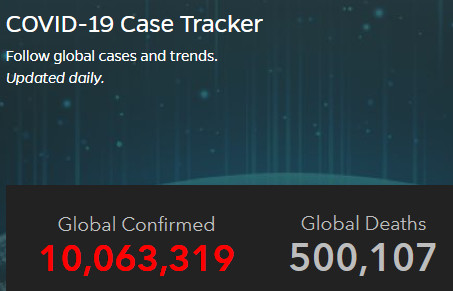
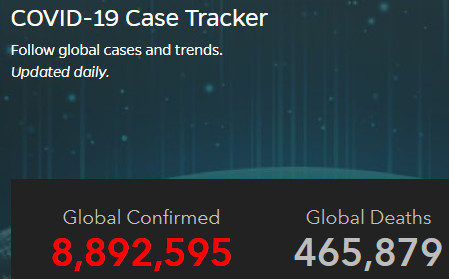
  • With the briefings ending, you have to work hard to find the daily new cases and death figures. The four days figures Tuesday to Friday were 154, 149, 186, 100  and the total is 43,550 and the average new daily cases is about 900 which is at least moving in the right direction. Globally we passed 10 million confirmed cases and  500,000 deaths.
  • At the weekend it was announced that from the 6th July we will be able to go to some European countries via so-called ‘air corridors’, meaning that on return there will be no requirement to go into two weeks’ quarantine.
  • Infections in the US are continuing to rise at a dramatic pace and President Trump is still in denial, with his senior team appearing increasingly uncomfortable trying to defend the indefensible. It is such a large country and a major part of the world economy, even beyond the personal impact the loss of over 125,700 of its citizens.
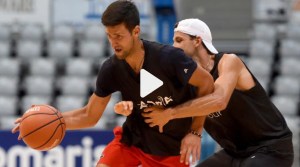
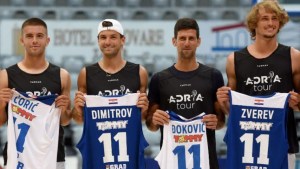
  • World number one tennis player Nova Djokovic arranged a short tour of his native Serbia, and Croatia in which there was little attention paid the social distancing or ‘covid security measures’. Djokovic himself got the disease as did his wife and several of the organising team. He is a self-declared ‘anti-vaxxer’, an area I plan to explore in a later article as the ‘conspiracy’ theorists and those who ignore science facts are dangerous for the rest of us.
How was week 14 for us?

It didn’t start well as on Monday Alyson was seriously ill with sickness and stomach upset. At first I did wonder if she had caught Covid-19 from working in the pharmacy on the Saturday. It turned out to be a reaction to a new type of antibiotic she was taking.  It was the first time in 93 days that she hadn’t been on our exercise bike and her Wii Fit.  We had to cancel our trip to meet friends from Shrewsbury the next day for a walk around a lake at a park halfway between us. It was a gloriously sunny day and such a shame.

The weather stayed hot and sunny and by Thursday when Alyson finally got to meet three former work colleagues in our garden, we needed to put up the gazebo we had bought specially, not for the rain, but so that they could sit in the shade. It was the hottest day of the year at 30 degrees.  

The opening of self-catering accommodation on 4th July means that our holiday at a National Trust cottage in a remote area of Norfolk is back on. It will be good to get away even if we can’t visit some of the places we planned to. It will be a change of scenery and walks along coastal paths. I admit to glancing at the availability of villas in Spain, Crete and Croatia when the air corridors were announced, but Alyson is a bit more cautious and is waiting for the ‘second spike’ and what happens when the ‘winter flu’ season starts again.

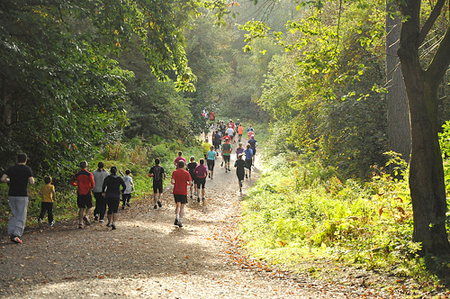
I continued to do my local parkruns twice a week and am feeling the benefits both in some weight loss, and clearing my mind of confusion.

We had a meeting of our head injury charity trustees via phone and the figures I had prepared as treasurer showed that our reserves have increased.  There really has been great support for small charities like ours who can’t hold fundraising events. We have been fortunate with the grants we have applied for – and received. Apart from the National Lottery the money we have received is from local trusts and benefactors wanting to support Cheshire-based charities.  We have not furloughed our two employees, as the work they do supporting members who were socially isolated even before the restrictions caused by the virus, is vital. We too will continue with ‘reorientation’ of our services, taking some of the ‘virtual coffee mornings’ and chat rooms forwards to reach those who haven’t wanted to attend physical meetings even in normal times.

Alyson’s hairdresser called to ask if she wanted an appointment in the first few days of opening. I am getting used to her long hair and she doesn’t want it taken back to where it was, just the fringe tidied up. I love the haircuts Alyson gives me with my trimmers and not sure I will ever go back to paying for one!

Although there was no formal Conference Service this year, our new President and Vice President joined the service at Westminster Central Hall via Zoom. Richard’s sermon was about John Wesley’s drive for Methodists to strive for ‘personal holiness’, but to live out the gospel we proclaim via what he called ‘social holiness’. This is a radical, active care for those in society who need it. Richard talked about the last letter Wesley ever wrote being to William Wilberforce supporting the abolition of slavery. He worked in the desperate slums of London where he saw people in extreme poverty continue to work and help others. Richard used a modern-day example of this social holiness by telling of a member in his circuit in rural Yorkshire, inspired by her faith to help the local food bank and deliver to the housebound and isolated in her community. 

Vice President Carolyn led us in prayers for those who are broken-hearted, worried about the virus, struggling with loneliness and living in conditions where social distancing is impossible. For countries where health systems are overwhelmed and asked that we use our social holiness to do what we can.

We finished with video messages from our sister churches around the world from, Bolivia, Rwanda, Australia, The Caribbean, and Italy. As Methodists we adapt one of  Wesley’s famously sayings ‘the world is our parish’.

Keep safe and let’s see what the next week brings us.
Coronavirus week 13 – The best and worst of the NHS – the old normal is back…

C22H29FO5 – the wonder drug

As it is nearly 40 years since I was awarded a BA(Hons) in Chemistry, I think I can be forgiven for not being able to give the modern name for dexamethasone. This is the drug announced this week used to treat patients with Covid-19 resulting in reduced deaths for those receiving oxygen or on mechanical ventilators.

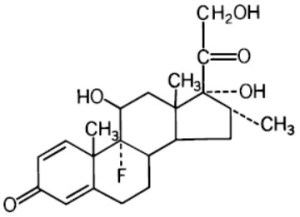
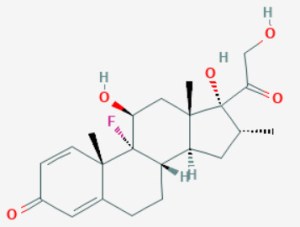
Nomenclature has changed since I taught chemistry for five years in the mid-80s. Looking back at the literature of the time it was called 9α-fluoro-16α-methylprednisolone or 6α-methyl-9α-fluoroprednisolone, but either way even having done a biochemistry module I am not sure I would have known it was a steroid derivative of the well-known drug hydrocortisone. One of the main topics I enjoyed was organic chemistry, that of carbon compounds. Looking through the 1,280 pages of Hendrickson, Cram and Hammond’s textbook from 1977 there is no mention of it, despite being used in a clinical way since 1961. To complete the confusion that people often express when I tell them I used to teach chemistry, it is always good to have a chemical structure to describe the compound. Here are two for this drug.

The slightly more modern version on the right shows the different elements hydrogen, oxygen and fluorine as different colours and the methyl (CH3-) structures as a dark triangle. My pharmacy consultant (and wife) Alyson tells me that I was on dexamethasone for a short time in 2012. I was in hospital for 12 weeks (the time we have been locked down now) with a brain abscess, and was given it to reduce the resultant swelling of my brain.

The research on dexamethasone done in British hospitals, with volunteer patients involved in the clinical trials, has been hailed as ground-breaking. The drug has potential to save tens of thousands of lives worldwide. It must be devastating for those who have lost loved ones who may have benefited from it. This and the amazing dedication of the care staff, cleaners, physios, pharmacists, therapists, doctors, nurses, and administrators demonstrate the best of our NHS. As a country and tax payers we need to fund them to the level required. We will have a thorough review and ‘learn the lessons’, but I fear that once ‘real life’ takes over and self-interest resumes its ‘normal life’, we will forget those weeks early on when as one voice we said ‘this can’t be allowed to happen again’.

The whole system needs a thorough rethink. There have been many reviews and reorganisations over the years, and it would be natural for those who work in it to think ‘oh no not again’.  The NHS needs rebuilding from the ground up, and possibly renaming. Before Covid-19 I think most people thought of the NHS mainly as the hospitals and local surgeries. In latter years, and certainly during the crisis, there have been concerns that care homes, mental health services, and some social care is linked to the NHS. Many people comment on ‘private business’ not getting involved in our health system as a bad thing. Well I have news for them, much of what we think of are ‘private businesses’. Community pharmacies which I worked in for over 20 years and Alyson has worked in for 40 now, are private limited companies owned mostly by pharmacists but some by medical wholesalers. The same is true of almost every doctor’s surgery who are businesses of doctors setup as a partnership of lead GPs who employ other GPs to help them. These private businesses operate as ‘contractors’ and are paid by Department for Health and Social Care (DHSC), itself only renamed in January 2018.  They are paid a rate for their services, whether that’s seeing patients, running clinics or dispensing prescription or carrying out medicine use reviews that is negotiated by their professional bodies with DHSC. It should not be a surprise that negotiating with what is in effect a ‘monopoly’ supplier is not one that leads to mass riches. What does surprise those doctors who visit pharmacies or chat to owners is unlike their partnerships, DHSC pays nothing towards premises or staffing costs of pharmacy businesses, or pay for the holding of large amounts of drug stocks. And don’t even get me on the subject of Dispensing Doctor practices – people who can write a prescription if they have too much stock of a particular drug, or choose the one that’s best for their business rather than the patient.

‘Business’ and the idea of accountability and competition has been part of the health service for many years, and now we have ‘Trusts’ who are independent organisations running services at a local or regional level. They contract to suppliers and surgeries, pharmacies and ‘buy in’ other services from blood and organ donation services, laboratory services and a host of other clinical ones. There are companies who contract for IT projects, finance, property building and maintenance, catering, cleaning etc. This started when I was still in pharmacy 20 years ago and even then I could see the problems of having local GPs on trusts. As with teachers and risk assessments I wrote about in an earlier blog, most GPs are not businesspeople and they can’t be blamed for conflicts of interest between their business and that of patients and other contractors.

Many governments have presided over reforms but the last major one by the coalition government in 2010 and overseen by Andrew Lansley has proven to be disastrous. Even before starting it drew criticism from a lot of areas. The idea of giving even more power to GPs and frontline staff and increased ‘competition’ on one level might seem like a good one, but in reality it led to a mix of systems and lack of any central accountability. The devolving of the social care and public health issues to local government foundered as the secretary of state for health, Jeremy Hunt, cut the budgets under the guise of ‘austerity measures’. The well-publicised ‘scandals’ with Mid Staffordshire NHS Trust and others in care homes can be laid at the lack of oversight on patient safety.  The organisation Public Health England (PHE) was formed as a result of abolishing Strategic Health Authorities (SHAs), and at the time several directors warned that this would compromise our ability to ‘fight any future pandemic’. SHA’s would have been able to lead on organising the local response and would have people on the ground able to conduct a ‘track and trace’ system. Andrew Lansley stepped down from government in 2015 and was rewarded for his efforts with a seat in the House of Lords.

Jeremy Hunt was the secretary of health who ignored the results of ‘Operation Cygnus’ in  October 2016 used to check the resilience of the NHS to respond to a pandemic (albeit one of influenza). As widely reported at the start of this pandemic, this led to a failure to replenish our stockpiles of PPE, antiviral drugs and ventilators. It is shocking to see him in recent weeks, as the now chair of the parliamentary health and social care select committee, taking the government to task over their failure on issues he was responsible for. When he was elected by MPs to this role in January there was a feeling that this conflict of interest might stop him questioning too much. It’s extraordinary to see the exact opposite happening, but his ability to wipe clean his own responsibility is equally unbelievable.

Andrew Lansley promised a ‘bottom up’ review but ended up with more ‘top down’ structures in place and setting up a whole series of ‘independent bodies’ to monitor things.

Several people have expressed surprise that hospices receive so little funding from DHSC and other government bodies that they have to rely on local fundraising and charitable status to continue. This was put in the spotlight early in the current crisis when fundraising stopped and no provision was forthcoming to help with PPE. If a national health service is supposed to cater for us from ‘cradle to grave’, what has gone so wrong that patients and their families who are facing the real end of the health system are left to donations and sales from charity shops for the provision of care to their loved ones. Another part of the health service that I have experience of, and which has been neglected are rehabilitation units. It seems Covid-19 is an illness that takes a terrible toll on survivors, with months of aftercare needed to even walk again. Many weeks on a ventilator in a medically-induced coma leads to mental health issues as well as physical weakness.

NHS IT provision, which I had some experience of when trying to implement the Electronic Prescription Service (EPS) in our pharmacy branches in 2005/6 was one riven with problems. With the help of our wholesalers and investment in NHS broadband we got all 50 branches setup just as we were sold to the Co-op. Alyson continued working in branch and even now, 14 years on, the system is not fully implemented and looks unlikely to be any time soon. Only recently can pharmacists see a very small amount of information held nationally on any patient who comes into their branchwhen they are away from the place they live. I know from personal experience that my local hospital, 15 miles from the one in another county and a separate trust where I was treated for my brain injury, can’t access any of my scans or records. This is why I have a lever arch folder with all my records and several CDs of my scans/x-rays that I can take in should it happen again.

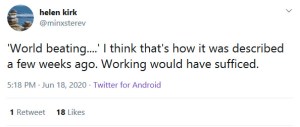
As predicted by my sons in a blog six weeks ago NHS IT, or NHSX as it is now called, was criticised this week for the failure to deliver the NHS Test & Trace app, and are considering reverting to the Google/Apple model. As my chair of district tweeted;

In all the ‘clap for carers’ and accolades given to those in the health and care systems, we shouldn’t fall into the trap of thinking everyone is working for the common good. In an organisation of about 1.5 million people there will be some ‘bad apples’ and strong management and administration supported by decent pay and training is needed.

Our National Health service should be as much about prevention and encouragement to live a healthy lifestyle as it is about treating us when we fall ill. The effects of obesity, diabetes, heart disease and respiratory conditions on the death rate from coronavirus demonstrates this need. The savings made from prevention should outweigh the costs of later treatment.  Education, as in many things, is vital for health outcomes as is reducing poverty.

Let’s hope the next review takes all of the factors into account and, as I wrote last week, as a country we can fund the necessary changes. Our National Health Service has become a ‘Reactive Illness Programme’ (RIP), and needs to change, and quickly.

Other news this week

  • The ‘old normal’ resurfaced in our area this week when 6,000 people attended raves in two separate areas of Manchester on Monday. Several people were stabbed, one girl allegedly raped and local people had to clear up the mess after everyone had left.
  • Crime seems to be on the increase (or at least being more reported) and terror is back on our streets with the stabbings in Reading this weekend.
  • There is more talk of reducing the social distancing requirements to one metre to get hospitality and self-catering holiday accommodation open.
  • Dame Vera Lynn died this week at the age of 103. She was called the ‘forces sweetheart’ during World War Two and had shared her thoughts during the current crisis and her song was echoed in the address to the nation by our Queen when she said ‘we will meet again’.
  • The Labour Party review on the reasons for disastrous results in December’s general election was published. It didn’t make comfortable reading for members of the party like me. We must work for Labour to produce policies which chime with the need to do things differently in relation to funding the new health and social care system, tackling poverty, improving education and closing the gap between the wealthy and poorer in society.
  • The daily death announced totals continue to fall with the Monday-Friday total this week being 853 down from 1,065 last week (a fall of 20%). The total of deaths at the end of the week was 42,632.
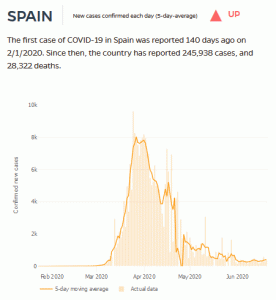
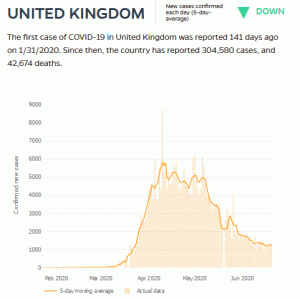
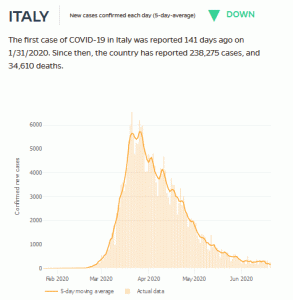
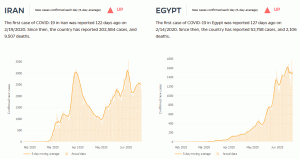
  • With numbers seemingly under control in European countries despite some local outbreaks in Germany, I looked again at the statistics on Johns Hopkins site and there are some awful looking graphs in other areas of the world. Here are the graphs for cases in Europe;


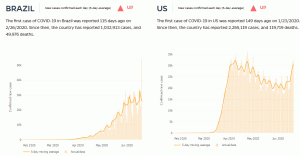
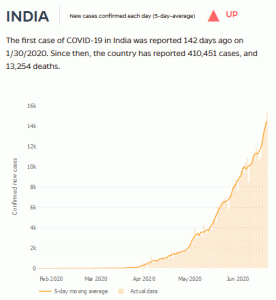
    These show that we are over the (first?) peak of infections. The story in two countries with presidents who think it is nothing to worry about, and are trying to get their country’s open again is not so hopeful…

    and note that the scales on these are tens of thousands rather than the thousands in Europe.
    The middle and far east countries are also showing curves which are concerning, with a ‘double peak’ for Iran. The cases are in hundreds but show no signs of decreasing.

  • We need to start looking overseas again now that we are getting the UK cases down. There is concern from aid charities that helping less well-off countries will be harder now that the department for international development (DFID) and the UKAid agency has been subsumed into the Foreign Office. A move criticised by three recent former prime ministers from both Conservative and Labour.
  • The debate and protests around racism and the ‘Black Lives Matter’ movement continued across the world.
  • I was going to write that the demonstrations and actions of climate protestors, similar to the ones for Black Lives Matters with marches and ‘direct action’ had not resurfaced, when yesterday I saw an interview with Greta Thunberg saying that she was looking forward to going back to school in Sweden, and vowing to carry on campaigning.
  • Greta’s target for criticism president Donald J Trump was back on the campaign trail with a ‘huge rally’ in Tulsa, Oklahoma where only 6,000 of a possible 19,000 seats were occupied despite over a million applications for tickets. For those who did attend there was little sign of masks or social distancing, and six of the organisers caught the virus. At the time of writing there are reports that Mr Trumps rally had been ‘turned over’ by teens and young people responding to campaigns on the Tik-Tok and K-Pop social media platforms applying for tickets then not turning up. Mr Trump said earlier in the week that a million supporters would come.

How has week 13 been for us?

Unfortunately we have another example of the ‘worst of the NHS’ in our household. Five weeks after Alyson applied to help out NHS 111 with taking phone calls from people who need to speak to a pharmacist, and after three polite chasing emails and responses from the HR team doing the ‘on-boarding’ stating that she will hear ‘in a few days’, there is still no sign of her contract or training plans. She has played her part by taking two more calls on the SOS NHS volunteering app.

We haven’t ventured to ‘non-essential shops’ yet and the crush at the Nike store in London and the lady interviewed in the Primark queue in Manchester who stated that she ‘felt like I’ve won the lottery’ didn’t pursuade us. We did go for another walk in Delamere Forest and had a picnic which was pleasant. The weather meant another postponement of meeting with friends in our garden, but we have a walk planned in a park further afield this week.

I have watched a couple of the Premier League football matches now live on ‘free tv’ and have been surprised how realistic the ‘virtual crowd noise’ is to make them seem more ‘normal’ despite empty stadiums. The  online radio commentary I heard for my team Middlesbrough was a sign of the ‘new normal’ being much like the old – we lost 3-0 and are looking at relegation again.

I had my first international Zoom with a call to our subcontractors’ office in India with the person who helps on the IT project I am doing. We have had training sessions with the team from our district who are attending the Methodist Conference in a week’s time. With over 300 representatives, Zoom will be in the form of a webinar where we can only see the person presenting and another speaker who wants to add to the debate. Voting will by the raising of a virtual hand or completing a poll on the screen, so the feedback on numbers should be much quicker than the usual manual count of raised hands in the conference hall.  I will write more about this next week. The conference service on Sunday will be at my now ‘virtual home church’ of Methodist Central Hall, Westminster in London.

Keep safe and let’s hope there is a safe further easing of lockdown in the coming week.


So Whats the Story?….We did it!

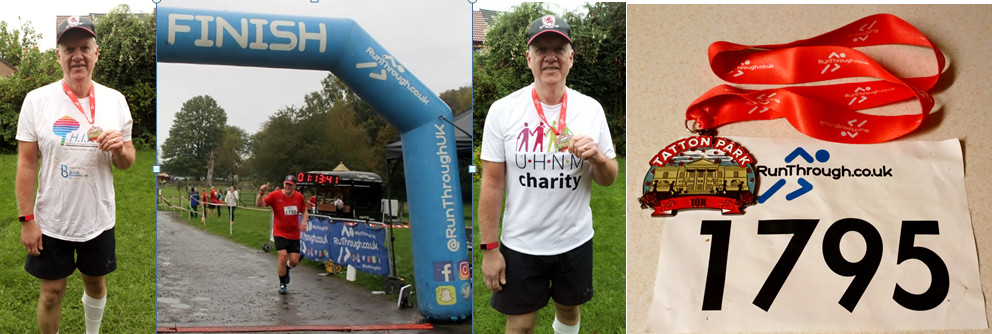
During the weekend that Eliud Kipchoge ran a marathon in under two hours, I managed to slowly jog 10k around Tatton Park in 1 hour 12 minutes and 23 seconds. Eliud could have done it in 28 minutes 32 seconds!

The real story, however, is not my running but that together we raised a lot of money for four charities. I decided to include Parkrun Forever, the charity which, along with corporate sponsors, allows Parkrun to be free for everyone to take part in.

The total sponsorship for the charities are:

Cheshire South Methodist Circuit
£1,230.00

HIP in Cheshire
£2,860.50

UHNM Charity (Royal Stoke Hospital)
£1,312.50

Parkrun Forever
£145.00

That’s a total of £5,548

Thanks to more than 65 of my family, friends, church fellowship and HIP members who donated. Your generosity is overwhelming!

I know the charities will be grateful for the funds and it will allow them to support the people they work with, or who are helped by what they do.

The on-line donation pages have now been closed and the funds passed to the charities.

Every blessing

Ian Skaife
November 2019


So Whats the Story?….. The Long Story

This is the longer story of the reason I am doing a sponsored 10k for three charities that you can read about in my last post So Whats the Story…? A 3-2-1 offer on a sponsored 10k.

During the Olympic summer of 2012 I was training for my first short triathlon, having been a ‘slow plodder’ for about 30 years of doing 10K’s and around 15 Half Marathons including five Great North Runs. I was never competitive and my motto was ‘when the going gets tough…..it’s time to slow down or even walk if needed’.

I woke up one Wednesday morning with a splitting headache and some numbness in my right foot. Putting it down to ‘man flu’ and an old back injury I worked that day but took the next one off. On Friday I woke up and could barely move my right side and the headache was excruciating. By the time we got to A&E I could barely stand unaided. A stroke was diagnosed, and I was put in a ward and pumped full of aspirin. On Sunday after a CT scan I was told that it could be a cancerous brain tumour and I was being sent to a specialist hospital 18 miles away. They confirmed that it wasn’t a tumour but a large amount of infection. They were not able to operate, as I had so much aspirin in my blood there was a danger that I would suffer a bleed in the brain. By Thursday my condition deteriorated, and they did an emergency biopsy. This didn’t go well and early the next morning I went for a second operation to drain the infection. Alyson was told that I might not make it, and when our two sons arrived from their homes in the south, they had what we now refer to as ‘the organ donation conversation’.

Memories of the next 24 hours are sketchy but when I arrived back on the ward from intensive care, I still couldn’t move my right side and although I understood what people were saying I couldn’t answer at all. The only words I managed were a tentative ‘yes’ (when I meant no) and no (meaning yes). Later I managed to speak a little but then it was mainly swear words which, as people who know me will confirm, I rarely use.

So began treatment involving two antibiotics intravenously five times a day every day. I was also put on anti-epileptic medication to prevent fitting, and antidepressants for my low mood. The days were endless, the restless nights even longer. I was struggling with tiredness and extreme confusion. Coming to a dead stop after my life as a busy IT Project Manager was hard. I wanted to be back at work but had to learn that in the brain business, days turn to weeks and weeks to months.

I tried to read newspapers and magazines but by the end of a paragraph I had forgotten what the headline was about. I had asked for my Bible to be brought in and that was even harder to read. I couldn’t even remember The Lord’s Prayer. My Bible was still a source of some comfort, although starting on Psalms was probably not my best idea. I do have a vivid memory of Carmen, a Columbian nurse singing quietly a hymn while she gently washed my back. I shared stories with other overseas nurses who, on seeing my Bible, talked about life ‘back home’ and what their faith meant to them.

I started intense physio and speech therapy. Being left-handed was a bonus as at least I could do some basic tasks. It took three people to get me out of bed using a hoist and either onto the toilet or eventually to prop me up in a chair.  What I couldn’t do was muster the words to ask to be put back, so often sat there frustrated for hours as people came in and out of my room.

Alyson visited me twice a day every day for the next 12 weeks. I owe her a debt that will never be paid. Church friends and close family helped relate my story each day to our wider circle. My brother and cousins drove mum and dad from their home 3 hours away. I barred any visitors other than close family at first, as I looked awful and couldn’t concentrate enough. When I relented our friends were faced with Ian who didn’t have any personality. The lights were on, but no-one was at home.

Then started daily visits from close friends, our sons, Alyson’s sister and brother, cousins. I couldn’t remember who had been from one day to the next – but I know that they all made me feel better – even if it didn’t always show on my face. Chocolates, grapes, biscuits and particularly ready-made custard were very welcome!

Work colleagues from the IT & Business Consultancy business I worked in visited and I was grateful for their support covering the projects I was supposed to be managing. Alyson’s employers Co-op Pharmacy were very understanding and allowed her all the time off with compassionate leave. The stress and worry meant that she was unable to work in any useful way.

Eight weeks in I needed a third operation as infection was still collecting in my brain. I had ‘drains’ fitted linked to bags on my shoulder – I looked like ‘Dracula’s Bride’ for a week or so.

This is a scan of my brain just before the operation on the left, and what a ‘normal’ brain looks like on the right – you don’t need to be medically trained to see the pools of infection and damage….

The result was a small improvement in all my symptoms; I managed to move a toe then bend my ankle.  I managed some ‘freedom’ with a wheelchair that I could push myself around the ward and, if Alyson came with me, to the café or even outside. Friends and family began to see some big changes in both my alertness and mobility.

Steve Ingrouille, the minister at my local Methodist church, came to visit and we had the strangest communion I have ever received sitting in a corner of the public restaurant. Steve did the complete service with the bread and wine used at my church the previous Sunday.
Alyson also had great support from church friends who rallied around to help and I believe that the prayers they gave aided my recovery. Val Mayers and our neighbours Stuart & Veronica Rhodes need a special mention. I continue to gain strength from my church fellowship and my faith.

My mood slowly improved and when mum visited me one Saturday as she left we hugged and she said ‘Love you son, keep getting better and see you soon’. These were the last words she said to me as the next day she had a heart attack and was put into a coma on a life support system for a week.  One Friday as I was taking my first steps unaided by physios I had a missed call on my mobile. It was my brother telling me that mum had died…she never got to see me walk again.

I was allowed out of hospital for one day to travel to her funeral 150 miles away and managed to stand using a frame to give part of her eulogy.

I had my laptop back by then to write and plan my ‘escape’ from the rehab hospital until my condition improved enough for Alyson to take me home in a wheelchair. The skilled consultants, surgeons, nursing team and physios had ‘fixed me’ – physically at least.

18 months of hard work started, to recover from my ongoing symptoms, regain my driving licence, and build my strength enough to stand on my own with a stick, and climb stairs. I did some part-time work in the IT Consultancy Business, helping the owners to sell the part of the business I was in. I knew about this before my illness but it meant me being made redundant. I then managed to get a little paid work with my church on finance and property.

Alyson went back to work as a pharmacy manager in a very busy community pharmacy attached to a surgery. This is an extremely demanding role with a team of around 20 to manage and unrealistic targets set. At least I was able to support her in this, being at home to look after practical things around the house, waiting for trades people, doing some of the household chores that until then had fallen mainly on Alyson. I was happy with a lower pace of life than before, and could rest when needed.

I had the hip replacement that I needed before going into hospital, and it was through this that I met Annette Turner, a brilliant physio specialising in hydrotherapy. When my consultant had signed me off in February 2013 he said it would be two years before we would know the lasting damage and implied this would be substantial. Annette convinced me that, whilst that was true, she could get me to the point where it might be that the only thing I couldn’t do was to move my little toe. That has proved to be the case.

In January 2014 I was encouraged by Beth Fisher, Service Manager from the Acquired Brain Injury service in Chester, to attend a support group who met for coffee. This is an amazing organisation who provide help for people with a brain injury to reduce the loneliness that can come from hidden symptoms, loss of confidence in social situations, along with memory issues and extreme fatigue. During the last few years this group has formed into a formal charity. I am now a trustee of Head Injured People in Cheshire.

Steve Price, an accountant who had been one of my project managers, had left to concentrate on his own business. In August 2014 he offered me the opportunity to work with him a few days a month to get out of his front room into an office,  taking on some people to help him.  I am eternally grateful to Steve and the team for the opportunity to work with them putting new systems, marketing material, social media, lots of new business processes in place as we grew. I became Compliance & Training Manager. (In April 2019 Steve and the rest of the team merged with another practice and he is now one of 5 directors in a company with 23 employees and a growing list of clients. I took the opportunity to retire).

I had another 18 months of physio and got to walk correctly and slowly, then six months later I decided to try running a few steps. I did a short route around our home in streets that I had used for training. It took me about 30 minutes to do a couple of miles with intense concentration on my foot placement and staying upright. I had to sleep for an hour afterwards. Fatigue is a lasting symptom of brain injury and several afternoons a week I sleep for 40 minutes, and each time I run I must sleep for around 50% longer than the time I take.

I don’t remember how I heard about Parkrun but in April 2016 I arrived at Delamere with my barcode and did the whole 5k without stopping. It was very emotional, and my account can be found at https://skatchat.wordpress.com/2016/04/.

Alyson used to come with me and walk the course before we started and meet me at the end but then two weeks before her 59th birthday she announced that she fancied running it. As someone who has asthma and have never run before I was amazed. She did her first run in 37 minutes, beat my PB the next week and after 5 more successive PBs she now runs around 30 minutes. She even fell over once and after dusting herself off for a short while still beat me by four minutes.

So the 100th Parkrun completed yesterday was an emotional one too, coming as it did on the 7th anniversary of mum’s death. Alyson did her 24th and our son Michael volunteered.  My brother Andrew did his 100th at Newcastle on the same day along with his son Thomas.

As we lost dad in 2016 and have received some money from their estate, it seemed a good time to celebrate my recovery and use their legacy to raise funds for the three charities that have helped me. So next weekend I will take on 10k at Tatton Park.

So Whats the Story?…..where I am now.

Reflecting on the past seven years, I genuinely feel that I am in a better place than before my brain injury. Sure, it has been a tough time and I wouldn’t want to inflict the stress and worry on my family that was some of our experience. Overall the positives are;

  • I am in a less stressful state than I was before – many people when they heard it may have been a stroke worried that it was due to pressure of work and church business that had caused it. I often say that my memory problems mean that I can’t remember what I am supposed to stress about
  • I feel that my faith has been strengthened, as it says in Psalm 40

    I patiently waited, Lord for you to hear my prayer. You listened and pulled me from a lonely pit full of mud and mire. You let me stand on a rock with my feet firm, and you gave me a new song a song of praise to you

    and when I hear the story in Luke’s gospel of the paralysed man whose friends prayed for him and took him to Jesus – I can really relate to that.

    But I want you to know that the Son of Man has authority on earth to forgive sins.” So he said to the paralyzed man, “I tell you, get up, take your mat and go home.” Immediately he stood up in front of them, took what he had been lying on and went home praising God.
    Everyone was amazed and gave praise to God. They were filled with awe and said, “We have seen remarkable things today.”

There is no substitute for confronting your own mortality and asking the real
questions of what your life is about…

  • I have been able to spend more time working for my local church on finance and property issues, to support the Leadership Team looking at new ways of working, recruiting some amazing lay workers to support our ministers and churches.
  • I have had more time to give to Alyson and our family. Supporting them through difficult times at work and being there to help with looking after her parents and supporting her when they died these past two years. Our two sons are in well-paid roles and have been able to buy their own homes. They too have benefited from their grandparents’ legacies, and by that I don’t just mean the financial ones.
  • We are fortunate to have built up enough savings to be comfortable in our retirement. I had several good jobs in companies with strong ethics and who made a difference to their employees and the patients/customers they served.  I have been able to help a friend build his business to repay his faith in me.
  • I work with some amazing people in the head injury charity and have met some truly inspirational survivors, who live in much more challenging after effects than mine. Head injury doesn’t discriminate on the basis of age, wealth, personal background, education or experience. I am fortunate that the relationships with family and close friends have survived – that is not always the case.

So as I look forward to enjoying some travel and a forthcoming pilgrimage to the Holy Land, I wonder what the future holds, and the next challenge we will face. I hope that I am up to the task but know that I will have a lot of support.

Thank you for reading my story.

Ian Skaife, October 2019

Celebrating my 50th & moving on…

50th Park Run - Feb 2018

This week I passed two significant milestones.

Tuesday was exactly 5 years since my neurosurgeon formally discharged me from his care, following treatment for a serious brain injury that paralysed the whole right side of my body and left me unable to speak. It was 6 months after I first went into hospital.

Yesterday I completed my 50th Park run since starting to run again almost two years ago. Although it was my fastest time for several months, that was completely unimportant. Being able to enjoy the feeling of running, breathing the clear fresh air, hearing the birds sing in the trees against bright blue sky – that’s what meant the most. Thanking God for my journey and the changed person I have become is equally important.  As I ran I thought about my family, church fellowship, friends and the medical team who have helped me get to this point.

My wife Alyson (my greatest supporter of all) often tells me that I should ‘move on’. This does not mean to forget; just not to dwell on the past and look more to the future. I feel that this is the time to take up that call.

I will always have my current symptoms of fatigue, memory issues, weakness and balance problems, but I am determined that these will not stop me from seeking new challenges and adventures.

We never know what will happen in the future, and the fact that a friend from church was diagnosed with a brain tumour and had a stroke a few weeks ago, is a painful reminder of that.

I will wear my red 50th Park Run shirt with pride and, all being well, will get my black 100th in the next two years – I tend to run once a fortnight.  By that time retirement may have happened and who knows where that will lead us.

For now my faith is stronger, my confidence has returned, my stress level is controlled (partly as I can’t hold too many things in my mind so forget what I should be worrying about!), and my general health is reasonable.

Time to ‘move on’…


The best 5k of my life – even if it took over 39 hours!

Yesterday marked a number of significant ‘milestones’ – an apt word for taking part in my first ever ‘Park Run’. 23rd April is our school friend Keren Harvey’s birthday. Protocol dictates that I shouldn’t give her age away, but it was 39 years ago that Alyson & me started ‘dating’ at Keren’s 18th birthday party.

I had been meaning to take part in our closest Park Run at Delamere Forest, situated between Northwich & Chester, for several weeks. Our son Michael could not run with me, having had a significant milestone of his own this week. He moved to work in the Sydney office of his company for at least 3 months. I had suggested to Michael that we do the run last Saturday. Apart from being busy with his packing, he observed that the publicity over a council starting to charge Park Run for using paths, which until then had been free, may have meant a larger turnout than usual showing their support for the organisation.

Checking the forecast all week it seemed that it might be wet. Being a fair-weather runner and unsure of my footing in slippery conditions, the prospects didn’t look good. On Friday I was mentally and physically tired from the events of the previous two days. However, on Saturday the sun was shining and it was a crisp, frosty start and I felt full of hope (and energy!). After an early breakfast I set off at 7.30am with the aim of arriving early, to see how the organisation of the run worked and to check the parking situation. I got to the main car park for 8am, and it was deserted save for a group of seven or eight of varying ages carrying logs and weights ready for an early morning workout with a personal trainer.

In the hour until the run started I checked out my fellow runners as they arrived and filled the car park. There were running club groups from Warrington, Ellesmere Port, with vaguely ‘Scouse’ accents, and others more from the more local rural villages in Cheshire, with less harsh voices. There were families with young children and pushchairs. There were couples of all ages and shapes in shockingly tight bright Lycra. A few singletons who, like me, appeared to be ‘first-timers’ arrived and jogged nervously round the car park and found the start about 200 yards away on the edge of the forest.  Then there were the inevitable dog-walkers.

Wearing my tracksuit jacket, thinking it may be cold, as 9am approached the sun shone and it was warm enough jogging on the spot. The top came off to reveal my 2006 Great North Run(GNR) t-shirt. I had chosen this partly as it is cotton and doesn’t rub when I run, but mainly to remind me of the last time I did an organised run. I completed my fifth GNR in a time of 2.5hrs and raised over £2,300 in memory of a church member who had died of bacterial meningitis just after Christmas that year. It was very emotional as I got to the home straight on South Shields sea front and imagined Mike running alongside me and encouraging me to finish. Today’s run would turn out to be equally emotional.

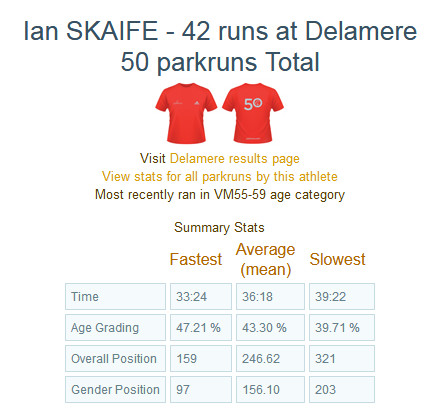
I had printed my Park Run bar code which you need to get a time for your run. Noticing it had Michael’s UK mobile number as an emergency contact, I text him to say I was doing the run but not sure what he would do if someone called about me at 6pm local time in Australia!. He wished me luck. About 300 of us gathered at the start and after a few brief instructions about the route and procedure at the finish we were off. Every runner is deemed to start at the same time and the 3o seconds or so it took me to cross the start point would be irrelevant as it is not the sort of event where seconds are important. The aim is running against yourself and improving your times over the weeks and months.

The course at Delamere is uphill through a forestry track for about 3/4 of a mile then a circuit of Blakemere Moss, a large pool in the middle of the forest, then back down to the start/finish near the visitor centre. I found myself at the very back of the run. I was ready for this as the main goal was to see if I could jog at a pace just above walking for the whole distance. Alyson & I had walked the course a few weeks earlier which helped as I was familiar with the terrain and where we were going. Having done quite a few 10k’s and half-marathons over the years I also knew that there would be some who set off like Usain Bolt for a few hundred yards then come to a complete stop and walking very slowly. So it was that a mother and young son were doing exactly that, and I spent the whole of the run going past them and waiting for them to go past me. Similarly a young woman and her mildly overweight friend were doing the same ‘shuttle runs’. They would have managed a lot better had they heeded the advice from the volunteer marshal at the second check-point to do more running and less gossiping!  They encouraged each other and I saw them at the end talking about doing it again next week; exactly what this event is all about.

It was all I could do to keep running in a vaguely straight line and not to trip as my footing & balance are less sure than they had been 10 years previously. As we jogged by the point where the track and pool meet the B-road through the forest, the sun came through an opening in the trees, and I took a quick glance at my watch. 20 minutes. At the front of the ‘race’ there were competitive types and the top 10 would already have finished. They would have had their cup of coffee and be in the car on the way home by the time I got to the end. By my estimate we were about halfway round, my breathing was steady and my legs had started to feel stronger and less heavy. This could have been the point where my enthusiasm got the better of me, so I resisted the temptation to start passing a few of those in front. I tripped over a tree root and came close to being face-down on the muddy ground!

Soon we were back on the track down to the Start/Finish line and I did indeed pass a few people on the way. The young lady marshal who earlier had told the two girls to stop chatting, shouted words of encouragement and said I was looking great. It lifted my spirits and I started to get emotional. Around four years ago I was training for a triathlon when I suffered a brain injury. After 10 weeks in hospital during which time I had not been able to speak, move my right side or stand, I took my first steps unaided on the day my mum died suddenly a week after visiting me in hospital. I also had a total hip replacement in 2013. My physio Annette specialises in using an hydrotherapy pool to remake connections between the brain and muscles which have been lost. After a year Annette got me standing correctly  and last November, rather than walking like a stiff-legged robot, she taught me how to run again. With exercises for both my core and improved balance, I resolved at New Year to start jogging again. Until yesterday my furthest distance was less than a kilometre on a gym running machine. I was tearful as I gave thanks to God for my faith, the support of my  family, friends and the prayers of my church fellowship that had got me to this next stage of my recovery.

Driving back home my car which reads texts to me announced that Park Run had messaged and interpreted 39.22 as ‘thirty nine hours and twenty two minutes’!

More Park Runs at Delamere and volunteering on other weekends are definitely on my list. My brother Andrew has a charity entry for this year’s Great North Run in September. If I can continue to improve you never know….at my present rate I could finish in less than 5.5hrs!

In honour of 23rd April milestone this year here are two Shakespeare quotes that you may think apply to my first blog post:

  • “Wisely and slow; they stumble that run fast.” Romeo and Juliet

  • “You speak an infinite deal of nothing.”  The Merchant of Venice

And a Biblical one to end on:

“…let us throw off everything that hinders and the sin that so easily entangles. And let us run with perseverance the race marked out for us….” Hebrews  Chapter 12 v1.

For more information on Park Runs and to find the nearest one to you head over to 
www.parkrun.org.uk  
Theology Everywhere

Discuss theology today to transform tomorrow

verbalising

ruminations on life at fifty ... or so ...

Discover WordPress

A daily selection of the best content published on WordPress, collected for you by humans who love to read.

The Daily Post

The Art and Craft of Blogging

WordPress.com News

The latest news on WordPress.com and the WordPress community.