Why (and how?) Rachel Reeves should fix the broken tax system.

There has been much comment over recent weeks on what should happen and my two-pen’orth won’t add much to the debate. However, the ideas I put forward are ones raised at a fringe meeting at the Labour Conference I attended as a delegate all those weeks back in early October. The meeting had a panel consisting of a chair from ‘Nesta’, a charity trying to stimulate debate on topics in this case finance, two Labour MPs, and two economists who had been advisors to the treasury in previous governments. I was allowed one of the first question and had been desperate to put my idea to a wider audience to see how it landed. This was what I said (paraphrased).

Does the panel think that combining Tax and National Insurance into one type of ‘Income Tax’ allied to a graph where the rate of tax starts off low and curves up in very small increments, such that the more you earn the higher relative percentage of tax you pay, could be a way forward?’

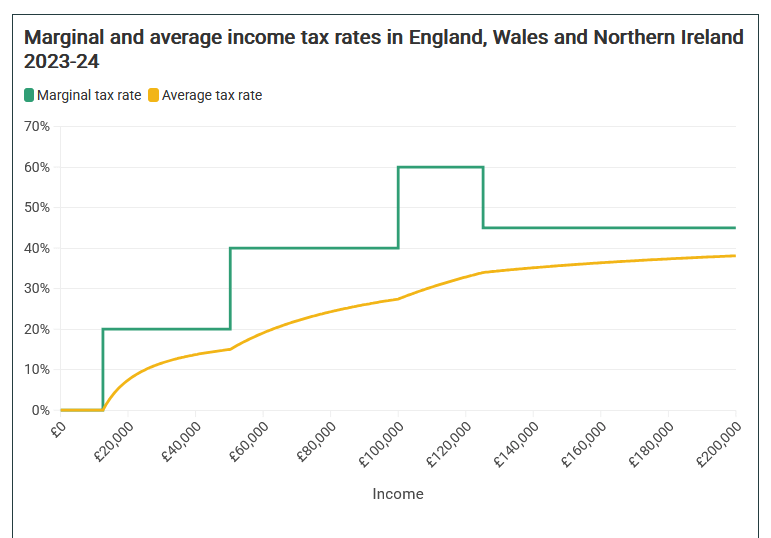
I was amazed that this landed extremely well particularly with the economists and I justified it by saying this had been proposed by the IFS in an article over ten years before. It has the beauty of overcoming the ridiculous cliff/edges/boundaries between the rates as shown below:

In my proposal the yellow line would not ‘tail off’ but increase steeply as earnings increase and keep going up even to about 80% or more when you get into individual earnings of £Millions. This graph is just for current income tax rates and doesn’t include NI and it’s various thresholds and bands – which is even harder to understand!

It is clear that most people don’t really understand why we have National Insurance – many think it relates to paying for the NHS/Pensions in some way that is not understood, and certainly the ‘stamp’ as it was called even when I started running payrolls in the mid-80s was a thing. The links are still there to benefit payments but in reality it all goes into the general taxation pot.

You can watch the event on this link.

https://www.nesta.org.uk/event/autumn-budget-2025-what-would-you-do-to-tax-and-spend-labour/

My question comes 23 minutes 30 seconds in and after some discussion on pensions from another questioner the panel come back to my question after three or four minutes. They discuss simplifying the whole tax system and later taxing unearned income in the same way as earned income.

Employers Contributions would be set as a percentage -say 5% of the curve amount -so also increasing with earnings. You could add to it things like minimum state or private pension contributions as per auto enrolment currently.

The reason most chancellors won’t do it is because it allows the press to say that the basic rate of ‘Tax’ has jumped from 20% to 28% and for higher earners it will go from 40% to 50% and for very high earners from 45% to 55%. But this over-simplification misses my point. That may be the rate for some of a person’s earnings but the ‘effective rate’ taking into account tax free earnings and different bands varies considerably. With some middle earners paying a higher actual rate than those on very high wages.

This brings me to my second ‘idea’ as prompted by the event at Conference. Why do we tax ‘unearned income’ and wealth differently to wages/salaries. The arguement goes that business owners and ‘entrepreneurs’ put in capital to start business and need to be rewarded for that risk. I agree, but when taking dividends or shares or capital gains adds to wealth but is taxed at lower overall rates, is that fair?

Why, as someone with a high state pension and a good private pension – which increases annually via the ‘triple lock’ – just because I am over 66, do I stop paying National Insurance on my earnings? This point was put by Tim Leunig, one of the economists on the panel (Visiting Professor in Practice at the London School of Economics’ School of Public Policy), who, like me lives in a high value house that is paid for, and has savings which keep growing year on year with little effort. Meantime our children and grandchildren some of whom are relatively well paid as IT professionals or teachers are struggling to get on the property ladder and finding day to day spending on children’s education and clothing and household bills tough going? As older people our cost to the NHS for instance grows every year. The old saying ‘..well we have paid our contributions for 40 years..’ may be true but why does that mean we stop?

While we were discussing with the panel Tim suggested that if you wanted to be really radical you could look at our ‘Tax Code’ and all the various regulations and minor taxes we have and scrap most of them which tinker around the edges and put it all on income/wealth. He has argued this in this week’s Substack blog’ he wrote along with another good idea of getting everyone together to design a system whereby we in the UK can become an ‘average tax-level’ nation comparing us with other countries. Follow this link for more detail – What should the Chancellor do this week?

Clearly there are many implications and details to be worked out, and wholesale changes in payroll systems will be needed. Better brains than mine will be able to work out exactly how the curve grows and how it relates to the actual tax receipts given the earnings spread. The advantage of this method is that at each budget the Chancellor will increase or reduce by a small percentage the rate at a point on the curve – say the mean salary level – depending on whether it has been a ‘good’ or ‘bad’ year. This flows ‘up and down the curve to the actual percentage paid on esrnings. The actual scale would increase with inflation.

So, rather than fiddling around the edges and the so-called ‘Smorgasbord’ of small taxes that has been trailed, Rachel Reeves could be known as a reforming chancellor who changed the debate on tax and came up with a system which is much more transparent and truly ‘progressive’. Wealth inequality is a serious issue in this country and I believe this will go some way to levelling the issue.

It would also mean that the whole industry of ‘tax accountants’ advising people which scheme to hide their money in, would go, to be replaced by one focussed not on ‘compliance’ but helping business grow their companies by systemising, getting some real increased productivity and growth.

VAT and ‘consumption taxes’

A quick point on another of Tim’s ideas we talked about in October was to reduce the rate of VAT but widen the scope. The example he used, was ‘Children’s Clothes’ – Zero Rated at present. But this means that a one pound babygro from Primark and a more expensive one from M&S and an even more expensive one at £190 from Burberry are all zero-rated…is that right? The pooerst households pay more in indirect taxes such as VAT and Council Tax as they ‘have to’ spend rather than save.

Some quick figures to provoke you while you are thinking about this. How do you compare…?

  • Average Earnings excluding bonuses in September 2025 in the UK were approx £35,000 for a full-time worker.
  • The Minimum wage will increase to £12.71 per hour from next April. £24,785 for a 37.5 hour week.
  • The Real Living Wage – as calculated by a foundation is £13.45 per hour outside London from next May. £26,226 annually for a 37.5 hour week.
  • 10% of people in the UK have no cash savings and another 21% have less than £1,000. Nearly half of 18-24 year olds have less than £1,000 saved.
  • There is ‘pensioner poverty’, with 11% having no savings at all.

Coronavirus week 19 – That didn’t last long…second wave starting

A short heatwave but signs of another wave of infection.

According to one of the weather forecasters I heard, to qualify as a heatwave there needs to be a period of three days of higher than average temperatures, but ours this week was only one day. It was 20-21 degrees on Thursday and reasonably sunny, by Friday afternoon it was 35 but by the evening it was cloudy muggy and raining and on Saturday it was back to 21 with a cool wind and some showers.

At the end of my last blog I suggested that I may not do another for a few weeks as things appeared to have reached a ‘steady state’, with falling numbers of deaths and a ‘levelling off’ in the number of infections. That idea didn’t even last for 24 hours. It wasn’t that a couple of people were kind enough to comment on my Facebook post saying that they enjoyed reading them; it was watching Channel 4 News on Monday evening.  It’s a way of getting updated on current events that I get the most from. All day ‘rolling news’ is a great thing, something we never had in ‘the good old days’ when there were only three or four terrestrial television channels. The problem is that even  BBC News 24, whose coverage I also enjoy, only touch the surface of a story. I don’t want to sound like a ‘grumpy old man’, but programme makers appear to think we are incapable of listening for more than 90 seconds, or in ITV’s case, that we also need the chance to win a £150,000 prize of gifts we probably don’t need.

Anyway, it was watching the news on Monday evening that there were so many items I wanted to write about, many of them linked to each other or to coronavirus. Hence this blog with all the topics originating with the items on that edition.

Holidaymakers returning from mainland Spain complaining that there were more cases of the virus on one caravan park in Shropshire, than the whole of the Balearic Islands, and they felt safer in a country where everyone was obeying the rules on social distancing and hygiene. By the evening, the islands had been included. Transport minister Grant Shapps went to Spain but had to isolate when he came back on Wednesday. I admit to thinking that I would go if insured, and suffer two weeks quarantine or extend the holiday as I was sure there would be extra capacity. By the end of the week, however, as local lockdown was declared for large parts of Greater Manchester, Lancashire, and West Yorkshire, like others I suspect, I was more doubtful.  I listened to arguments about having to declare whole countries as giving a simpler message than trying to exclude certain areas, and had to agree. Whilst the Canaries are further from mainland Spain than Venice is from London, it would not be difficult to get around the rules by taking a flight from the mainland to the islands and return from there. There is also the danger of catching the virus and having to be in hospital in a foreign country possibly for a long time where the care may be excellent, but my Spanish is almost non-existent.

Despite early criticism there appeared to be more acceptance later in the week when the rates of infection in Belgium (which had one of the highest rates in Europe in the earlier part of the pandemic), and Luxembourg, were rising very quickly. It seems a ‘second wave’ is starting to spread across Europe.

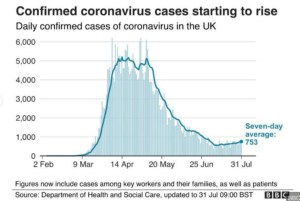
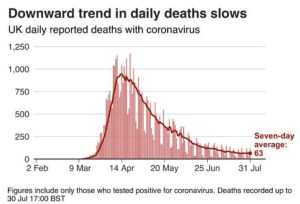
In the UK cases were definitely rising with average daily cases approaching 800 at the end of the week. The fact that average daily deaths was still falling to about 60 at the end of the week, could point to two things; that the lag between cases and serious illness is not showing yet, or that it is mainly younger people getting infections and they don’t generally suffer with the more life-threatening symptoms.
Boris says ‘get on your bike’…

Boris encouraged us (like Norman Tebbit in 1981) to ‘get on our bikes’, but this time not to look for work, but in an effort to fight obesity. The web site handing out free £50 vouchers to get bikes repaired crashed due to demand. Not surprising for £2.5million of untargeted benefits. Many would be snapped up by those who could well afford to repair the bicycle that had lain neglected in the garage for years. It all seemed a bit of a headline-grabbing gimmick. Boris has previous on this topic. As Mayor of London he encouraged people to use a Transport for London (TfL) scheme for hiring simple bicycles parked in many areas in the city to travel to other areas. Registered users could take any of the 5,000 cycles from any of the 315 docking stations in central London to any other for a relatively small fee. This was in 2010 and proved successful. The original bikes were sponsored by Barclays bank with a blue highlight. The scheme was transferred to Santander bank with the current ones mainly red and there are now 11,000 bikes and 800 ‘stations’ spread across 40 square miles of London. 

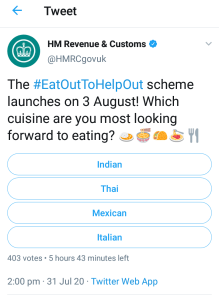
In a week of mixed messages I had one alert from GOV.UK announcing a ban on buy one get one free offers on unhealthy food, and the next one reminded me that I could go to the pub or restaurant and taxpayers will give me 50% off any meal. This is for as many times as I like. So presumably I could get a first course with chips, followed by a chocolate brownie/ice cream / sticky toffee pudding (with extra chocolate sauce) for 12 days (it’s only Monday-Wednesday) from 3rd to 31st August. All washed down with a nice glass of wine or beer – but don’t worry the discount is not off those and they don’t contain many calories. Even HMRC were putting out Tweets about the offer – even if they couldn’t bring themselves to think people might want other European or even British menus…?
The idea of making it a requirement to put calories on all restaurant menus is a good one, but many pubs and fast-food sites do that now. The problem appears to be the ‘education’ needed to allow us to make the healthier choices.

Channel 4 News had an interview with chef Jamie Oliver (who also has years of campaigning for us to make more healthy choices. He made the point that the good quality food is more expensive, and those with less money can only afford the ‘less good’. Rather than taxing sugar, he suggested that perhaps we should be subsidising healthier food.

It could be that this approach to obesity, exercise and healthy eating was related to Boris’s own experience of Covid-19 and the realisation that his own health may have meant not seeing his fiancee and young child? There are many in the Conservative Party who decry the so-called ‘Nanny State’ (itself a posh expression), but a government that claims to have been ‘following the science and experts’ appears in the past to have paid more attention to the food and drink industry lobbyists than ‘health experts’ when deciding policies. Like tobacco before it, the ‘curse of sugar’ needs mass cultural and social change if it is to be effective.

What it doesn’t need is ‘fat-shaming’ and judging people by their apparent excess weight. The majority of our population have some problems maintaining a healthy diet. No one wakes up one day and finds themselves several stones overweight.  The busyness of our lives and availability of cheap food make it hard to change. I have the luxury of a good income, the space to own an exercise bike, and a pleasant area go out for a run. In my case I have made a conscious decision to change, and am currently about a stone less in weight than I was at the start of March. I also know it will be a struggle to keep this way once we get back to eating out again on a regular basis.  I often wonder how people in poverty-stricken countries who have to walk miles to get clean water or a meagre amount of food to take back to a house with no electricity, would make of our kitchen cupboards and American-style double refrigerators. As if that wasn’t enough for them to take in, imagine trying to explain that we then pay a membership of £360 a year for the privilege of driving, three or more times a week ,to a large warehouse full of bicycles that don’t move and treadmills. All in an effort to lose the excess body mass we have!

The next item of news last Monday was one on rehabilitation from the after effects of having Covid-19, or one of its variants dubbed ‘Long Covid’, as the fatigue and memory issues and muscle weakness can last for months (maybe even years, we don’t know yet). The item showed a group using a gym closed due to lockdown, and sharing experiences with people who have been through the same thing.  This is just like my journey after brain injury, when I found the charity that brings together people from all parts of society and background to share with each other. Access to physio and rehab services across the country is patchy at best, but so vital. All of this should have happened years ago. There is a small charity that works with people who have been in intensive care for long periods of time. Patients may be physically well, but the mental effects can last a very long time.  If this step of physio is missing or not done thoroughly, there is more of a cost to the country in terms of lost working days and productivity, as well as actual treatment, medicines, and care in old age. It makes no sense health wise or economically, not having these services readily available for everyone.

The final two articles on the Monday evening news was one that US president Trump’s security advisor had tested positive, after a trip to Florida ,where there is a rise in cases of Covid-19.  Then that Brazil’s president Bolsanaro has been reported to the International Criminal Court, by an umbrella group representing health worker unions and social care organisations, for ignoring and mishandling the crisis. Their claim of crimes against humanity amounting to genocide are unlikely to be taken on by the ICC but demonstrate the strong feelings in the country.  There was an interview (on BBC news!) with a doctor in a hospital in Sao Paulo stating that they had people turn up at hospital still claiming it was all false and a hoax – but when they ended up in intensive care they say ‘doctor don’t let me die and tell my family to take care!’ 

Other news last week.

  • We watched Jimmy McGovern’s powerful drama imagining the life Anthony Walker a young black man killed aged just 18 in 2005. He wanted to become a barrister. His mum asked the writer to show him qualifying against all the odds, marrying his (white) girlfriend at the time of his death, having a child and saving his best man from a life of crime by taking him to live with his family after becoming destitute. It brought me to tears. 
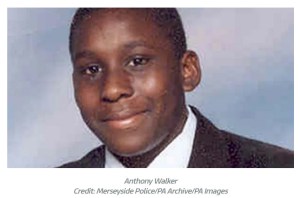
    Anthony’s mother, Gee Walker, has setup a trust in his name and as a Christian she believed this was part of Anthony’s legacy.  This will be something that is hard for those without a faith to accept. But I believe, as his mother hopes, that despite not becoming a civil rights lawyer and going to America, Anthony’s legacy through the work his mum does, and the effect of this drama, means more people could be touched. Some small comfort to his brave mum.
  • Late Thursday evening health secretary Matt Hancock announced that Greater Manchester, East Lancashire and parts of West Yorkshire were told to go into a ‘local lockdown’. This was due to a ‘spike in cases’ from people going into each other’s homes. There was some confusion and a great deal of contention from the Muslim population as it was the eve of Eid one of the major feasts of Islam. One leader likened it to cancelling the Christmas Day at 9 o’clock on Christmas Eve, although another did acknowledge that when the original lockdown was imposed many Christians had to miss Easter Day celebrations.
    Writing as someone who is doing project work for a company in Sale, there was concern that some members of the team who had only returned to work because their parents could look after the children again, may have to go back on furlough until the lockdown was over.
  • Another member of the team at the company developed some symptoms and was relieved when their test came back negative – but they had to wait over 3 days for the result.
  • One report from Manchester showed a street where many of the rainbow posters drawn to put in windows to celebrate the NHS Heroes were faded and torn….perhaps a sign of how quickly we forget?
  • One of the most worrying statements last week was from Professor Chris Whitty as he stood next to Boris Johnson at a Downing Street press conference on Friday announcing that the opening of face to face beauty treatments and bowling alleys was to be delayed for a further two weeks at least. He said

“I think what we’re seeing from the data from ONS, and other data, is that we have probably reached near the limit or the limits of what we can do in terms of opening up society.

“So what that means potentially is that if we wish to do more things in the future, we may have to do less of some other things.”

He expanded to say that if we are to get children back to school in September we may need to close some other places (pubs perhaps?) or put new limits on what people can do and who they can meet.

It really does feel this week that we are not in a ‘steady state’ anymore….!

How was week 19 for us?

After weeks of training and struggling with IT and ‘HR’ Alyson finally managed to book a few shifts on NHS 111 service…but only as reserve. She responded ‘I don’t want to be a reserve I want to be on the first team!’ Her wish came true on Friday when she was given just 20 minutes notice that she was working an 8-hour shift. This was due to late cancellations by two other people on the shifts. The deal is that people are supposed to get 24 hours’ notice. So, she managed to cancel one and worked 4-8pm. It was a tough shift, not only with the types of call, but using the systems for the first time. Reflecting afterwards Alyson felt that she had helped people at a difficult time, and knew that the next shift(s) would be better.

We both signed up as volunteers for vaccine trial in conjunction with the NHS and a pharmaceutical company. Unlike last week’s attempt we both passed the age & health requirements.

After the very warm day of Friday we went to Coventry for a ‘socially distanced picnic’ in a large park to meet up with Alyson’s sister and brother and their families in  Coventry. It was good to see everyone again including our two boys and our nieces. There were three generations and one of our nieces is expecting her first child in October  – she works in a hospital so was concerned about getting too close to us, but I think she enjoyed the day. The only member of the family who couldn’t come was our nephew who returned from the Spanish Balearic Island of Majorca so was self-isolating in his London flat.

On Sunday I attended my now weekly Zoom service at Westminster Central Hall Methodist Church. It was great to be part of a ‘congregation’ of over 1,100 people sharing in worship. Rev Howard Mellor gave an amazing sermon on the ‘original picnic’, the feeding of the 5,000, a miracle told in exactly the same way in all four gospels. Howard pointed out a small word that I had not noticed before – grass! Despite the disciples only having meagre rations of five loaves and two fishes, and thinking that was not enough to feed the crowd, Jesus managed to make it sufficient for all the people (more than 5,000 when including the women and children) and ‘still there were 12 baskets left over’. All this in an area which, because of the grass, was clearly a place of abundance where crops could grow. Howard’s message to those of us hoping to be modern day ‘good disciples’ was however little (in terms of skills and gifts) we think we have, if we give it to Jesus, he can help us achieve so much more than we ever believed.

Stay safe and let’s see if there is enough for another blog next week!
Life & Death – Coronavirus week 2

Introduction

When I attended a meeting of our Constituency Labour Party four weeks ago, I was shocked when one of our local councilors, who looks after the crematorium, gave an update on contingency planning for cornavirus. They informed us, in a matter of fact way, that a large plot had been identified capable of burying hundreds of people in a mass grave. They wouldn’t have capacity to hold funerals or cremations. Families could get bodies exhumed at a later date but there would be no guarantee depending on the numbers.  It really shook me.

Thinking back to when I was first aware of the virus being a potential issue outside China, it was ‘Brexit Day’ at the end of January. We had visited friends on The Wirral when the first coach load of UK citizens arrived at Arrowe Park hospital a couple of miles away. That evening we travelled to London and the taxi we took to our hotel was delayed by the large gatherings celebrating at Parliament Square and other streets which were closed. Over the weekend we caught crowded Tube trains, went to concerts, shows and busy restaurants in the West End. No social isolation, and little extra hygiene measures then. We did pass a light comment when we walked through Chinatown that perhaps we ought not to have gone that way…

Given the pace of the changes since then and the prospects of even worse to come I decided to journal some events and my thoughts in more detail. I want to do this weekly so that when I look back in months’ or years’ time, I can see how my views changed with each dramatic turn.

I also want to explore several aspects of the crisis that may fundamentally change our country, our society and some of the norms we have taken for granted.

None of us know how this will end. We all hope that, like other crises both natural and those as a result of human action, we will come through it . But currently nothing is certain.

Why ‘Week 2’? From a personal perspective this is the end of our second week of serious ‘lock-down’ after some of the less restrictive guidelines and advice. The World Health Organisation (WHO) on 12th January 2020 officially confirmed the new virus and the four Chief Medical Officers (CMOs) in the UK moved the threat from low to moderate on 30th January.  For those in the front-line and our NHS service this is probably week 9.

With no training as an ‘investigative reporter’ and short of time for detailed research, the articles will be my own interpretation of ‘facts’ gleaned from mainstream news, written articles and ‘official’ web sites from some of the organisations involved.  My experience of being a secondary school science and maths teacher, director of operations & IT for a large retail pharmacy group, self-employed IT & business consultant, setting up systems for an accountancy practice, gives me some insight into a variety of processes and analysis. I have produced statutory accounts for a large Methodist Circuit and local Head Injury charity.

This is a public blog so feel free to join in ‘the conversation’, give alternative views, tell me where I am wrong – or right!

Whatever our views or beliefs, I think the majority would agree that we are living in ‘strange times’.

Outline of topics for discussion.

In thinking about what I need to put in the blog some large themes developed in my mind. It is hard to separate out specific topics and most are linked to one or more of the others. This is my initial list in alphabetical order rather than significance.

  • Economics
    How we use our wealth to best effect for what both main political parties agree should be ‘for the many not the few’. How corporations, public bodies, small and medium businesses, wealthy individuals, and every individual supports each other. Do we need a fundamental rethink and ‘reordering’ of past conventions?
  • Education
    Including science and mathematical modelling. Learning the lessons of history. How people react to news and the spread of ‘fake news’.
  • Faith
    In times of trouble and potential death the systems and personal and group support people of all faith and none turn to.
  • Globalisation
    How the virus and the news of it spread from China to the rest of the world. Transport, goods, news channels, sharing vital research and information. How world governments, leaders and organisations like the G20 co-operated or put self-interest before the wider good.
  • Health & Social Care
    Some would say this is the main topic. Clearly it is a health issue with Coronavirus at the centre. Our National Health Service (NHS) is at the forefront.  There are deep concerns over the elderly and vulnerable members of our society who are in hospitals and the care system.
  • Politics
    In the general sense the ways which people make choices, and in a specific sense the way different political parties have reacted and communicated. As I recently joined as a member of The Labour Party, Keir Starmer is elected the new leader as I write. We need to co-operate with the Conservative government but not be afraid to question or hold them to account now, or after it is all over.
  • Science
    The science behind the virus. The knowledge needed to trust the advice of ‘experts’. The way science will help the end the crisis.
  • Society
    How we have reacted and changed in the ways we interact with our neighbours and fellow citizens. The voluntary sector and the good and bad aspects of people’s behaviours. How we enforce those behaviours, and do we need more state surveillance and control to prevent similar crises in the future?
  • Technology
    This is the first time of real crisis when we have seen some of the ‘good’ that technology can do, but also the dangers of misinformation spread. Social Media can also be a force for good, but also a source for terrible harm.

In looking at these topics I will attempt to remember that there are other huge issues facing our world such as poverty, war, conflict, drought, famine and climate change. Many of these seem to have dropped completely from our news agenda. Significant parts of daily life such as arts, culture, sport and of course ‘socialising’ have disappeared completely overnight, and the effect on business is incalculable.

Thoughts at the end of week 2

We are very fortunate that the reality for me and my immediate family is nothing more than a minor inconvenience. We are semi-retired, relatively well off, have a large home with a garden to move around in. Getting food and essentials has not been a problem. Our two adult sons are working from home and still in full employment.
We have got the technology to hold virtual family, friend, church and social club meetings. We are using the time to do jobs around the house and garden, reading and exercising using an indoor bike and Wii Fit console on the TV.

No one we know in family or friends has had the virus (or to be correct has had serious symptoms). It all seems a bit surreal and like a Hollywood movie with empty streets in major cities around the world, and footage of overwhelmed medical facilities.

The daily government briefings are part of our rhythm of the day. They vary in usefulness and the messages can be confused and some ‘facts’ are found to be unreliable or even ‘spin’. The journalists’ questions are sometimes not the ones we need, but lately at least the presenters go back and invite supplementary questions.

While every loss of a life is awful, the rise in the last week in our own country is from passing over 1,000 last weekend to 4,932 now. The numbers in countries that we are supposedly following two weeks behind such as Italy and Spain are 15,887 and 12,418. This is getting serious.

To end I want to quote part of a letter our Chair of District Rev Helen Kirk sent us today as we start our journey through Holy Week from Palm Sunday to Easter Day. Note the use of the word ‘dis-ease‘….

Each year I challenge people to engage with Holy week for although it is not a comfortable place to be, we can too easily pass from the triumph of Palm Sunday to the joy of the Easter Day and miss the impact of the six days in between.

Perhaps that ever darkening week is one we can relate to more than ever this year as we live with the uncertainty, the anxiety, the constant underlying dis-ease that we carry for ourselves, our families, our church and our communities.

And yet for all, life is extraordinarily different and for many difficult; Spring is still arriving with a pace around us. As a novice gardener there is something extremely hopeful about planting seeds and watching as the new shoots grow. And they do grow, regardless of what is happening in my life, the plants in my garden and the seeds in my greenhouse are emerging with new life and beginning to bloom.


Celebrating my 50th & moving on…

50th Park Run - Feb 2018

This week I passed two significant milestones.

Tuesday was exactly 5 years since my neurosurgeon formally discharged me from his care, following treatment for a serious brain injury that paralysed the whole right side of my body and left me unable to speak. It was 6 months after I first went into hospital.

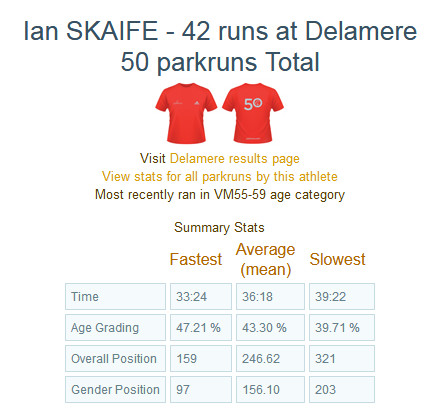
Yesterday I completed my 50th Park run since starting to run again almost two years ago. Although it was my fastest time for several months, that was completely unimportant. Being able to enjoy the feeling of running, breathing the clear fresh air, hearing the birds sing in the trees against bright blue sky – that’s what meant the most. Thanking God for my journey and the changed person I have become is equally important.  As I ran I thought about my family, church fellowship, friends and the medical team who have helped me get to this point.

My wife Alyson (my greatest supporter of all) often tells me that I should ‘move on’. This does not mean to forget; just not to dwell on the past and look more to the future. I feel that this is the time to take up that call.

I will always have my current symptoms of fatigue, memory issues, weakness and balance problems, but I am determined that these will not stop me from seeking new challenges and adventures.

We never know what will happen in the future, and the fact that a friend from church was diagnosed with a brain tumour and had a stroke a few weeks ago, is a painful reminder of that.

I will wear my red 50th Park Run shirt with pride and, all being well, will get my black 100th in the next two years – I tend to run once a fortnight.  By that time retirement may have happened and who knows where that will lead us.

For now my faith is stronger, my confidence has returned, my stress level is controlled (partly as I can’t hold too many things in my mind so forget what I should be worrying about!), and my general health is reasonable.

Time to ‘move on’…


Legion d’honneur

Julie’s dad is a kind gentle soul and is always asking how I am. I guess we will never quite know what our parents went through in the war (hopefully). The memories will never quite fade completely. My mum was always sad when she remembered my uncle Wilf, her brother shot down in June 1940 flying back from a sortie over the channel. He was in his twenties and mum was a month before her 9th birthday…

jules's avatarverbalising

Last month my father was the recipient of the highest decoration in France, the legion d’honneur. This medals were awarded at Yorkshire Air Museum as a way of honouring and thanking those who fought and risked their lives to secure France’s liberation during the Second World War.

I had always known he landed on a Normandy beach in 1944 and had heard some of the ‘funny’ stories of the war, perhaps because the horror of war was not a story anyone would want to tell. Even when I had watched Saving Private Ryan many years ago and Dad had said that he had been on the next beach, I had hardly wondered at how he might have felt, perhaps because the imagery in this film was linked to an American flag and an American story.

Only when our family sat listening and watching as five, frail British nonagenarians were awarded their medals and I saw the…

View original post 16 more words

The best 5k of my life – even if it took over 39 hours!

Yesterday marked a number of significant ‘milestones’ – an apt word for taking part in my first ever ‘Park Run’. 23rd April is our school friend Keren Harvey’s birthday. Protocol dictates that I shouldn’t give her age away, but it was 39 years ago that Alyson & me started ‘dating’ at Keren’s 18th birthday party.

I had been meaning to take part in our closest Park Run at Delamere Forest, situated between Northwich & Chester, for several weeks. Our son Michael could not run with me, having had a significant milestone of his own this week. He moved to work in the Sydney office of his company for at least 3 months. I had suggested to Michael that we do the run last Saturday. Apart from being busy with his packing, he observed that the publicity over a council starting to charge Park Run for using paths, which until then had been free, may have meant a larger turnout than usual showing their support for the organisation.

Checking the forecast all week it seemed that it might be wet. Being a fair-weather runner and unsure of my footing in slippery conditions, the prospects didn’t look good. On Friday I was mentally and physically tired from the events of the previous two days. However, on Saturday the sun was shining and it was a crisp, frosty start and I felt full of hope (and energy!). After an early breakfast I set off at 7.30am with the aim of arriving early, to see how the organisation of the run worked and to check the parking situation. I got to the main car park for 8am, and it was deserted save for a group of seven or eight of varying ages carrying logs and weights ready for an early morning workout with a personal trainer.

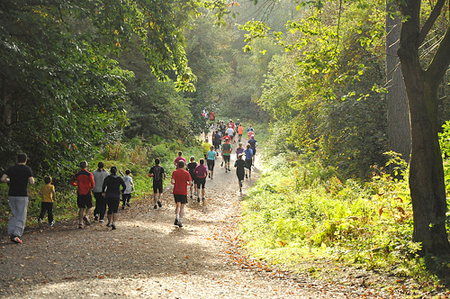
In the hour until the run started I checked out my fellow runners as they arrived and filled the car park. There were running club groups from Warrington, Ellesmere Port, with vaguely ‘Scouse’ accents, and others more from the more local rural villages in Cheshire, with less harsh voices. There were families with young children and pushchairs. There were couples of all ages and shapes in shockingly tight bright Lycra. A few singletons who, like me, appeared to be ‘first-timers’ arrived and jogged nervously round the car park and found the start about 200 yards away on the edge of the forest.  Then there were the inevitable dog-walkers.

Wearing my tracksuit jacket, thinking it may be cold, as 9am approached the sun shone and it was warm enough jogging on the spot. The top came off to reveal my 2006 Great North Run(GNR) t-shirt. I had chosen this partly as it is cotton and doesn’t rub when I run, but mainly to remind me of the last time I did an organised run. I completed my fifth GNR in a time of 2.5hrs and raised over £2,300 in memory of a church member who had died of bacterial meningitis just after Christmas that year. It was very emotional as I got to the home straight on South Shields sea front and imagined Mike running alongside me and encouraging me to finish. Today’s run would turn out to be equally emotional.

I had printed my Park Run bar code which you need to get a time for your run. Noticing it had Michael’s UK mobile number as an emergency contact, I text him to say I was doing the run but not sure what he would do if someone called about me at 6pm local time in Australia!. He wished me luck. About 300 of us gathered at the start and after a few brief instructions about the route and procedure at the finish we were off. Every runner is deemed to start at the same time and the 3o seconds or so it took me to cross the start point would be irrelevant as it is not the sort of event where seconds are important. The aim is running against yourself and improving your times over the weeks and months.

The course at Delamere is uphill through a forestry track for about 3/4 of a mile then a circuit of Blakemere Moss, a large pool in the middle of the forest, then back down to the start/finish near the visitor centre. I found myself at the very back of the run. I was ready for this as the main goal was to see if I could jog at a pace just above walking for the whole distance. Alyson & I had walked the course a few weeks earlier which helped as I was familiar with the terrain and where we were going. Having done quite a few 10k’s and half-marathons over the years I also knew that there would be some who set off like Usain Bolt for a few hundred yards then come to a complete stop and walking very slowly. So it was that a mother and young son were doing exactly that, and I spent the whole of the run going past them and waiting for them to go past me. Similarly a young woman and her mildly overweight friend were doing the same ‘shuttle runs’. They would have managed a lot better had they heeded the advice from the volunteer marshal at the second check-point to do more running and less gossiping!  They encouraged each other and I saw them at the end talking about doing it again next week; exactly what this event is all about.

It was all I could do to keep running in a vaguely straight line and not to trip as my footing & balance are less sure than they had been 10 years previously. As we jogged by the point where the track and pool meet the B-road through the forest, the sun came through an opening in the trees, and I took a quick glance at my watch. 20 minutes. At the front of the ‘race’ there were competitive types and the top 10 would already have finished. They would have had their cup of coffee and be in the car on the way home by the time I got to the end. By my estimate we were about halfway round, my breathing was steady and my legs had started to feel stronger and less heavy. This could have been the point where my enthusiasm got the better of me, so I resisted the temptation to start passing a few of those in front. I tripped over a tree root and came close to being face-down on the muddy ground!

Soon we were back on the track down to the Start/Finish line and I did indeed pass a few people on the way. The young lady marshal who earlier had told the two girls to stop chatting, shouted words of encouragement and said I was looking great. It lifted my spirits and I started to get emotional. Around four years ago I was training for a triathlon when I suffered a brain injury. After 10 weeks in hospital during which time I had not been able to speak, move my right side or stand, I took my first steps unaided on the day my mum died suddenly a week after visiting me in hospital. I also had a total hip replacement in 2013. My physio Annette specialises in using an hydrotherapy pool to remake connections between the brain and muscles which have been lost. After a year Annette got me standing correctly  and last November, rather than walking like a stiff-legged robot, she taught me how to run again. With exercises for both my core and improved balance, I resolved at New Year to start jogging again. Until yesterday my furthest distance was less than a kilometre on a gym running machine. I was tearful as I gave thanks to God for my faith, the support of my  family, friends and the prayers of my church fellowship that had got me to this next stage of my recovery.

Driving back home my car which reads texts to me announced that Park Run had messaged and interpreted 39.22 as ‘thirty nine hours and twenty two minutes’!

More Park Runs at Delamere and volunteering on other weekends are definitely on my list. My brother Andrew has a charity entry for this year’s Great North Run in September. If I can continue to improve you never know….at my present rate I could finish in less than 5.5hrs!

In honour of 23rd April milestone this year here are two Shakespeare quotes that you may think apply to my first blog post:

  • “Wisely and slow; they stumble that run fast.” Romeo and Juliet

  • “You speak an infinite deal of nothing.”  The Merchant of Venice

And a Biblical one to end on:

“…let us throw off everything that hinders and the sin that so easily entangles. And let us run with perseverance the race marked out for us….” Hebrews  Chapter 12 v1.

For more information on Park Runs and to find the nearest one to you head over to 
www.parkrun.org.uk  
Theology Everywhere

Discuss theology today to transform tomorrow

verbalising

ruminations on life at fifty ... or so ...

Discover WordPress

A daily selection of the best content published on WordPress, collected for you by humans who love to read.

The Daily Post

The Art and Craft of Blogging

WordPress.com News

The latest news on WordPress.com and the WordPress community.