Life & Death – Coronavirus week 10 – taking things one day at a time

Week  10 in daily format.

I usually start these blogs at the end of the week but decided today that I will try doing a ‘daily’ note. This will allow me to capture my thoughts in real time and my mood in relation to events around the crisis. I will review and correct some grammar and shorten sections prior to publishing, but the essence of the days won’t change.

Monday 25th May – ‘I have never been so angry..’

Having made a determined effort in last week’s blog not to write much about Dominic Cummings, the story of his 260 mile trip to Durham, and Boris Johnson’s ‘defence’ of his actions at Sunday’s daily briefing, I woke up this morning quite angry. Not about the actions of the senior advisor, but more that I was so distracted by the whole thing that I missed a huge section of the blog which I had planned to cover.

Sunday 24th May was, for Methodists like me a special day. It is called  ‘Aldersgate Sunday’ formerly ‘Wesley Day’. As the web site for the Methodist Church in Great Britain explains;

In May 1738, John unwillingly attended worship at a Moravian ‘Religious Society’ meeting on Aldersgate Street in London. It was during this service that he felt his “heart strangely warmed”, as he experienced God’s love in a most personal and life-giving way. Until then he had known God in his mind, but not in his heart. Now he understood the value of a personal experience of God that would bring assurance of salvation to the believer.

This year the 24th fell on a Sunday so that made it even more relevant. Not so reluctantly as John Wesley, I attended a streamed service from Methodist Central Hall in London, just over two miles from Aldersgate Street in the City of London.  It was a wonderful service with over 1,500 watching. It was also the last service of their minister Rev Dr Martyn Atkins, former President of the Conference who was ‘retiring’ or as we call it ‘sitting down’ after over 40 years of service to his church. He was what we call ‘one of Mr Wesley’s preachers’, who had been ‘stationed’ in various places across the country as ministers in our denomination are called to be ‘itinerant’, usually staying in one place for around 10 years and then moving to another ‘appointment’ .

The penultimate service I attended in church before they were closed for lockdown was at Methodist Central Hall on 1st February. We were down in London for a visit and, never having been there, I decided to go for the Sunday service. It is an impressive place, built from the donations of one million Methodists, including members of my mum and dad’s families. Martyn was preaching and gave a challenging message about putting on the ‘armour of God’. I received a blessing and was anointed with oil by one of the Deacons at the end of the service. I  managed a few words with Martyn as we had briefly met a couple of years previously. It was in a small room at one of our closed churches, repurposed as a second-hand bookshop raising funds for the museum of Methodism at Englesea Brook Chapel, which is in our circuit between Crewe & Alsager. I was dropping some books off and Martyn was chatting to our Superintendent minister who worked there on his days off. Martyn had written an article for the ‘Methodist Recorder’ that came out that day and which was a challenge to modernise, and I told him it was thoughtful and a great piece. Martyn didn’t remember the conversation but knows the bookshop as he is a great collector of books, and said he would be going there a lot in the future as he and his wife are moving back to Derbyshire, less than an hour away from Alsager.

So, my anger was about not mentioning all that in last week’s blog.

However, the anger referred to in the heading of this section is my wife Alyson’s. Having never been ‘political’ before, she found the email address of our local MP this morning and wrote to him to express her anger at the situation over Dominic Cummings and her disappointment at the way Boris Johnson has handled it. I don’t think Alyson will mind me saying that her natural inclination is not to vote Labour. As a pharmacist and frontline worker who has seen the effects of coronavirus on her patients she wanted her MP to know. He is Dr Kieran Mullan who worked in the accident & emergency department prior to becoming our local MP for the conservatives and has gone back to work some shifts. It will be interesting to see if she gets a reply.

Neither of our moods was improved after the two press conferences that evening. The extraordinary lengthy one with the special advisor in which he showed no regrets but tried to explain why he could make special arrangements for his family. Followed an hour later by one with Boris Johnson. No one, particularly the journalists, was listening to details of how lockdown was to be eased by opening of shops and secondary schools in mid-June. Everyone wanted to keep talking about Mr Cummings. As the day ended the special advisor was still in place, left to be judged in the court of public opinion.

I sat and wrote my own email to Dr Mullan MP.

Tuesday 26th May – hey ho, hey ho, it’s back to work we go..

When the prime minister told the country two weeks ago to get back to work, I didn’t think it applied to me. I was enjoying my semi-retirement, time with Alyson, the warm weather and helping my church and the charities I am involved with. However, at 9.30am I found myself attending a Zoom ‘Monday Morning Meeting’ (moved due to yesterday’s Bank Holiday) with 18 of my new colleagues at an accountancy practice in Manchester.

My friend Steve had asked me back to do another systems project for his new company. If Alyson and I had been managing to take all the holidays that we had planned, there was no way I could have said yes. Truth be known I had some doubts about my ability but after a couple of meetings and 1-2-1’s my interest, and not a little ‘excitement’, was back. It took most of my day, and I had foregone the usual early morning exercise.

Meanwhile Dominic Cummings was still in his job, despite one ministerial resignation and a ‘revolt’ of 30 MPs and literally thousands of similar emails like mine to local MPs. It was left once again to the BBC ‘s Newsnight presenter Emily Maitlis in her opening ‘monologue’ to sum up as follows

Dominic Cummings broke the rules. The country can see that and it’s shocked that the government can’t. The longer ministers and the prime minister tell us he worked within them, the more angry the response to this scandal is likely to be.  He was the man remember who got the public mood, who tagged the lazy label ‘elite’ on those who disagreed. He should understand that public mood now; one of fury, contempt and anguish. He made those who struggled to keep the rules feel like fools and has allowed many more to feel they can flout them. The prime minister knows all this, but despite the resignation of one minister, growing unease from his backbenchers, a dramatic early warning from the polls, deep national disquiet, Boris Johnson has chosen to ignore it. Tonight we consider what this blind loyalty means about the workings of ‘Number Ten’. We do not expect to be joined by a government minister but that won’t stop us asking the questions.

Wednesday 27th May

Today was a warm one and started with my weekly 5k ‘local Parkrun’ which I have been doing as the usual Saturday morning one, I have done since 2016, has been suspended as part of the lockdown measures. We ate all three meals outside on our patio table and were delighted to see a pair of young goldfinches on our feeders.

The numbers of Conservative MPs asking for Dominic Cummings to  be sacked was over 40, and the prime minister was before a committee of senior members of parliament from all political parties. Their questions were supposed to be on his performance in the new parliament which started in December. However, they too concentrated a lot on his special advisor and what effect it might have in getting the message over for the rest of the pandemic.

Health secretary Matt Hancock tried to distract from the Cummings story by changing the sign on the podium at the daily press conference announcing the NHS test and trace strategy to help ease the lockdown. He was ambushed by the video question from a member of the public asking if everyone who had been fined for travelling to arrange childcare would have the money refunded. Perhaps taken aback by the questioner being,  as he so tweely described him, ‘a man of the cloth’, he desperately searched for an answer and promised to take it back and ask the treasury. The next day the answer came back – ‘no’.

At 9pm I logged onto the American businessman Elon Musk’s SpaceX website to watch a live stream of his Falcon 9 reusable rocket taking men into space in a Dragon spaceship that sits on top and carries astronauts Bob Behnken and Doug Hurley. It will dock with the International Space Station (ISS) and then return to earth. This was the first time since 2011, and it was cancelled with 17 minutes to go due to storm clouds. I looked forward to the second try on Saturday.

The virus touched this event when a photo of people watching the launch from a road bridge nearby caused a social media storm around social distancing and accusations that the picture in USA Today was an old one. I read an account on the paper’s blog that showed the picture from 2011 and you can see not quite so many  people, and some in the today’s one wearing masks.
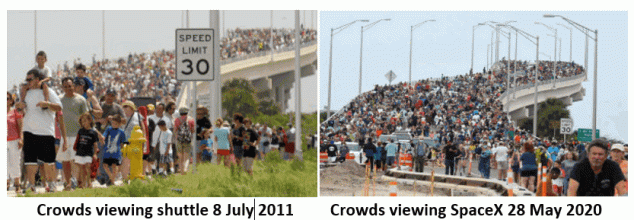
We have watched the launch of a small rocket from a beach nearby the Kennedy Space Centre during a visit in 1994, so can understand the interest of locals in such a massive event.

Just before turning off my laptop to go to bed I made a sign parodying the one on  the daily briefing podium. Having done so, I almost deleted it immediately, worrying if such a thing was ok. I posted it on Facebook and Tweeted it to Rev Helen Kirk, our own Chair of District or ‘woman of the cloth’!

Thursday 28th May

The tactics seemed to work as the prime minister’s special advisor was not the top headline on news bulletins. My ‘funny’ podium sign was retweeted by Helen and liked on Facebook, so guess it was ok. This was the exchange between Helen and me.
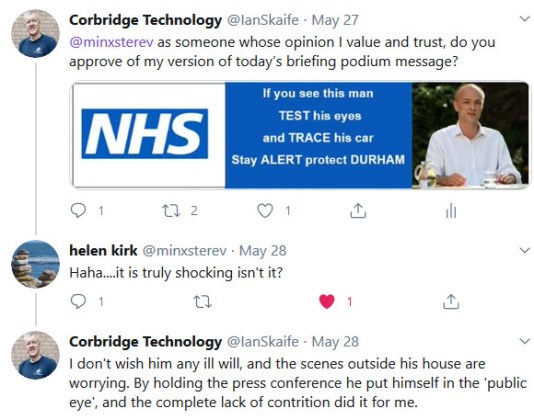
When we had a coffee via Skype with friends David & Janis it was something they were annoyed about. Janis knows the road to Barnard Castle where the now infamous ‘test drive’ was taken and thought it unsuitable as a check for the type of journey back to London.

It was another very warm day and we had meals outside and did more work on the garden.

The evening briefing, after the cabinet had done their legally required 3-weekly review, brought news of another ‘easing’ of the lockdown measures. From next Monday we will be able to meet in groups of six in a garden or outside space, some non-essential shops, outdoor markets and car show rooms can open from the 8th of June.  Premier League matches would start from 17th June behind closed doors. Boris Johnson stated that he wanted to ‘draw a line’ under the Cummings affair and move on ‘as the country wanted’. Journalists had other ideas and asked more questions about the ‘illegal trip’, even trying to involve the Chief Scientist and Chief Medical Officer in the questions. There were questions about how people might hold ‘socially distancing barbecues’ in their gardens, and what if someone wanted to use a toilet in the house. Scotland, Wales and Northern Ireland announced different measures from England, just to add to the confusion.

The evening brought the tenth and final clap for carers. It was well supported and loud on our street, but it felt like the right time to end it.

Friday 29th May

We had planned to get up very early, have breakfast, drive to Delamere Forest, and see if we could manage a walk without getting too close to other people. We arrived at 8.45am and walked to a small isolated lake surrounded by some beautiful yellow orchids. It was not too busy with people, but there was a lot of litter from visitors over recent days. We resolved to take bags and collect it if we came again. We saw a lot of birds, went on a rope swing under a tree, and walked the parkrun course.  We arrived home by mid-morning and sat in our warm garden for lunch.

Alyson commented during the walk that it seemed odd to be in such a peaceful place surrounded by life when there were thousands of people in hospital fighting for their lives. I said that most days were like that, but it had been heightened in the last three months.

Rishi Sunak, Chancellor of the exchequer announced an extension of the furlough scheme and support for the self-employed until October.  It was at a slightly lower rate and employers were going to contribute towards the costs. Employees can go back part-time under the scheme.

We watched the last of the daily  BBC Two ‘Springwatch’ reports. It has been a joy to see all the birds nesting and trying to survive. Insights into nature, and a new section of ‘mindfulness’ where they show 90 seconds of pictures with no commentary. We have had river valleys, woodlands, seaside, and tonight’s was lakes and mountains. Wonderful.

This was followed by the satirical program Have I Got News For You, and we were back to Dominic Cummings again. The fun (laced with real anger) they had with the story reached new levels of satire. Apparently there is a Durham slang of ‘that’s a load Barney Castle’ meaning a pathetic excuse. It originates from medieval saying based on a siege in the castle. As one famous columnist is fond of saying ‘You couldn’t make it up!’.

Saturday 30th May

Another bright and sunny day. I got a new PB for my new regular ‘local parkrun’ and like every other week I finished in first place! Alyson was back on the frontline working a morning shift in a community pharmacy. It was again one where she felt safe with one patient at a time.

Two members of the Scientific Advisory Group on Emergencies (SAGE) broke ranks to voice concern about easing lockdown restrictions too early, risking a second wave and peak of infections. There was a worry that having announced on Thursday that people could meet up in larger groups for a barbecue in gardens, some would start early with the forecast sunny weekend. Our neighbours had two families together in their garden with little evidence of social distancing, and on Alyson’s afternoon walk she saw a group of youths playing a football game.

I watched the SpaceX mission finally take off to the ISS at 8.22pm. It was a spectacular event.

Sunday 31st May

Harold Wilson, labour prime minister in the 1960’s is quoted telling lobbyists before a general election, when it wasn’t looking good, ‘a week is a long time in politics’. He won the election with an increased majority. Well, it is a week since the papers and television were full of stories and accusations about a trip to Durham. It felt at the time like Mr Cummings would be sacked, especially after another day trip to Barnard Castle came out. Boris Johnson decided to try to ride out the storm, pushback on any questions, and focus on getting the next steps of easing restrictions out. It appears to have worked. The news today was of opening schools and some shops tomorrow, and the overnight announcement that those who have been ‘shielding’, and locked in their own homes for the last ten weeks are to be allowed out for walks in the local area but still not to go to shops. They can meet up with one person from another household in the open air but must maintain social distancing. As the virus is around less than it was the chances of infection have gone from 1 in 40 at the start of their self-isolation to 1 in 1,000 now.

This Sunday in the church year is Pentecost (what used to be called Whitsun), the anniversary of the formation of the early church and the day the first ‘sermon’ was preached by Simon Peter after the coming of the Holy Spirit. Watching the service streamed from Methodist Central Hall, preacher Rev Howard Mellor reminded us that the disciples had been effectively in ‘lockdown’ for coming up to 50 days waiting for the next stage in their work.  The image with tongues of fire raining down reminded me both of the fires burning in the US from the protests over the killings of the unarmed black man George Floyd by a white policemen in Minneapolis, and the power of the burning of kerosene and liquid oxygen that took the two NASA astronauts towards the ISS. The US riots had spread to many more cities overnight with more fires and looting. There was little social distancing going on there or at the protests in central London.

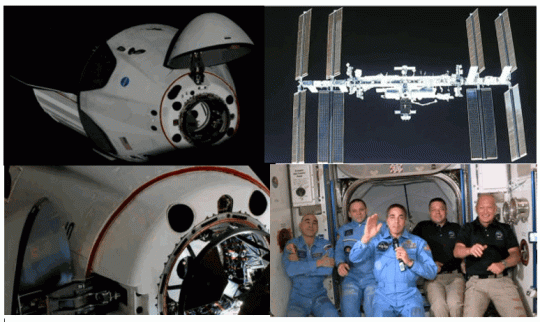
I watched the live stream of the docking manoeuvre on SpaceX’s web site as the Dragon-2 spacecraft gently attached to ISS. Despite the seemingly ‘slow and careful’ way the two vehicles came together; we were reminded by the commentator on the video that the two vehicles were travelling at 7.66km per second or over 17,000 miles per hour. As I watched the spaceship close in ‘slowly’ for the last 20 metres between the two vehicles which took just over a minute, they travelled over 300 miles or the distance from Crewe to Land’s End! All at 260 miles above the earth. Over 1.3 million people were watching live on-line.   Docking happened at 3:16pm and the alarm on my phone went off. It is set to remind me of the famous Bible verse John 3:16. My mind went back to the time last November when I stood on steps on top of the Hulda Gate up to the temple at the centre of the ancient city of Jerusalem. Our guide told us that when astronaut Neil Armstrong stood on them he said
I am more excited stepping on these stones than I was stepping on the moon.”

It was seeing earth from the Apollo spacecraft and from the moon that reinforced Armstrong’s belief in something larger than humanity. He had been brought up in a Methodist family and on return from the moon he gave a speech in front of the U.S. Congress in which he thanked them for giving him the opportunity to see some of the grandest views of the Creator.

The final daily briefing of the week gave the figures for deaths on Saturday as 113 compared to 215 on Friday and 324 on Thursday. The total of deaths at the end of week 10 was 38,489.

We shared a weekly family Zoom with the boys. David was happy to be back on the river Avon after his second session of solo rowing from his club in Bath. He had also managed a short swim as he capsized his single-seater boat!  Michael had been walking in Delamere again.

Alyson has arranged for a friend from her ‘knit & natter’ group to come around tomorrow and sit in our garden to share a coffee. We are planning to meet up with her sister and husband for a walk somewhere between our home and theirs in Coventry.

Next week I am planning to look at a single issue related to the pandemic, perhaps the future of the health and social care services, or the costs of repaying the huge financial debts the government support has built up.

Keep safe.


Life & Death – Coronavirus week 5 – what’s the next step?

An uncertain timescale, and new ways of working.

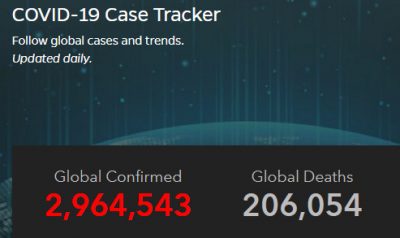
As the total passed 20,000 this week I fear the announcement of a high number deaths in the previous 24 hours is becoming part of our daily routine. I had some favourable comments about last week’s blog on statistics and am grateful to our son David for sending a publicly available link to the NHS Statistics site that details how these are compiled and it is at;

https://www.england.nhs.uk/statistics/statistical-work-areas/covid-19-daily-deaths/

David pointed out that the term ‘daily death toll’ is misleading as they are compiled from a series of numbers, some of which can be from a few weeks before. If you want to see how many have died in your local hospital trust these are on the different sheets in the spreadsheets.

The daily briefings are now showing some of the additional community and care home figures, which increases the totals. There has also been a discussion this week on how exactly registrations of death in the community are classified. The new guidelines allow for dying of Covid-19 or dying with Covid-19 and having one of the reasons as ‘pneumonia-like’ symptoms.

Looking at the current versions of the Johns Hopkins charts from last week’s blog, there is not really a definite ‘plateau’ in the figures, never mind any sign of a decline.

Unlike the virus, the shock of a high number of daily deaths appears to be something we are becoming immune to. Chief Medical Officer (CMO) Professor Chris Whitty suggested the current measures might need to be in place until the end of the year. The situation has been compared to a war, and in my less optimistic moments I worry that like the First World War when the ‘experts’ of the time, the military analysts, declared it would be ‘over by Christmas’, we will need to come to a more realistic appraisal. The first few months of the Great War were characterised by patriotic parades, rousing speeches, a general call to arms, volunteering and government spending. After Christmas, however, when it was clear that the proposed strategy of a short campaign followed by bringing enemies together to negotiate, was not working, countries had to change their economies and society and put them on a ‘war footing’ for the long-haul. Most of the time, however, I am optimistic that we can see out the current ‘war against an unseen enemy’, and a return to ‘normal’ is on the horizon.

No one wants to think of this war going on for a few years and our government having to borrow over 25% of Gross Domestic Product (GDP) annually, as happened in the two wars, compared to the short term 15-20% our chancellor has sanctioned so far. In the two wars GDP increased due to more production of munitions and uniforms etc. There is already some increased activity in sectors of the economy such as supermarkets, food manufacturers, logistics, suppliers of PPE and the pharmaceutical sector supplying medication and carrying out testing.  The problem (as it was during the previous wars) is that much of this expenditure is government-funded and needs to be repaid at some point.

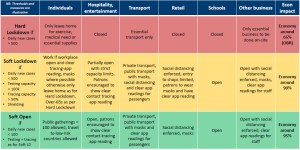
An increasing theme of questions to ministers at the daily briefings, and from some of the government’s own MPs, has been a desire to talk about the plan to get out of lockdown.  The week started with former prime minister Tony Blair’s Foundation the Institute For Global Change producing an outline 10-point plan for how this might happen. It uses a ‘traffic light’ system of the metrics that would allow certain activities when an amber stage is reached, and more when a green might follow. If infections, hospitalisation and deaths start to climb again, it allows for a red stage and return to lockdown.

Nicola Sturgeon Scotland’s First Minister released a similar document to start what she called an ‘adult discussion’ about the gradual release of restrictions.  For example, on how schools might have to be adapted to keep social distancing measures. One of the opposition parties in Scotland claimed that this was as much to do with trying to have a separate track from the UK government, and to steal a march on the ‘English Parliament’, as it is a real attempt to plan.
We had an idea of how releasing the lockdown might look after I joined an ‘on-line queue’ last Sunday to place a small order with DIY retailer Wickes. We had a text on Tuesday when it was ready to collect. Alyson drove to an empty car park where a member of staff brought the order out and put it to one side for her to place in the car. It was so long since Alyson had been out that the car clock was an hour behind. Alyson was so excited that in a Shirley Valentine moment she said, ‘hello car, it’s been a long time, how are you doing?’

It may be that any retailer that wants to re-open, must think about making such adjustments and change the layout and operate a queue and collection system. As our good friend David said during a Skype call ‘every shop will be like Argos’. Talking to my brother-in-law Paul, on a Zoom call for Friday evening drinks, about Jaguar Land Rover (JLR) planning to restart production at two of their car plants, he said they will have ‘re-engineered’ the line. Paul knows about such things having been involved in similar plans before retirement. Instead of having two or three people working on the cars as they go down the line, the engineers will be changing the order and reprogramming the robots used to allow the build to continue within the ‘social distancing’ guidelines. Whether there will be the customers to buy the finished vehicles is a different question.

The UK is fortunate to have some really educated and clever people working in our small and large private and public enterprises. We must hope that, like JLR, they will have been working on ways to ‘re-engineer’ what they do in a ‘post-pandemic’ world. Some of these changes may have been the way to improved productivity anyway, and the space and time during this outbreak was needed to get them implemented. Other businesses less able to adapt and change and whose business model was not ‘fit for purpose’ will disappear.

Apparently a group of experts are meeting with the various sporting bodies to determine how the leagues and events might resume in May/June. There is talk of playing behind closed doors with safety measures in place for players/officials and broadcasters. I will return to this topic in the coming weeks, after more details are released. For now, I am curious how a game of football will look if players must keep two metres apart and the ball must be wiped down with sanitiser after every header or a throw by the goalkeepers!

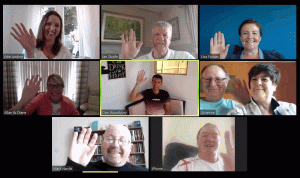
For me the first few weeks of lockdown has brought an increasing number of video calls. Two months ago I knew about Skype, but Zoom was a new product to me. Such is the growth of this platform that, like Google, it has gone from being a noun to a verb quite quickly. We now say we are ‘having a Zoom’ with a colleague or we say we have ‘been Zooming our family’.  Looking back I have had 16 such meetings in the last fortnight and a few more 1-2-1’s helping people setup Zoom. This week we had our first ‘virtual coffee morning’ with members of the head injury charity I am trustee/volunteer for. Given one of our aims is to reduce the social isolation of people who suffer such injuries, I have no doubts that this is an aspect of our work that will continue whenever the situation gets back to ‘normal’. It was a wonderful time of sharing for the ten of us on the call from all over Cheshire.

Technology is another sector of our economy that is booming as people need to be setup for working from home. Some of this business-to-business (B2B) spending is from the private sector so, even if it is funded by borrowing, is adding to our GDP.

Another crisis in the nations’ health being stored for the future?

After last week’s headlines about the current crisis in the care sector, this week doctors leaders and Sir Simon Stevens, Chief Executive of the NHS, highlighted a fall in general attendance at hospitals and GP surgeries. There could be people who need on-going treatment for heart conditions, cancers and other serious issues not getting these. People showing other serious symptoms of stroke, early-warning signs of cancers are choosing not to get checked out. 

Related to this is the mental health of those who are isolated or trapped in homes with an abusive partner or parent. The increase in retail sales of alcohol, the boom in business for wine delivery merchants, some of which is the result of the closure of pubs and restaurants, should also be an area of serious concern.

Alyson and I are blessed to live as a couple with all the interaction that brings and so far are generally getting along amicably! I saw a piece on one of the news channels about the lack of ‘human touch’ that is becoming a real problem even for those who wouldn’t normally classify themselves as ‘touchy-feely’ types. This could be something as simple as a touch of a hand when upset or a hug with a child or grandchild. One new grandparent said, hopefully semi-seriously, ‘well perhaps I will get to see them before their first day of school…’

My thoughts have been with a church friend who lives on her own following the death of her husband last April. This lack of touch is becoming a real problem for her. She had to manage the anniversary of her husband’s death on her own, without the special touch from her son who lives 150 miles away. Her daughter lives in Australia and has a son who was born a few days after her husdand’s death. So she couldn’t even share a first birthday cuddle with him, just a ‘virtual cuddle’ via the ‘FaceTime’ app on an iPad.

Other news this week.

  • Not a new item but a ‘correction’ from two weeks’ ago when I stated that the birds were singing more loudly as a sign of new life. During one of our virtual coffee chats with friends David and Janis, they sent a link to some research showing that the decibel volume of birdsong has actually fallen. This is true particularly in urban areas and near airports as they don’t have to compete with the ambient background traffic noise anymore.
  • This week a potential vaccine against the coronavirus was injected into a human in the first stage of a trial. The remarkable speed at which this has happened is a chance for some optimism, but the scientists tell us that it will take months for any useful results to be available and analysed. In the rush to get this game-changer out to the world, great care needs to be taken to be sure that there are no side-effects that could make the harm done in the long-term far greater than the deaths of the outbreak.
  • The science needed to understand vaccines and terms like re-infection rates, on-going immunity, blind trials, cohort selection, existing morbidities, aggravating factors etc are not simple. I tried to resist mentioning President Trump again this week, but his suggestion of injecting or inhaling disinfectants to ‘clean out the virus in a minute’ was not only dangerous but showed a complete lack of any of the science on which his experts have briefed him. I do think this quote, and his subsequent attempt to pass it off as sarcasm towards the reporters in the briefing room, will be seen as a ‘game-changer’ in the longer term. The idea that a President who has any sort of basic education is unable to see the difference of putting a powerful chemical on surfaces such as metal, porcelain or man-made plastics is no different to the delicate structure of skin or the inside of a human lung is frightening. It is like a parody of the story of ‘The Emperor’s New Clothes’ or in this case ‘The President’s New Coronavirus Treatment’ where everyone else can see it is completely ridiculous idea, but the person elected to lead thinks it is a brilliant one. Will any of his advisors or leaders in his administration have the courage to criticise him in public?
  • There was some ‘outrage’ that Richard Branson would apply for a loan from the government to support his airline Virgin Atlantic. It was pointed out that he has a lot of personal wealth and despite putting his private island (valued at ‘only’ a few tens of millions of pounds) as an asset against the £500Million loan, his press was not favourable. I can see the need to support his employees in the UK, but this is one example for the government and big businesses to negotiate over. The ownership of the company by one of the major US airlines and the tax regimes they operate in needs considering. Denmark was one of the countries this week to announce that any company that hides some of its tax offshore, without true transparency, will not be allowed a loan.
  • On Sunday morning it was announced that prime minister Boris Johnson had recovered enough from his coronavirus after effects to return to Downing Street and lead the government again. Writing as someone who has also come close to death during a 12-week stay in hospital, my hope is that the episode might have given him a new perspective on what really matters in life. The decisions he takes, the way he views the NHS and key workers, might mean a change in approach.

Thoughts at the end of week 5.

Covid-19 has claimed the life of another person I knew. Sharon was a local church treasurer in our circuit, and we talked at meetings. She had some other health problems, but the loss of any life, particularly from this virus, and the effect isolation has on close family is devastating.

The weather continued to be warm and dry so we enjoyed lovely walks outside viewing plants and wildlife. I went for two more substitute parkruns. The goods we managed to get from Wickes meant we could get on with work in the garden and complete painting the fence.

I have really enjoyed all my Zooming this week, particularly catching up with friends and family for coffee and chat.

Alyson continued learning her new skill of sign language and sewed a mask from cotton material should she need to wear it outside.

My lack of any new improved DIY skill was demonstrated by the fact that it has so far taken me over three hours to put up three simple shelves in our garden shed. The phrase ‘all the gear and no idea’ definitely applies to me. What made it worse was that the neighbour who backs onto our garden has made a whole Japanese design inspired pergola from scraps of wood in the same time. Complete with a decorative hand-carved finial. I looked on with some envy at the way he constructed it and used his power tools and screws in a way that I can only dream of. I will report how long it took to put my final shelf up in the next blog.

Stay safe and let’s see what week 6 brings.

Mothering Sunday – traditional & updated.

Even with all the advances in medical science and technology, I think we can be pretty certain that every person on earth has a mother. Many may not remember or even know who their mother is, many may have lost touch, but mothers and ‘motherly love’ form an important part of life.

We lost our mum four and a half years ago, which means I don’t have anyone to send a card or flowers to. However, I have the less traditional means of acknowledging the love mum showed by writing about it here.

Mum brought us up in a traditional church environment of Sunday school and Mothering Sunday is the fourth Sunday in Lent, a day when people go back to their ‘mother church’. Like many of the religious festivals this one has been taken on by retail & commercial interests – think Easter eggs, M&S Christmas adverts, expensive flowers & cards. In the United States & Canada ‘Mother’s Day’ is the second Sunday in May and has been officially since 1914. It is much more commercial, and has been taken up by over 60 countries across the world.

This morning I went not to my ‘mother church’, but to our local Methodist one, where Rev Den reminded us that the traditional family is a changing one. 9 million people in the UK live in single person households, many young women choose not to join the ‘traditional’ family of mum, dad and children. The number of children in a UK household has gone down from 2.4 and is around 1.7. There are so-called ‘blended families’ formed by those whose relationships have broken down, often more than once. Same sex couples adopting add to the wonderful variety of what we call ‘families’.

I wait to see this week’s documentary following ex footballer Rio Ferdinand and his journey taking on the ‘mother’ role to his children, following the death of his wife, their mother, from cancer almost two years ago. It will be full of many different emotions. I know of someone whose wife died giving birth to twin girls leaving him not only grieving, but having to bring up two young children – I can’t imagine how hard that is. In both examples I guess ‘Mothering Sunday’ takes on a whole different form.

We need to remember on this special day, those who have never felt a mother’s love, those who had a ‘difficult’ or even abusive relationship with their mother, and those who still don’t know who their mother is.

The day is also a hard one for those mothers who have lost a child and have no one to phone them, send a card or bring flowers. For those of us who follow a Christian faith Mary, the mother of Jesus, is an example of such a person.

My mum died suddenly when I had been in hospital for 10 weeks with a brain injury that left me unable to talk clearly, or walk at all. This was what I said about that in the tribute at mum’s funeral two weeks later…

I know that mum is now at peace and I didn’t feel the need to travel to be with her when she went to sleep, but I was pleased to hear that my older brother and my younger brother’s wife had been with her the night before, and dad  my younger brother were with her the moment on that Friday lunchtime when, as dad put it, she ‘looked peaceful and in no pain’. My brother had told her on the Tuesday when they turned the life support off that I had taken my first steps on the ward, and when I missed the call on Friday to say that mum had gone it was because I was taking my first few steps unsupported by the physios…..I like to think that mum was holding my hand.

We will all have some regrets for all the things which we could have done together and the times which might have been, but I will always remember the last words we said to each other as we hugged after visiting. I said ‘I love you mum thanks for coming’ and she replied ‘I love you too son and hope you keep getting better.’

My wife and her sister told me later that they believe that mum had done a ‘deal with God’, giving up her life to save mine. I don’t think God does such deals, but understand the sentiment, and I know mum, like many others, would gladly have offered her life to end my suffering.

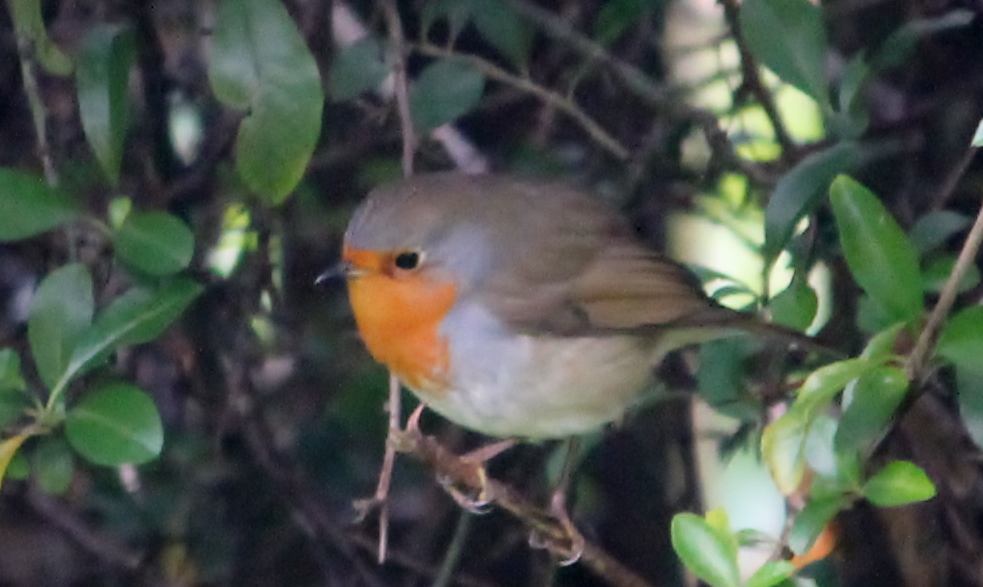
There are people who believe that robins are a sort of angel who visit us on behalf of loved ones to keep an eye on us. Again I don’t subscribe to this, but it is good to be reminded of mum whenever I see one. Just this afternoon as I was thinking about this blog whilst cutting our lawn, a robin who is a regular visitor to our garden landed on a bush. I could hear its incessant call over the noise of the motor – ‘go on write your blog’ it seemed to be saying! This is a picture I took of it last autumn…

Robin - our garden

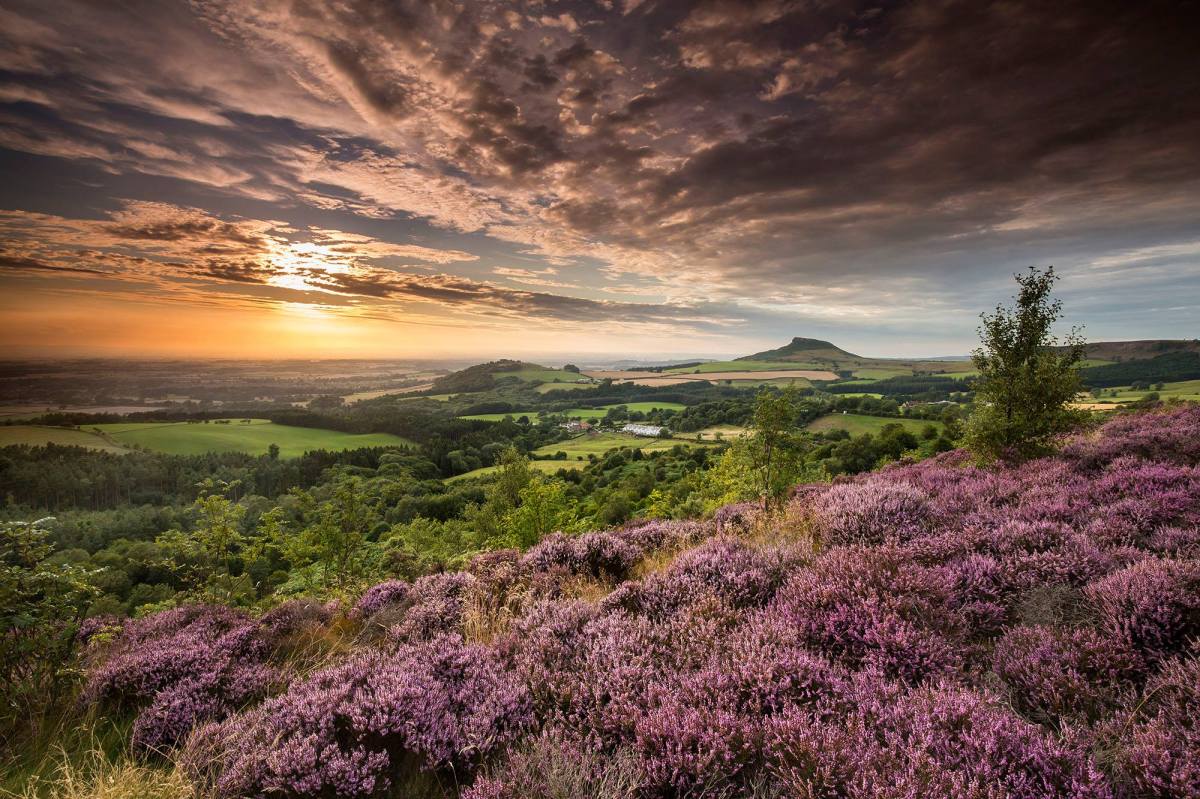
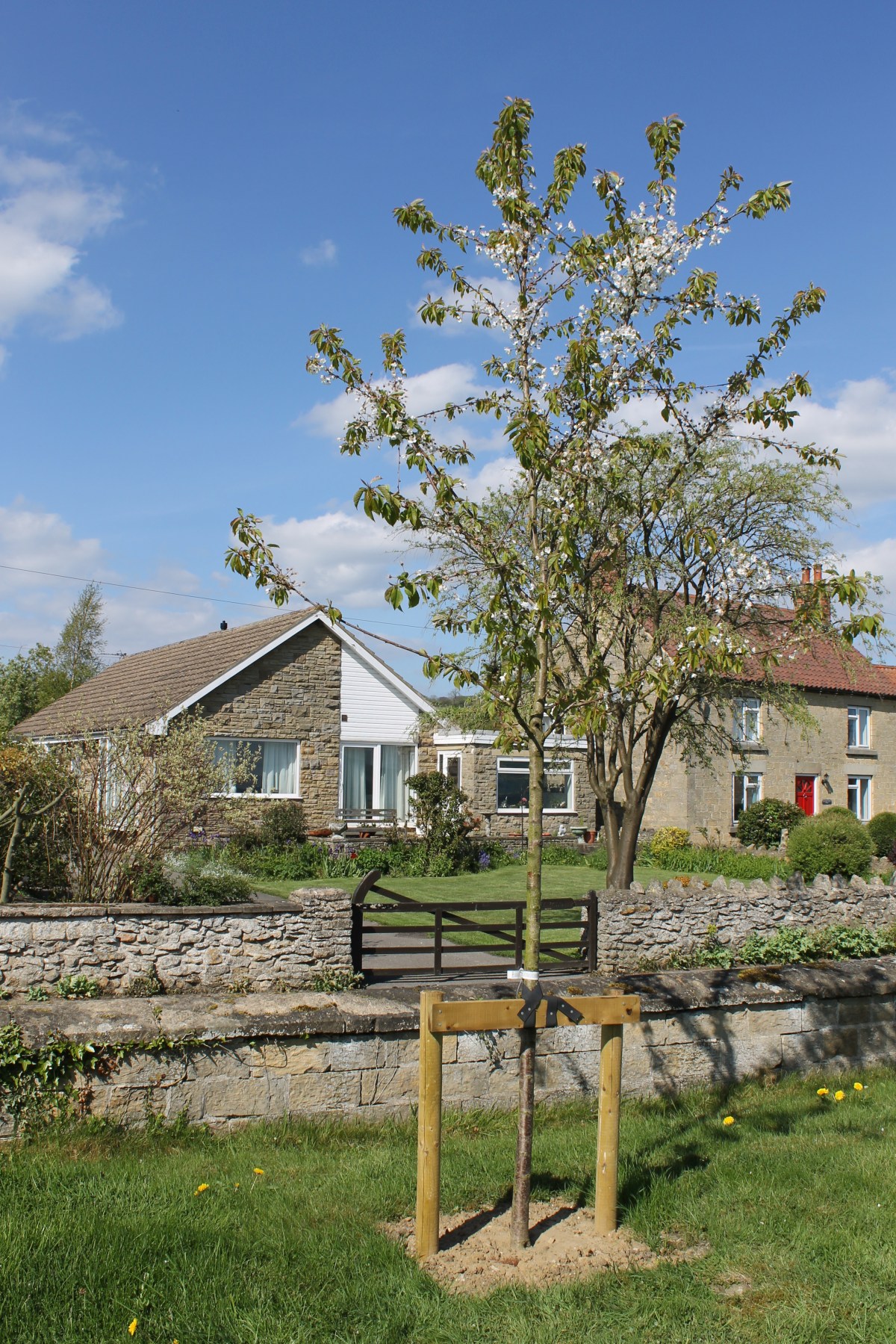
Mum was someone who enjoyed her garden and the new life that came from it. We put mum’s ashes under a flowering cherry tree that sits in the churchyard opposite her garden – the main picture at the start of this blog. As spring moves into summer it is a reminder of on-going life and vitality.

In addition to love and demonstrating Christian care, mum showed me that we need to remember those less fortunate than we are. This week would have been an upsetting one for her with television news having the following items:

  • The plight of mothers watching their young children die as the result of famine in eastern Africa.
  • The Westminster Bridge attack near parliament where Aysha Frade was strolling across on the way to collect her children from school when Khalid Massood charged down the pavement in a 4×4 and snatched her life away. She had just come from work, a school itself, where she dedicated herself to helping youngsters learn the language and culture of her native Spain.
  • Comic Relief and the many appeals showing the suffering of children who had lost both parents, with daughters taking on the mother’s role.
  • The appeal on the same programme to prevent mothers losing small children to malaria – preventable by a simple test and a cheap mosquito net.
  • The children dying as a result of the bombings in Mosul in Iraq – more mothers left childless.

We need to acknowledge that whatever we think of Khalid Massood and his actions, he had a mother whose feelings at this time we may never really know, but can imagine.

For those, like me and my brothers, who had the loving example of a mother who cared for us & others, her life carries on in the way we act towards other people. As my friend put it in a poem to her mum after she passed away at the start of the year, following a long time suffering with dementia…

Mum you always said when we were young that we should try our best;
helping you live with dementia was a truly challenging test.
We hope you would be proud of us, if you realised all we’d done;
we tried our best and in the end our battle with dementia was won.

We shouldn’t dwell on the recent past, happy memories we have a plenty;
of a devoted mum, grandma, great grandma , teacher and friend to many.
….

These are the memories we treasure, the ones that involve the real you;
that stranger that came into our lives was only passing through.

On that dull January day you passed away, but you haven’t really gone;
in the way we think, and what we do, so much of you lives on.
To make a difference and try our best we will always endeavour,
so mum goodnight and God bless, all my love, Heather xx

God bless mothers everywhere.


Life & Death Part 2. Walking in the light, a life well lived, three orphans & time to move on…

Our mum used to say  ‘..as Methodists we have faith and don’t believe in superstition’. We had no problem holding dad’s funeral on Friday 13th January. It turned out to be a day that started with a light covering of snow, but this didn’t settle and we were able to follow the hearse from Thornton Dale to the Crematorium in Scarborough. On the journey there, and also on our return, we saw a complete and very bright rainbow. Adam, our funeral director and fellow Methodist, commented – ‘Seeing a sign like that, makes you realise all will be well’.

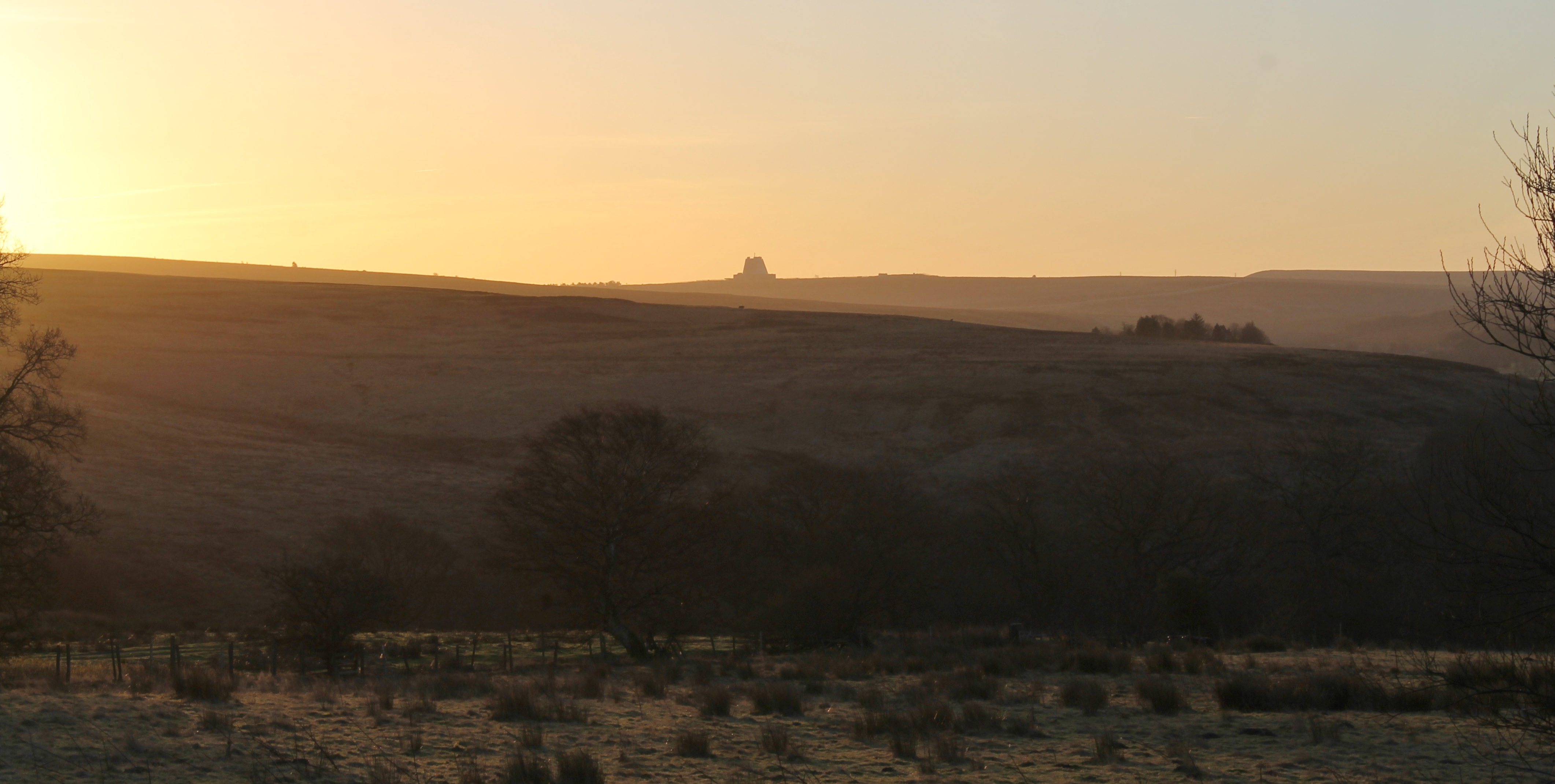
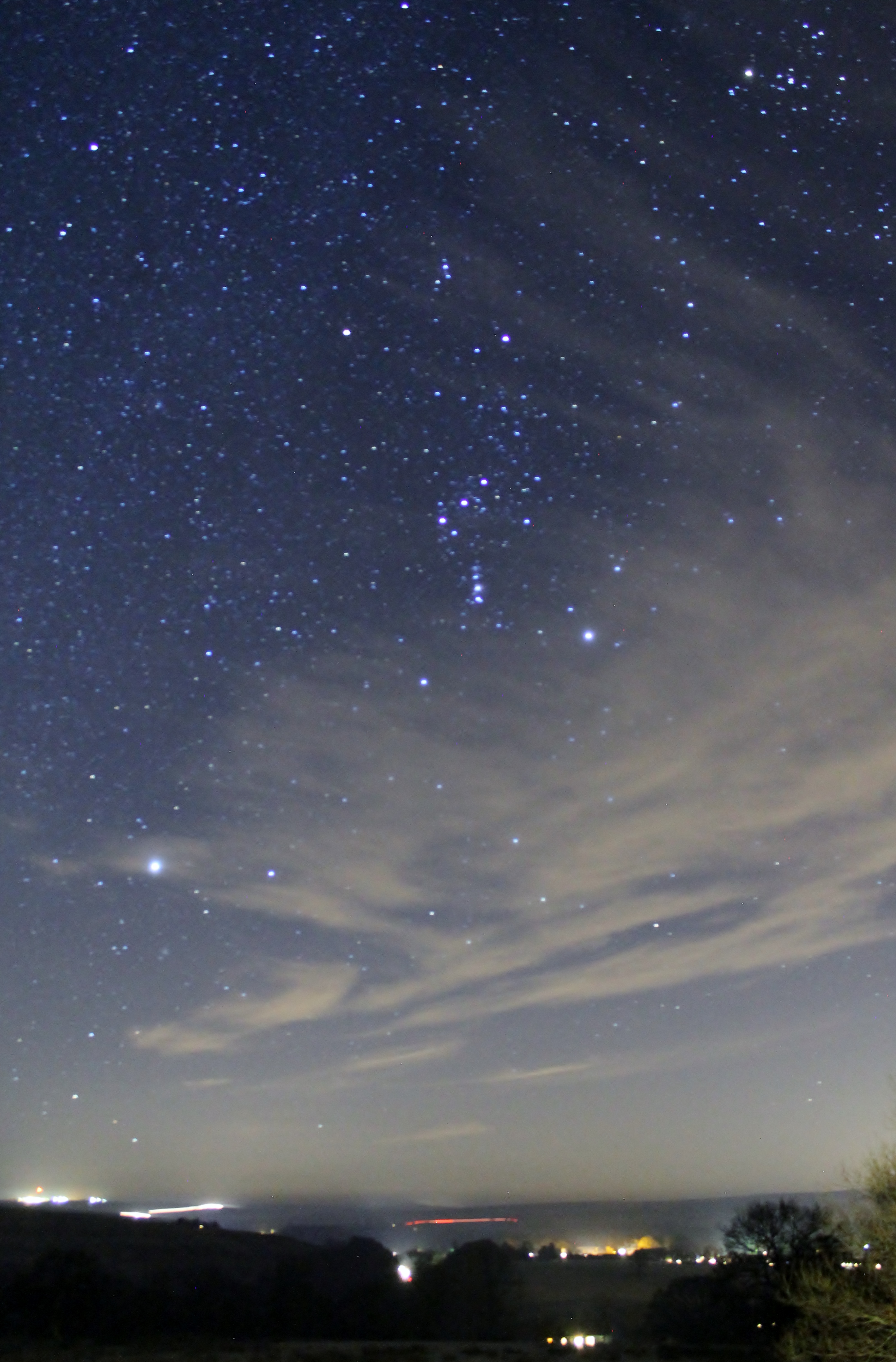
Light also had a part to play the day dad died at the end of December. We had been staying for the week at a cottage on the North York Moors, with my wife’s family to celebrate Christmas. It was a beautiful spot with views over the hills & valleys of the moors. We enjoyed stunning sunrises and on many nights the sky was so clear we could see an endless canopy of stars. With the only artificial light from houses in the village and RAF Fylingdales early warning station, it was a ‘dark sky’ area.

sunrise-over-fylingdales-27-dec-2016
Sunrise over Fylingdales 27 Dec 2016

stars-over-fylingale-27-dec-2016
Stars over Fylingdales 27 Dec 2016

Dad was nearing death as the result of his Parkinson’s causing an inability to swallow two weeks’ previously. After a short spell in hospital – beside the crematorium that he would return to – dad was allowed to go back to his care home in Pickering for palliative care. Our cottage was only a 30 minute drive away, so we visited him several times. My younger brother, Andrew, and his family called in to see him on their way to relatives in the south.

The night before dad passed away I set off to drive the short journey, but a heavy fog had come down. It was obvious after taking 10 minutes to get less than a mile that it was a dangerous journey without streetlights or markings at the edge of the roads. A phone call to the home confirmed that it was they same there. I had already visited dad that morning and now he was settled down for a good night’s sleep. I returned to the cottage.

Next morning I woke up early; the fog had cleared and through the skylight a host of bright stars shone in. Lying in the quiet stillness I thought about dad and prayed to God that if it was His will then it was time to let go, and for dad to pass on to his next life. I also remembered my mum who had died four years ago of a sudden heart attack. Dad had missed her terribly and took about two years to get over his grief. Recently, in a cruel twist brought on by his dementia, dad had started asking us when we visited if we had seen mum, as she hadn’t been to visit him for a while. If we told dad the truth he looked shocked and said it was too much to bear. We decided not to lie but changed the subject and distracted him with something else.

As I got up and went down for breakfast, the sun was just coming up over Fylingdales and the sky was a beautiful pale orange colour. The air was still and a few tufts of high, white cloud were visible. Through the large glass kitchen doors overlooking the garden & fields of sheep, a tawny owl flew past slowly and gently settled out of sight among a clump of grasses. A rabbit hopped across the gravel driveway and under the wooden gate to the field. Four female pheasants came onto the lawn to feed on the breadcrumbs and nuts we had put out. A robin and sparrow sat on top of the wooden table where we had put the remaining food.  The place was teeming with life and the beauty of nature.

There was no mobile phone signal so we had been using wi-fi and WhatsApp to communicate. We finished breakfast and were packing up to leave, as we were due out by 10am,  when Anne Marie (the owner and nurse manager of the care home) sent me a message asking me to call on WhatsApp. I managed to speak to her long enough to tell me that dad had passed away a few minutes before. I heard her say it was peaceful then the signal went and I couldn’t phone back. Driving up the half mile farm track to the main road I managed to find a good signal to call Andrew. Anne Marie had called him already, and we shared a short silence and a sense of relief that it was over. I called the home to say I would visit after we left the cottage.

As I made the journey to Pickering the sun was rising higher against blue sky & reflecting off the rail tracks in the deep wooded valley of the preserved steam railway that curves through the moors. I passed the end of a narrow track off the road down which lie the ashes of dad’s brother and wife, overlooking the valley and the moors beyond.

The closer I got to town the fog, light at first, got thicker so that by the time I got to the care home it was dark, damp and cold. As Anne Marie took me to see dad she told me that she had checked on him at 25 to 9 and he was sleeping peacefully and five minutes later she came back and he had died. The night shift hourly care records all said ‘settled and sleeping quietly’. Dad’s earthly life had come to a peaceful and pain-free end. Anne Marie confided that when she awoke that morning she too had prayed the same words as me. When she had opened the window to ‘let his soul free’ as they do in many hospitals and care homes, I like to think that dad escaped the darkness of the town and soared up to see his brother and sister-in-law at that beautiful spot I passed on the way in. A place where the sky was blue, the sun shining and the birds singing. All would be stillness and peace.

Anne Marie gave me dad’s Bible to read whilst I sat with him. A bookmark was placed at the first chapter of John’s first letter; a section headed The Word of life, walking in the light.

God is light; in him there is no darkness at all.  If we claim to have fellowship with him and yet walk in the darkness, we lie and do not live out the truth.
But if we walk in the light, as he is in the light, we have fellowship with one another, and the blood of Jesus, his Son, purifies us from all sin.

 There was a Post-it note in dad’s writing of two other passages about faith and actions and helping those in need. A further bookmark was at Psalm 121 which we had used in mum’s service. It seemed that I had been given the readings and theme for dad’s service of remembrance.

Dad’s was the first dead body I have seen. When I kissed the top of his head it was cold, but holding his hand it was still warm. I sat quietly listening to the hymns which had been playing all week at his bedside. I cried a few tears, but the overwhelming feeling was one of gratefulness & peace.

I am usually a blubbering wreck at funerals, even for people I barely know and who have been ill for a long time. I was always amazed that the family could stay so calm. However, having spent two weeks planning the service and writing dad’s tribute, for the service back at Thornton Dale Chapel, after the shorter one at the crematorium, it seemed natural to be calm and speak joyfully of dad’s life of faith and service. We shared lots of stories and some jokes with his church friends and family from near and far. This continued over lunch afterwords.

I was given a book for Christmas written by one of my cousin’s friends Rosalind Bradley titled ‘A Matter of Life and Death’, consisting of 60 short passages by various people sharing their experiences of death.  It asks us to treat death as a natural part of life. To think, talk and plan for it, so that when it comes – which it certainly will – we and those who know us can go through the process in a peaceful, ordered way. I have yet to finish it, but some useful words found already are;

Death is not extinguishing the light; it is only putting out the lamp because the dawn has come.    Rabindranath Tagore.

Do not seek death. Death will find you. But seek the road which makes death a fulfilment.  Dag Hammarskjold’s words as chosen by Arrchbishop Desmond Tutu in his foreword.

Our dead watch over us from inside our hearts. We talk to them, they talk to us, and their love and wisdom bless us.   Rabbi Jonathan Wittenberg.

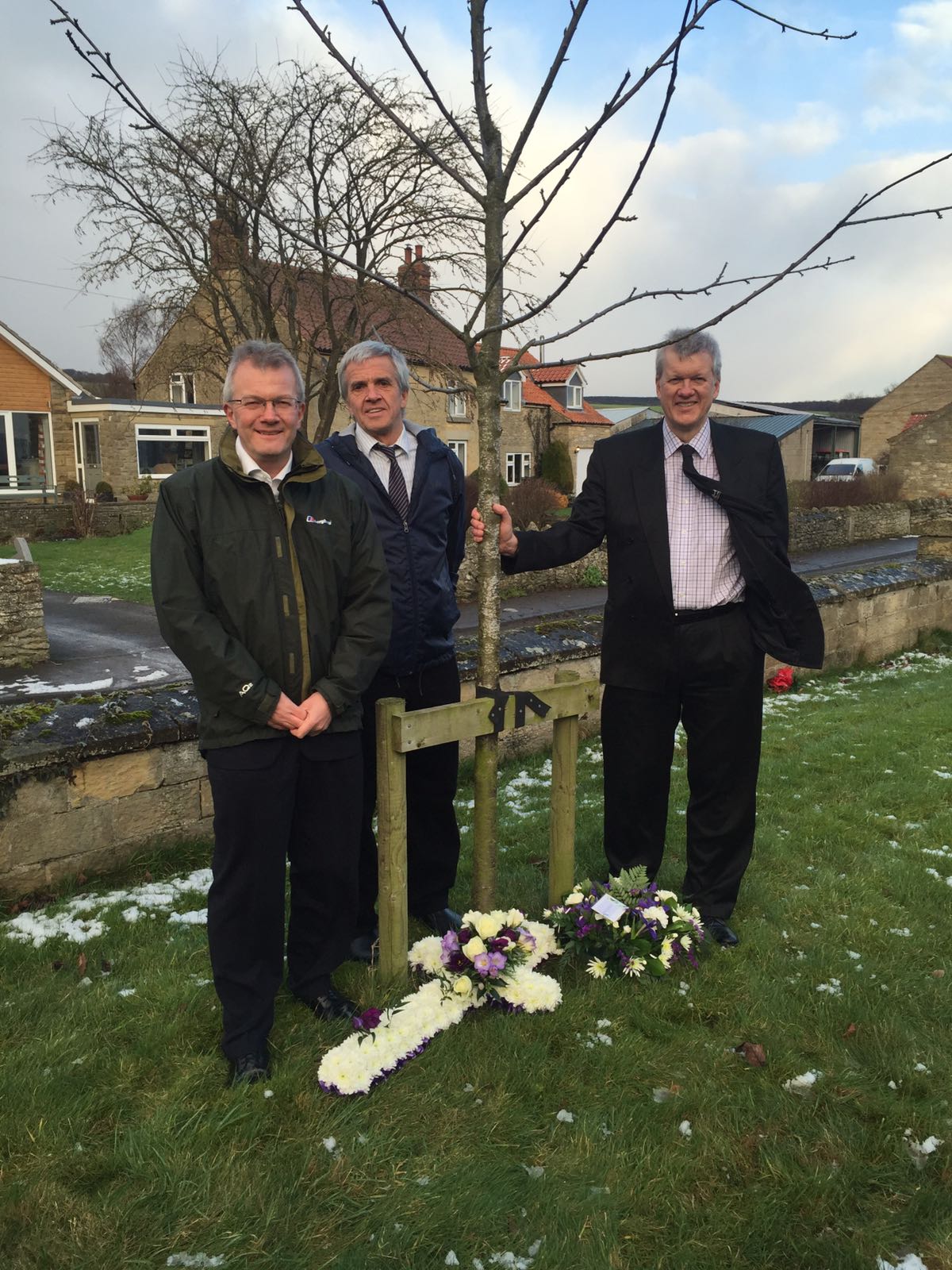
The picture at the start of this blog is we three brothers who can now be classed as orphans, standing next to ‘mum’s tree’ at Wilton in front of the small Anglican church. We buried mum’s ashes under a flowering cherry we bought to replace one that had died. The bungalow in the background was where mum & dad spent 24 years together in retirement. Mum loved her garden so now looks over that and the Wolds nearby. Dad will be joining mum in the spring. The photo was taken after the funeral service and the flowers are the cross from dad’s coffin and another wreath from our cousins (whose mum’s and dad’s ashes are in the valley overlooking the railway and moors near Fylingdales).

As we said at the end of dad’s tribute:

…we join our cousins in becoming ‘orphans’, we also join them as living testimony to the care and love of our parents.

The fact that we hopefully are contributing in a positive way to our local community and society, being aware of social injustice & poverty, the needs of our neighbours near and far, means we will continue to be a tribute to them.

And that love and care will continue as our families grow from one generation to the next.

We all need to move on to the next stage in our lives, to let go of, but not forget the past.

Experiences not ‘stuff’…three wishes achieved!

Around Easter Alyson & I went through the annual round of trying to decide what to buy each other for our upcoming birthdays. Perhaps it was the experience of clearing mum & dad’s house prior to selling it, which we had been doing for the previous 3 years; or maybe looking at the amount of ‘stuff’ we have accumulated in over 35 years of being together, but Alyson declared she didn’t want anything material. She had realised there is beauty all around in the natural world, and that the pressure of work and family means that free time is more  precious than so-called ‘valuables’. Freedom to look around at the beauty in nature, or to sit and watch a glorious sunset, is priceless, with memories last much longer than material possessions.

Alyson has never had any interest in expensive jewellery or clothes, and can’t believe that anyone would even consider paying hundreds of pounds for a handbag. Sure we live in a large family home & have nice things; lots of ornaments, collectables, books and electronic gadgets. These things have a tendency to gather dust or become ‘unusable’ due to being superseded by the latest model. We are fortunate to have some savings and good pension arrangements, so holidays & travel are regularly on our agenda.

With these thoughts Alyson declared that this year she had three wishes.

  • To sleep in a windmill
  • To see a puffin.
  • To see a kingfisher

The windmill has been on the list for quite a few years, as every time we pass one Alyson declares a curiosity about what it would be like to stay in a dwelling with round rooms.

At Easter we were on our annual family weekend at a cottage near Bamburgh  in Northumberland & Alyson took a particular interest in the sea birds, guided by  ‘big Pete’, who volunteers at a nature reserve near his home. This led to the last two wishes.

As is the modern way I put ‘staying at a windmill’ into my search engine and one of the results that came up was The Windmill Hotel in Scarborough. Now, I have been visiting the Yorkshire seaside resort for over 50 years so dismissed this as ‘just a hotel’ with the name, perhaps because it was on the site of a former building. But no, it was somewhere that had rooms but with a couple of them in an actual windmill. I chose the apartment on the top two floors.  The bedroom with en-suite on the lower floor and kitchen/living room above. It also had sails and a balcony which went the full 360 degrees. The stay was booked for the end of June.

Before then we made a return visit to Northumberland in May when the boat trips to the Farne Islands were running, we could land on one and get close to the nesting birds. Our first attempt was foiled not by bad weather but swelling seas. Our boat left Seahouses with a promise of landing on one of the islands manned by National Trust Rangers. The vessel Glad Tidings V was packed full of 60 people who seemed to be aged 55+ and from a coach party. We saw lots of birds nesting on the rock stacks and the largest of the 20+ islands, Inner Farne. We also saw grey seals bobbing around the boat looking at us with great interest. There were plenty of birds in the air; guillemots, razorbills, cormorants, shags and some puffins with their distinctive rapid-flapping flight, and a flash of orange bill. However, despite watching the boat ahead of us almost landing successfully, when it came to our turn the swell was too high to get us safely on and off the jetty. We made do with a tour round the other islands.  Arctic tern pecked away at the ranger’s hat on Inner Farne as he came between the birds and their young. There were plenty of eider ducks or ”Cuddy’s ducks” as they are known locally, after St Cuthbert who set up a monastery on Holy Island (or Lindisfarne). We spent the afternoon watching small waders in the mud around the harbour as the tide was out and saw kittiwakes on a nearby cliff.

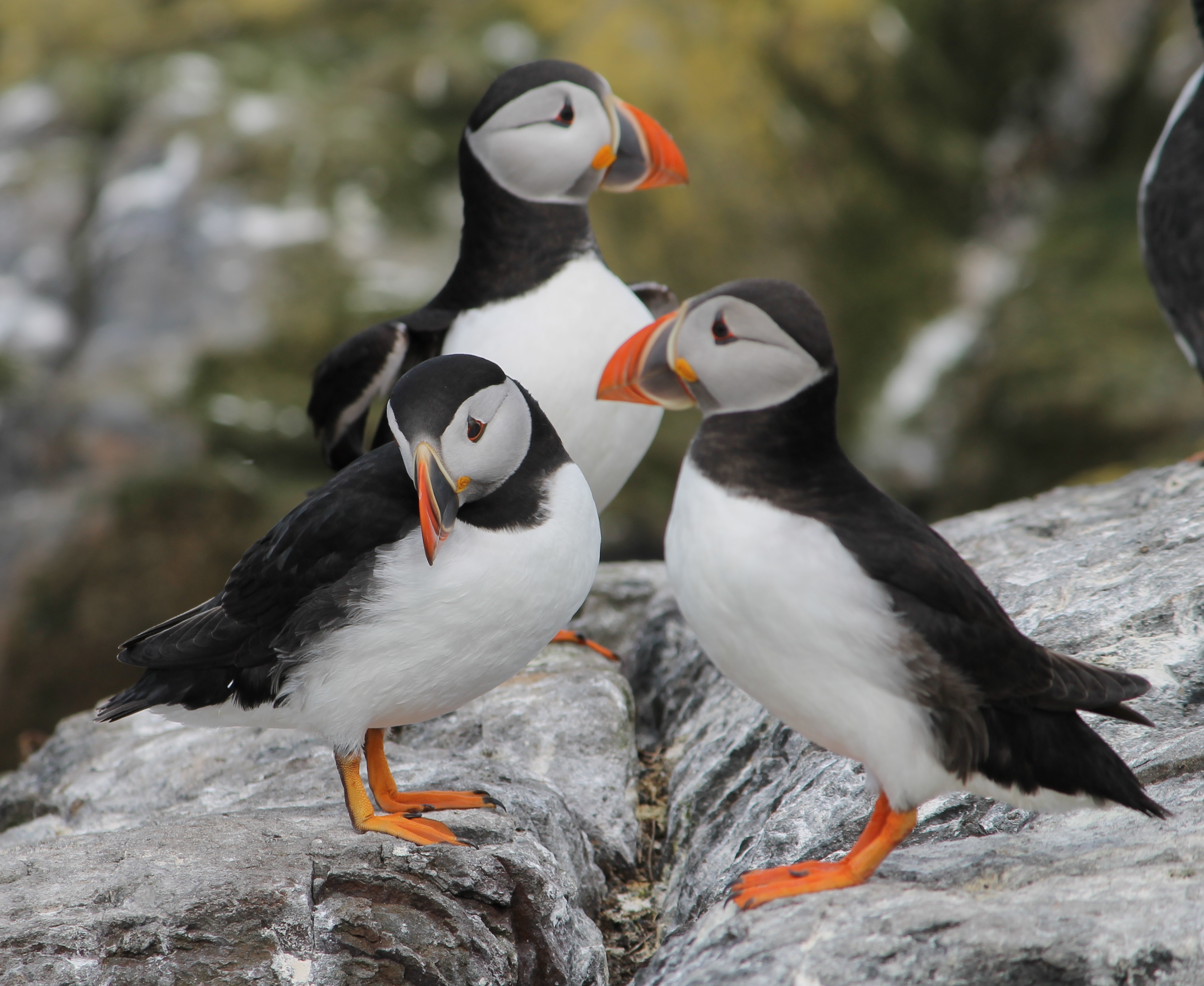
We decided to have one last go before we left, managing to get on one of the early morning boats. It had only six other people onboard and a cast-iron guaranteed landing on Staple Island, the National Trust run bird sanctuary. We did land and what a treat! Lots of time to wander on the rocks and grass, near ropes separating us from the nesting birds by only a few feet. They seemed oblivious to us as they had got used to the rangers being there alongside general visitors. This meant we saw literally hundreds of puffins close up as they came in and out of their underground burrows. So one line crossed off the wish-list. The photo below is one that Alyson took with my digital SLR camera.

Puffins Farne Islands May 2016

We thoroughly enjoyed our time in Northumberland and I plan to post a blog devoted entirely to this beautiful county.

At the end of June Alyson’s recently changed work pattern meant that we had time for a long-weekend break, so we stopped at The Windmill in Scarborough for two nights. It exceeded all our expectations. The owners have done a great job in the 18 months since they took it over. They have developed it tastefully, added some home comforts and wi-fi whilst at the same time maintaining the character of the place. The balcony went all the way round and we had to walk under the sails. Admittedly the views were over the rooftops of the nearby houses towards the sea and hills. Someone on Trip Advisor wrote that it was in the ‘wrong place’ and views over hills and meadows would have been nicer. As the owner said in reply that was the case when it was built but, they can’t be held responsible for the decisions of local planners over the years to allow residential development! There have been windmills on the site for more than 400 years, with the present one originating from 1784. It was restored after becoming derelict for many years after it ground the last corn in 1927.

The accommodation was warm and the en-suite in the rounded room behind our bedroom was modern and comfortable. The wind rattled round it during the night due to being the highest building in the area, and I know it will be much colder and breezy in winter. The steps up to it are on the outside and could be treacherous if there was snow or ice on the ground. Breakfast was served in the reception area at the base of the windmill and the outbuildings serve as the other rooms of the hotel. The car park has ‘spaces’ for seven cars, but anything larger than a family saloon will struggle to park in them.

We enjoyed the break, going for a meal with Janice, our friend from university who trained with Alyson almost forty years ago now, and her partner Graham. Janice declared that despite living in Scarborough for many years she had always wanted to stay in the windmill,  and now she had seen it they would definitely book it sometime. As a family we always enjoy stays in Scarborough, and I have been going there since I was about five. Dad was evacuated to a hotel, and went to a local school during the second world war. It was considered safer than his boyhood home of industrial Middlesbrough – a prime target for German bombers.

We managed an eight-mile walk from the South Bay cliffs all the way along the sea front to the Sea Life Centre at Scalby Mills. Lunch was at the recently refurbished Watermark Cafe on Royal Albert Drive, just down from the bus turning circle on the North Bay.

So another one ticked off and I know we will return in the future.

Seeing a kingfisher was proving more difficult, but that was no surprise as this small bird is well-known to be elusive and if you see one it often described as ‘a flash of blue’ as they rarely perch on a branch. That didn’t stop everyone Alyson mentioned it to coming up with plenty of advice, and claiming to have seen lots of them. Karen, Alyson’s sister, said we need to go on a canal holiday as that is where she had seen them many times. The lady we rented our holiday cottage in Ireland from in July said that the river boat trip in Bath was a good one as well. Someone else had mentioned that trip and as our son David lives there we have set him the task of booking it for the next time we visit.

Plenty of the RSPB reserves have kingfishers on the ‘recent sightings list’ often as ‘in flight’, but we never seemed to be there at the right time. This was part of my plan when I bought Alyson RSPB membership for her birthday. Driving up to Northumberland I stopped at a truck stop near Carnforth for lunch. Alyson declared herself unimpressed with my choice of this stark, industrial looking place, despite my protestations that it was perfectly ok. I came clean as we got out of the car and handed her the early present of a membership card, bird guide book and another with information on all the reserves. We drove to nearby Leighton Moss, the one Pete volunteers at. He told that me if we went to the Eric Morecambe hide we may see kingfishers, perched on the fence posts in front of the hide overlooking the tidal marsh there. We had lunch in the wonderful cafe at the visitor centre, drove down a very narrow track under a railway bridge to the car park near the hides in the reed beds. Eric Morecambe hide is large & comfortable, with plenty of poster to help you identify the birds. This was Alyson’s first formal bird-watching experience. We didn’t see a kingfisher but saw little egret, a heron and many species of ducks and waders.

Over the months we kept looking. Then two weeks ago we saw one very close to home. We have been looking after our eldest son Michael’s new house in Northwich whilst he was working in Australia for three months. On one of the visits we took a trip to nearby Marbury Country Park close to the historic Anderton Boat Lift. We walked to the mere and the bird watching screen there. A couple of weeks previously we had visited and not seen much except coots, moorhens and lots of mallards. We did see a nut hatch in the tree on the edge of the mere. This time, however, there were tufted ducks, cormorants and what we now call our ‘daily heron’ as it seems we always see one of these wherever we go – even in the sea off the beach in Ireland. We saw three together that day at Marbury Park. Then it happened! Alyson exclaimed ‘what is that..’ as a small bird flashed past on the edge of the bushes below and landed on a branch. Alyson managed to see it through her binoculars ‘It’s a kingfisher, yes it is!’ I was sat at the wrong angle to see it through mine, and after about 20 seconds it flew away and I saw the ‘blue flash’. Alyson was delighted and we stayed a while longer but it didn’t make another appearance. Walking along the edge of the mere we saw great crested grebe, the three herons, little egrets, and a cormorant. Two men were in the screen when we came back and told us the kingfisher had made a couple more appearances. We didn’t see it again, but Alyson had finally achieved her wish list.

This past week we were walking along the river Severn in Shrewsbury with my university friend Clare and her husband Stuart – and as we came under the railway bridge Alyson saw another kingfisher in flight. I don’t have an original photograph of the bird we saw, so that one is still on my own wish list.

I wait with interest the next experiences/challenges Alyson comes up with.


Theology Everywhere

Discuss theology today to transform tomorrow

verbalising

ruminations on life at fifty ... or so ...

Discover WordPress

A daily selection of the best content published on WordPress, collected for you by humans who love to read.

The Daily Post

The Art and Craft of Blogging

WordPress.com News

The latest news on WordPress.com and the WordPress community.