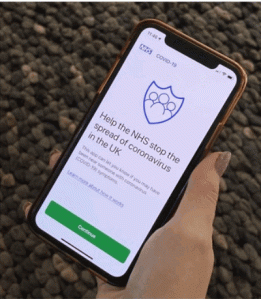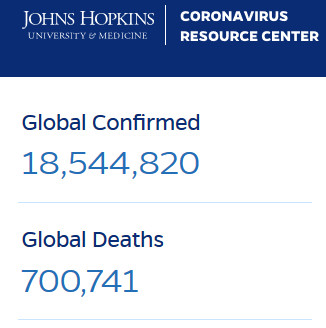
Coronavirus week 19 – That didn’t last long…second wave starting

A short heatwave but signs of another wave of infection.

According to one of the weather forecasters I heard, to qualify as a heatwave there needs to be a period of three days of higher than average temperatures, but ours this week was only one day. It was 20-21 degrees on Thursday and reasonably sunny, by Friday afternoon it was 35 but by the evening it was cloudy muggy and raining and on Saturday it was back to 21 with a cool wind and some showers.

At the end of my last blog I suggested that I may not do another for a few weeks as things appeared to have reached a ‘steady state’, with falling numbers of deaths and a ‘levelling off’ in the number of infections. That idea didn’t even last for 24 hours. It wasn’t that a couple of people were kind enough to comment on my Facebook post saying that they enjoyed reading them; it was watching Channel 4 News on Monday evening.  It’s a way of getting updated on current events that I get the most from. All day ‘rolling news’ is a great thing, something we never had in ‘the good old days’ when there were only three or four terrestrial television channels. The problem is that even  BBC News 24, whose coverage I also enjoy, only touch the surface of a story. I don’t want to sound like a ‘grumpy old man’, but programme makers appear to think we are incapable of listening for more than 90 seconds, or in ITV’s case, that we also need the chance to win a £150,000 prize of gifts we probably don’t need.

Anyway, it was watching the news on Monday evening that there were so many items I wanted to write about, many of them linked to each other or to coronavirus. Hence this blog with all the topics originating with the items on that edition.

Holidaymakers returning from mainland Spain complaining that there were more cases of the virus on one caravan park in Shropshire, than the whole of the Balearic Islands, and they felt safer in a country where everyone was obeying the rules on social distancing and hygiene. By the evening, the islands had been included. Transport minister Grant Shapps went to Spain but had to isolate when he came back on Wednesday. I admit to thinking that I would go if insured, and suffer two weeks quarantine or extend the holiday as I was sure there would be extra capacity. By the end of the week, however, as local lockdown was declared for large parts of Greater Manchester, Lancashire, and West Yorkshire, like others I suspect, I was more doubtful.  I listened to arguments about having to declare whole countries as giving a simpler message than trying to exclude certain areas, and had to agree. Whilst the Canaries are further from mainland Spain than Venice is from London, it would not be difficult to get around the rules by taking a flight from the mainland to the islands and return from there. There is also the danger of catching the virus and having to be in hospital in a foreign country possibly for a long time where the care may be excellent, but my Spanish is almost non-existent.

Despite early criticism there appeared to be more acceptance later in the week when the rates of infection in Belgium (which had one of the highest rates in Europe in the earlier part of the pandemic), and Luxembourg, were rising very quickly. It seems a ‘second wave’ is starting to spread across Europe.

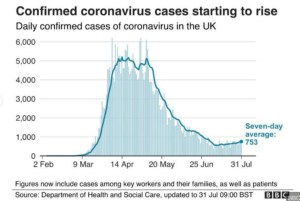
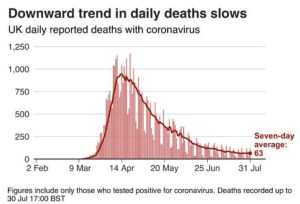
In the UK cases were definitely rising with average daily cases approaching 800 at the end of the week. The fact that average daily deaths was still falling to about 60 at the end of the week, could point to two things; that the lag between cases and serious illness is not showing yet, or that it is mainly younger people getting infections and they don’t generally suffer with the more life-threatening symptoms.
Boris says ‘get on your bike’…

Boris encouraged us (like Norman Tebbit in 1981) to ‘get on our bikes’, but this time not to look for work, but in an effort to fight obesity. The web site handing out free £50 vouchers to get bikes repaired crashed due to demand. Not surprising for £2.5million of untargeted benefits. Many would be snapped up by those who could well afford to repair the bicycle that had lain neglected in the garage for years. It all seemed a bit of a headline-grabbing gimmick. Boris has previous on this topic. As Mayor of London he encouraged people to use a Transport for London (TfL) scheme for hiring simple bicycles parked in many areas in the city to travel to other areas. Registered users could take any of the 5,000 cycles from any of the 315 docking stations in central London to any other for a relatively small fee. This was in 2010 and proved successful. The original bikes were sponsored by Barclays bank with a blue highlight. The scheme was transferred to Santander bank with the current ones mainly red and there are now 11,000 bikes and 800 ‘stations’ spread across 40 square miles of London. 

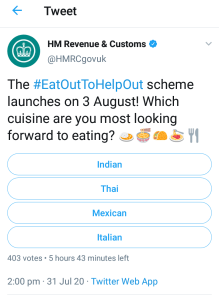
In a week of mixed messages I had one alert from GOV.UK announcing a ban on buy one get one free offers on unhealthy food, and the next one reminded me that I could go to the pub or restaurant and taxpayers will give me 50% off any meal. This is for as many times as I like. So presumably I could get a first course with chips, followed by a chocolate brownie/ice cream / sticky toffee pudding (with extra chocolate sauce) for 12 days (it’s only Monday-Wednesday) from 3rd to 31st August. All washed down with a nice glass of wine or beer – but don’t worry the discount is not off those and they don’t contain many calories. Even HMRC were putting out Tweets about the offer – even if they couldn’t bring themselves to think people might want other European or even British menus…?
The idea of making it a requirement to put calories on all restaurant menus is a good one, but many pubs and fast-food sites do that now. The problem appears to be the ‘education’ needed to allow us to make the healthier choices.

Channel 4 News had an interview with chef Jamie Oliver (who also has years of campaigning for us to make more healthy choices. He made the point that the good quality food is more expensive, and those with less money can only afford the ‘less good’. Rather than taxing sugar, he suggested that perhaps we should be subsidising healthier food.

It could be that this approach to obesity, exercise and healthy eating was related to Boris’s own experience of Covid-19 and the realisation that his own health may have meant not seeing his fiancee and young child? There are many in the Conservative Party who decry the so-called ‘Nanny State’ (itself a posh expression), but a government that claims to have been ‘following the science and experts’ appears in the past to have paid more attention to the food and drink industry lobbyists than ‘health experts’ when deciding policies. Like tobacco before it, the ‘curse of sugar’ needs mass cultural and social change if it is to be effective.

What it doesn’t need is ‘fat-shaming’ and judging people by their apparent excess weight. The majority of our population have some problems maintaining a healthy diet. No one wakes up one day and finds themselves several stones overweight.  The busyness of our lives and availability of cheap food make it hard to change. I have the luxury of a good income, the space to own an exercise bike, and a pleasant area go out for a run. In my case I have made a conscious decision to change, and am currently about a stone less in weight than I was at the start of March. I also know it will be a struggle to keep this way once we get back to eating out again on a regular basis.  I often wonder how people in poverty-stricken countries who have to walk miles to get clean water or a meagre amount of food to take back to a house with no electricity, would make of our kitchen cupboards and American-style double refrigerators. As if that wasn’t enough for them to take in, imagine trying to explain that we then pay a membership of £360 a year for the privilege of driving, three or more times a week ,to a large warehouse full of bicycles that don’t move and treadmills. All in an effort to lose the excess body mass we have!

The next item of news last Monday was one on rehabilitation from the after effects of having Covid-19, or one of its variants dubbed ‘Long Covid’, as the fatigue and memory issues and muscle weakness can last for months (maybe even years, we don’t know yet). The item showed a group using a gym closed due to lockdown, and sharing experiences with people who have been through the same thing.  This is just like my journey after brain injury, when I found the charity that brings together people from all parts of society and background to share with each other. Access to physio and rehab services across the country is patchy at best, but so vital. All of this should have happened years ago. There is a small charity that works with people who have been in intensive care for long periods of time. Patients may be physically well, but the mental effects can last a very long time.  If this step of physio is missing or not done thoroughly, there is more of a cost to the country in terms of lost working days and productivity, as well as actual treatment, medicines, and care in old age. It makes no sense health wise or economically, not having these services readily available for everyone.

The final two articles on the Monday evening news was one that US president Trump’s security advisor had tested positive, after a trip to Florida ,where there is a rise in cases of Covid-19.  Then that Brazil’s president Bolsanaro has been reported to the International Criminal Court, by an umbrella group representing health worker unions and social care organisations, for ignoring and mishandling the crisis. Their claim of crimes against humanity amounting to genocide are unlikely to be taken on by the ICC but demonstrate the strong feelings in the country.  There was an interview (on BBC news!) with a doctor in a hospital in Sao Paulo stating that they had people turn up at hospital still claiming it was all false and a hoax – but when they ended up in intensive care they say ‘doctor don’t let me die and tell my family to take care!’ 

Other news last week.

  • We watched Jimmy McGovern’s powerful drama imagining the life Anthony Walker a young black man killed aged just 18 in 2005. He wanted to become a barrister. His mum asked the writer to show him qualifying against all the odds, marrying his (white) girlfriend at the time of his death, having a child and saving his best man from a life of crime by taking him to live with his family after becoming destitute. It brought me to tears. 
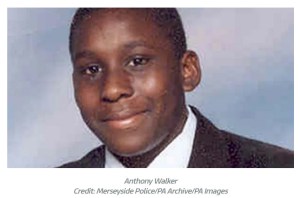
    Anthony’s mother, Gee Walker, has setup a trust in his name and as a Christian she believed this was part of Anthony’s legacy.  This will be something that is hard for those without a faith to accept. But I believe, as his mother hopes, that despite not becoming a civil rights lawyer and going to America, Anthony’s legacy through the work his mum does, and the effect of this drama, means more people could be touched. Some small comfort to his brave mum.
  • Late Thursday evening health secretary Matt Hancock announced that Greater Manchester, East Lancashire and parts of West Yorkshire were told to go into a ‘local lockdown’. This was due to a ‘spike in cases’ from people going into each other’s homes. There was some confusion and a great deal of contention from the Muslim population as it was the eve of Eid one of the major feasts of Islam. One leader likened it to cancelling the Christmas Day at 9 o’clock on Christmas Eve, although another did acknowledge that when the original lockdown was imposed many Christians had to miss Easter Day celebrations.
    Writing as someone who is doing project work for a company in Sale, there was concern that some members of the team who had only returned to work because their parents could look after the children again, may have to go back on furlough until the lockdown was over.
  • Another member of the team at the company developed some symptoms and was relieved when their test came back negative – but they had to wait over 3 days for the result.
  • One report from Manchester showed a street where many of the rainbow posters drawn to put in windows to celebrate the NHS Heroes were faded and torn….perhaps a sign of how quickly we forget?
  • One of the most worrying statements last week was from Professor Chris Whitty as he stood next to Boris Johnson at a Downing Street press conference on Friday announcing that the opening of face to face beauty treatments and bowling alleys was to be delayed for a further two weeks at least. He said

“I think what we’re seeing from the data from ONS, and other data, is that we have probably reached near the limit or the limits of what we can do in terms of opening up society.

“So what that means potentially is that if we wish to do more things in the future, we may have to do less of some other things.”

He expanded to say that if we are to get children back to school in September we may need to close some other places (pubs perhaps?) or put new limits on what people can do and who they can meet.

It really does feel this week that we are not in a ‘steady state’ anymore….!

How was week 19 for us?

After weeks of training and struggling with IT and ‘HR’ Alyson finally managed to book a few shifts on NHS 111 service…but only as reserve. She responded ‘I don’t want to be a reserve I want to be on the first team!’ Her wish came true on Friday when she was given just 20 minutes notice that she was working an 8-hour shift. This was due to late cancellations by two other people on the shifts. The deal is that people are supposed to get 24 hours’ notice. So, she managed to cancel one and worked 4-8pm. It was a tough shift, not only with the types of call, but using the systems for the first time. Reflecting afterwards Alyson felt that she had helped people at a difficult time, and knew that the next shift(s) would be better.

We both signed up as volunteers for vaccine trial in conjunction with the NHS and a pharmaceutical company. Unlike last week’s attempt we both passed the age & health requirements.

After the very warm day of Friday we went to Coventry for a ‘socially distanced picnic’ in a large park to meet up with Alyson’s sister and brother and their families in  Coventry. It was good to see everyone again including our two boys and our nieces. There were three generations and one of our nieces is expecting her first child in October  – she works in a hospital so was concerned about getting too close to us, but I think she enjoyed the day. The only member of the family who couldn’t come was our nephew who returned from the Spanish Balearic Island of Majorca so was self-isolating in his London flat.

On Sunday I attended my now weekly Zoom service at Westminster Central Hall Methodist Church. It was great to be part of a ‘congregation’ of over 1,100 people sharing in worship. Rev Howard Mellor gave an amazing sermon on the ‘original picnic’, the feeding of the 5,000, a miracle told in exactly the same way in all four gospels. Howard pointed out a small word that I had not noticed before – grass! Despite the disciples only having meagre rations of five loaves and two fishes, and thinking that was not enough to feed the crowd, Jesus managed to make it sufficient for all the people (more than 5,000 when including the women and children) and ‘still there were 12 baskets left over’. All this in an area which, because of the grass, was clearly a place of abundance where crops could grow. Howard’s message to those of us hoping to be modern day ‘good disciples’ was however little (in terms of skills and gifts) we think we have, if we give it to Jesus, he can help us achieve so much more than we ever believed.

Stay safe and let’s see if there is enough for another blog next week!
Coronavirus week 18 – the long wait for a vaccine

Will it be the scientists or anti-vaxxers who stop us getting a vaccine?

For the first time in the last 18 weeks of lockdown I found myself agreeing with Boris Johnson. He was visiting a GP surgery in London to promote the importance of flu jabs in the upcoming winter. Referring to the opponents of vaccinations he called them ‘nuts’. Ever since (the then doctor) Andrew Wakefield persuaded many parents 20 years ago not to give their children the measles, mumps and rubella (MMR) vaccine following some ‘research’ linking it to autism and inflammatory bowel disease (IBD), the use of vaccines has been called into question. 

Researching the claims by (now struck off doctor) Wakefield I learned the following facts from the General Medical Council (GMC) fitness to practice hearing of 2006 published in 2010.

  • A good study will include many participants, and Wakefield’s study included only twelve children.
  • Wakefield lied in the Lancet paper when he wrote that the participating children were referred independently after being diagnosed with IBD or other major gastrointestinal issues. In fact, many of the children were chosen specifically by Wakefield, and others were recruited with the help of the same lawyer who was paying him to conduct the study.
  • Even before publication of the study, Wakefield was working on patenting his own version of a measles vaccine, which he would sell at a great profit as a supposedly “safe” alternative to the MMR vaccine. The father of one of the children in Wakefield’s study was a cofounder of the planned business that would market this product.

The problems caused by Andrew Wakefield were in the news last August. Children who didn’t get vaccinated as their parents listened to him and not their doctors were now students, and an outbreak of measles was happening leading to serious side effects. The UK along with other parts of Europe has lost its status of being ‘measles free’.

The cofounder of Microsoft, Bill Gates and his wife Melinda are an example of people who have acquired enormous wealth, but are trying to use that to help others. They have been victims of terrible social media attacks and conspiracy theories as a result of pledging literally billions of dollars to vaccination programmes for children. They are partners of Gavi a global alliance of the WHO, UNICEF,  The World Bank and donor countries with the aim of funding vaccination programmes for children in all areas of the world. This will improve health, prevent needless deaths and lead to less poverty. In June a little-reported summit of world leaders was hosted by the UK and pledged over $8billion over the next five years to the programme.

The UK can be proud of being the largest donor pledging £330million a year. As Bill Gates said at the time

To beat the COVID-19 pandemic, the world needs more than breakthrough science. It needs breakthrough generosity. And that’s what we’re seeing today as leaders across the public and private sectors are stepping up to support Gavi – especially Prime Minister Johnson. When COVID-19 vaccines are ready, this funding and global coordination will ensure that people all over the world will be able to access them.

In recent weeks Russia (who pledged no new money in addition to the $4milion per year share from a previous campaign) have been accused by the UK of trying to steal scientific secrets on the development of a Covid-19 vaccine. China, who also only pledged $4million per year, are still being accused as a possible source for the current outbreak. 

To be clear, the pledges are for vaccinations of all types and not just Covid-19. Since 2000 over 760 million children have been vaccinated against polio, pneumococcal disease, typhoid, MMR, meningitis and rotavirus (that causes diarrhoea). However, the lockdowns in various parts of the world and the WHO advice to temporarily suspend vaccination programmes, to prevent people from spreading Covid-19, could lead to an estimated 6,000 children dying every day from lack of protection that vaccination provides. It’s a terrible dilemma for many countries’ health systems.

Their personal $1.6 Billion pledge hasn’t stopped the conspiracy theorists putting false information out about Bill & Melinda Gates, accusing them of wanting to use the programme for mass sterilisation to control world population, and even implanting a microchip as part of the programmes, to track everyone in the world.

This week DHSC announced that eligibility for the programme of flu injections for the coming winter has been extended to 30 million people in an attempt to prevent the NHS being overwhelmed by a flu pandemic and a second wave of Covid-19. We have had years of creating vaccines for seasonal influenza which is a slightly different strain each time, but even these aren’t always fully protective, but can lessen the severity of symptoms and reduce the rate of infection. 

We have never succeeded in getting an effective vaccine against any of the coronaviruses. Even with about 150 programmes to develop one and almost 25 starting human trials, there are questions to be answered  before getting one. Here are seven according to an article I read this week.

  1. Is the vaccine safe? Early results suggest that there can be mild side effects from the vaccines, but more worryingly these can we worse in those more likely to be affected by the actual virus – the elderly and those with comorbidities. It is possible that a vaccine could make the disease worse in those who have it already.

  2. Does the vaccine work? The general view is that it is unlikely to be completely effective and Professor Chris Witty has said that at least 50% would be a good result.

  3. Will protection from a vaccine fade over time? There was some excitement when the vaccine being developed at Oxford produced the type of reaction expected, but it could be that this fades after a few weeks or months. However, there is also a theory that some element of ‘immune memory’ could result that helps the next similar infection.

  4. Can we mass-produce it? Whilst the UK Government claims to have pre-ordered 100 million doses and be investing £150 million in new production facilities, there will be a long timescale. Some vaccines need to be stored in specials conditions such a low temperatures before being given. This could also be a challenge both in transportation and worldwide in countries with poor facilities and health systems.

  5. When will we really have a vaccine?  Are we talking about when we have a proven vaccine after clinical trials, when it is approved by regulators, when we have enough to give it to key workers in clinical settings and then those at greatest risk, or when we have enough to inoculate the whole world?
    There is a danger that if supplies are strictly limited only those who can afford it, or have the political leverage to get it will be treated. This will only exacerbate conditions in the rest of the world who can’t afford it – and the virus will be around for even longer.

  6. Once we have a vaccine, will people want to get it? So we come back to the anti-vaxxers or even those who are just cautious. In a recent poll about one in five Americans said they don’t plan to get a coronavirus vaccine, while half said they would. The rest were unsure. The US has a system where people need to pay or have insurance, so even in the richest country in the world cost could be a barrier.

  7. What about booster shots? It is likely that any vaccine could need more than one dose to maintain effectiveness, so all the points about cost and organisation of healthcare systems come back into play.

There was an appeal for volunteers to take part in the clinical trials for vaccines produced by Oxford University and Imperial College London, so I thought I might offer – but although I am fairly fit and healthy I am over 55 so that was the end of that.

Vaccines aren’t the only treatment and this week again there have been trials of a new therapy based on a protein called interferon beta that have shown promising results when given as an inhaled dose. This was previously shown to have been effective for the treatment of SARS.

Other news this week.

  • A couple of months ago when the government was recruiting 25,000 people to train up to ‘track and trace’ contacts of those who had a positive test for the virus, there were newspaper stories of them having so little to do that they were watching Netflix movies. A story emerged this week that could have been interpreted in a way that could have suggested these people were making their own work. It was an ‘international’ story too.
    The English NHS ‘test and trace’ system has been outsourced to a US company that uses call centres based in Scotland.  Eight of the Scottish workers there tested positive for coronavirus, meaning that the Scottish system, called ‘test and protect’, had to get involved to trace their contacts – you couldn’t make it up!
  • In an interview on the anniversary of taking over as leader of the Conservatives and moving into 10 Downing Street, Boris Johnson admitted that there were some ‘open questions’ to be answered about the handling of the crisis in relation to timings of lockdown and protecting care homes. There was a less than generous video doing the rounds on social media claiming that as the virus was spreading across the world Boris missed several COBRA meetings, was uninterested in briefings and more interested in throwing a party to celebrate ‘getting Brexit done’.
  • Whilst the school holidays had started and some people were enjoying time in Spain, on Sunday morning all four UK governments brought back measures for people returning from the country to isolate for 14 days on their return. Despite FCO advice that travel to the Balearic and Canary Islands was still allowed, and only that to mainland Spain was not recommended, people returning from the islands still had to isolate. Such measures had been on the cards, but the suddenness and extent caused some controversy with many people again unsure of their holiday insurance situation. Many will also lose money as not all employers will be sympathetic to them taking more time away from work.
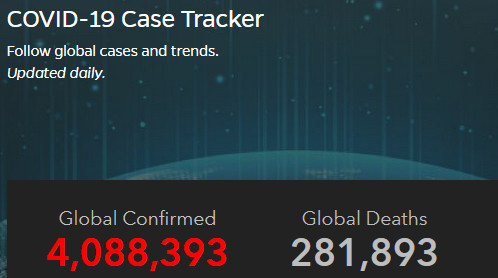
  • The number of cases is still falling very slowly with average daily deaths at 64 by the end of the week, down 8% from last week. The number of daily cases was averaging 662, which is up over 6% from last week. We are definitely plateauing but possibly to a sustainable level to live with as a trade off for an economic recovery.  Total deaths reported for the outbreak was 45,752.
  • At the same time as gyms and swimming pools are allowed to open, the government was trailing an old idea of getting doctors to focus on reducing the levels of obesity in the country. This is one of the key factors that makes people particularly susceptible to severe symptoms of Covid-19, as well as being bad for general health. Laws on advertising junk food will be brought in and GPs will be allowed to prescribe 12-week health plans and exercise.

How was week 18 for us?

It was back to work for me with planning for the project I am doing with the accountants in Manchester. The pressure is on to complete the first stages of the system in the next three months. We are not planning to be away on holiday any time soon so this should be manageable.

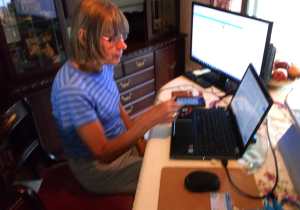
Alyson continued to come close to getting a first shift with NHS 111 pharmacy advice service. She had more technical problems but at the end of the week all appeared sorted and this is a photo of her ‘mobile call centre with a laptop with connection to the NHS systems, two screens, a smartcard and a mobile phone system that allows her to call patients using an NHS number.

In the week more sports opened up, I was pleased to be able to follow some Major League Baseball (MLB) as the team I support the Toronto Blue Jays started a shortened season in empty stadiums. As the only team in MLB outside the US, the Canadian authorities would not give them permission to play home games in Toronto as it would mean them crossing the border to play away games and US teams crossing to play at Rogers Centre in Toronto. Right up to Opening Day on 23rd the team had no base, but then it was decided to play games at their minor league team’s base in Buffalo in New York State. Their first series was away in Florida, so they need to get the stadium ready for the first home series, which was to be next weekend but has been put back until 11th August.
My other sports team, Middlesbrough football club managed to survive in the Championship on the last day of the season on Wednesday – ironically away at Sheffield Wednesday. Two teams previously managed by World Cup winner Jack Charlton, whose funeral was the day before.

Keep safe everyone and let’s see what the next week brings.

I am thinking about stopping this blog for a few weeks as the situation in the UK appears to be in a steady state.

Life & Death – Coronavirus week 7 – preparing for the ‘new normal’

Using technology for good – to help us ‘ease the lockdown’.

In terms of the coronavirus pandemic, week 7 was one in which we all speculated on what Boris would announce during his ‘address to the nation’ on Sunday by way of a ‘road map’ for lifting the restrictions. Lots of documents were ‘leaked’ and guidelines for certain businesses were published on the .gov.uk web site.

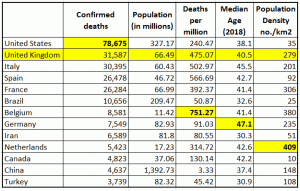
At the start of the week daily death totals (now in all situations) didn’t appear to be falling as quickly as many had hoped, but the last two days’ figures of 346 and 269 were lower, even for a Bank Holiday. By Sunday evening the number of lives lost was 31,855. On a purely numerical measure the UK is second to the US in terms of total deaths. There were more discussions on international comparisons. I have written in previous weeks about statistics and the difficulty of comparing countries. Factors such as the age profile, ethnic mix, housing density in cities, poverty and whether a country is an international ‘transport hub’ need to be considered.

Another topic that took up a lot of time during news bulletins and daily briefings was the launch of a ‘Track Test Trace’ (TTT) application for mobile phones. This is an example of ‘using technology for the good of society’.

On a basic level everyone who downloads the app to their smartphone can collect data about close contact with others who have the same app. If someone shows symptoms of infection by coronavirus they complete some details on the app and a central server sends a message to all of the people they have been in contact with over recent days informing them of steps they need to take. As with all ‘technology’ and especially programmes or apps, things are not so simple as I explain below.

My life using information technology for almost 40 years could be the subject of another blog. Even though one of my sons, now in his 30s, recently called me a ‘dinosaur’ for asking what I considered a reasonable question about how he implements systems in the complex world of on-line and mobile banking apps, I think my knowledge of the principles still stands me in good stead. I am proud of showing him and his brother before they got to secondary school, that there was more to computing than the games they played on our Atari console. This probably helped set them on the way to the complex systems they are responsible for now.

So I asked our two sons their professional opinion on the planned NHS TTT app development, its data usage and architecture. I read some articles with concerns around privacy, and the two departments party to it, the NHS and the intelligence agency GCHQ, not having a good track record with implementation of IT projects. GCHQ is all about surveillance so is the app as much about location as it is tracking the proximity of nearby devices?

Their reports were that most countries are going with an app produced by two of the largest technology companies, Google and Apple joining forces. They are promising an approach where all the data is stored ‘locally’ on the users device which also sends messages to the relevant contacts if required. No central data is held on individuals. Their  ownership of the two operating systems that all smartphones use, means they can maximise the efficiency of the Bluetooth file transfer exchanges and minimise the use of battery power on the devices.  It is this deep technical knowledge that may cause other countries, including the UK, problems in developing their own. 

An example of the problem is that in its standard form Google and Apple restrict apps from broadcasting Bluetooth constantly, as this has been exploited by companies connecting and sending targeted advertising. This means that most apps only broadcast if they are running in the ‘foreground’ or looking at it. If your phone is locked or you are not actively using the app there is a danger that some interactions will not be registered. There is some debate as to what counts as an ‘interaction’ is it that you are close to someone for a certain time such as five minutes, or just when you pass by on the street?

Michael found an article referring to a petition by developers to the French government demanding that there is complete openness on privacy, asking for published details of exactly what sort of data is collected, how it is used and when it will be destroyed after use. This is part of the ‘privacy v health’ debate around such applications. The UK government wants to use data to track the areas the virus is spreading.  David’s ‘research’ concentrated on battery life and foreground running. He says that with Bluetooth there is something called  “Received Signal Strength Indication” to determine distance between devices, but it’s not particularly accurate. This probably means there will be a lot of false positives, and even cases where it’s picked up a neighbour’s signal through a flat or house wall.

Whatever the pros and cons of the privacy debate, my concerns are about the practicalities of the system.

  • What incentive is there to report symptoms when people get them?
  • Alternatively what stops someone maliciously reporting symptoms if they are so minded just to cause a nuisance?
  • Is there a necessity for a positive test before the messages get sent and if not won’t the ‘false positives’ cause a lot of unnecessary disruption?
  • Given that a lot of people will go to a supermarket once a week, many ‘contacts’ will take place. The consequence is that one or two customers getting symptoms can lead to many supermarket workers having to isolate. Similarly, one supermarket worker getting symptoms could lead their fellow workers and hundreds of customers isolating. The result, after a few days, could be no supermarkets open and no customers going in.
  • Most transmission currently seems to be taking place in hospital and care home settings where there are lots and lots of ‘contacts’, so I am not sure how practical it is to use the app in those areas. Most medical staff take care not to contact people at home or outside the work situation anyway.

The biggest problem with the TTT system is the same as with the current hard lockdown. If there is a large minority who don’t engage or download the app, and they are the ones responsible for being lax on other ways of controlling the spread of the virus, they will still be responsible for causing some ‘needless’ cases and deaths.

We await the results of the Isle of Wight larger scale test but given that we have been told the app will be available to us ‘by the middle of the month’ there doesn’t appear to be much time to analyse how the system is working.

Readers of this blog know I love an initialism, so the last word goes to the writer of a blog three days ago suggesting countries trying to develop a (deep breath..) Pan-European Privacy-Preserving Proximity Tracing app or PEPPPT, will find themselves changing course and adopting the Apple-Google model. He predicted that by the end of the month the UK will have done so.

Is the change in message another sign that we are in for a long haul?

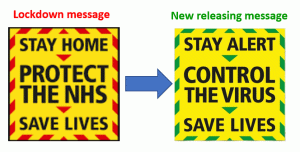
If today’s papers are to be believed Boris’s ‘address to the nation’ this evening will change the message we have been used to seeing as illustrated below.

The not so subtle change from red to green along with a ‘traffic light system’ for alert levels suggest to me that we are in for a period of trying changes, and if they don’t work putting restrictions back on. If, as has been trailed in the press, there are a whole variety of ways that businesses, workplaces, schools and social situations will change, then confusion (and some anger and worry) could be widespread.  The words of epidemiologist Professor Peter Horby interviewed on The Andrew Marr Show stood out to me. He is chair of  New and Emerging Respiratory Virus Threats Advisory Group or NERVTAG – sorry folks it is too lovely an acronym to ignore.  He stated

the virus is not like a storm or hurricane where we batten down the hatches until it has passed by, and then emerge into the sunshine and it has gone. It’s still out there and most of us have not had this virus, so if we get this wrong it will very quickly increase across the population and we will be back in a situation of crisis. So we have to be incredibly cautious about relaxing the measures.

NERVTAG told the government that getting the relaxation wrong could lead to a figure of 100,000 deaths in the UK. We still don’t know the proportion of the population who have had covid-19, but if the professor is correct there might be a lower but steady number of deaths for many more months yet.

The fact that the extra Nightingale Hospitals haven’t been closed is probably a sign that the politicians expect if not a ‘second wave’, then a lot more cases. As well as balancing privacy vs health for the new tracking app, there is even more pressure to balance health vs the economy. 

Finally, on Sunday evening we listened to Boris address the nation. He set out the way the five ‘alert levels’ would be set by monitoring the R-level by an advisory group. He set out timescales for now, the end of May, end of June when certain parts of the economy such as construction, manufacturing, garden centres, shops, and eventually limited hospitality would restart.

He encouraged anyone who can’t work from home to return to work tomorrow, and from Wednesday encouraged everyone to take more exercise and play sport with their family.

However, the main ‘confusions’ straight after the announcements were;

  • How people, who the prime minister said should go ‘back to work’ if they could the next day, would get there given limited public transport.
  • The other nations of the UK have announced that they are sticking with the ‘old message’ about staying at home. Scottish First Minister Nicola Sturgeon even asked the UK government not to run the information ads in Scotland. In Wales where you can’t drive for exercise, people from England could get fined for driving to the Brecon Beacons for exercise. Do Welsh workers need to drive to England if their employer decides that they need to work?
  • The detailed instructions for all sorts of workplaces have not been set out, so it is uncertain how that might look.

We will see what happens in the coming week with clarification and further statements to parliament on Monday, and questions from the public in the daily briefings.

Other news this week.

  • VE Day was celebrated in a ‘socially distancing’ way on Friday 8th May. The 75th anniversary was a special one and street parties held, and old-time songs sung. An evening concert held at Buckingham Palace featured a ‘virtual duet’ with Katherine Jenkins and Dame Vera Lynn of the wartime favourite ‘We’ll Meet Again’. One lady told the story that on the original VE Day she and her sister had to ‘socially distance’ and sit on a separate table as they had mumps, and she didn’t think that 75 years later she wouldn’t be able to join in a street party due to social distancing again.
  • In last week’s blog I wasn’t having a go at radio DJ Chris Evans specifically over his fundraising efforts. I listen to Virgin Radio’s Breakfast Show most mornings and Chris and his team try to spread joy and positivity in these difficult times.  He has also been party to raising literally tens of millions of pounds during his time at Radio 2 and Children in Need auctions and events. Chris by his own admission comes from ‘humble roots’, found fame and has had his well-documented ‘excesses’. But he tries to see the best in people and teach others lessons he has learned.  The message from last week was that our much-needed public services should be properly funded by us all and not rely on the charity and voluntary sectors.  Chris, his family and many celebrity friends have now raised in excess of £1 million from two auctions of memorabilia, and his son Noah over £100,000 by sleeping in a den in the garden. This money will go to producing more than 220,000 sets of scrubs for the NHS workers. 
  • On Friday transport minister Grant Shapps gave news of a £2billion scheme to encourage us to cycle or walk to work. For people travelling on public transport to maintain social distancing then they need to run at about 10% capacity. 
  • Other countries started to ease their lockdowns and in Germany Chancellor Angela Merkle allowed all shops to reopen, pupils are gradually returning to classes, and the Bundesliga – the country’s top football league – will restart next weekend. Initial signs are not promising as the dreaded R-number, a measure of the number of people each confirmed patient infects – moved to above 1.

Thoughts at the end of week 7

We continue to enjoy good health and the warm weather meant we ate a few meals outside. Alyson planted more seeds and worked on the garden. I managed to put the last shelf up in our shed in under an hour!

After finishing Terry Waite’s book Alyson has started the one by John McCarthy and Jill Morrell ‘ Some Other Rainbow‘ that documents the same time and similar events. We have been watching some more ‘culture’ on YouTube with recorded performances of Shakespeare and ‘Frankenstein’ by The National Theatre.

At today’s live stream service from Methodist Central Hall, Rev Martyn Atkins talking about being ‘salt and light’ referenced a talk he had heard where a student illustrated Christians being all shapes and sizes of candle, some battered, some old, some coloured – but all shining as a light to others. Something we are called to do at this time. One of his daughter’s friends when she was frightened would ask her dad to ‘turn off the dark’! We needed to use the battered candle I display some Sunday evenings to remember our carers as we had a power cut on Saturday evening.

We have had the usual Zoom meet up with friends and family. The week coming up is both Christian Aid Week and Brain Injury Awareness Week, so I have two ‘Zoom quizzes’ to prepare and host.

Alyson is hoping to get back to ‘frontline’ work by helping the NHS 111 Service and doing calls to patients who have been referred to a pharmacist for advice. She has been training and is waiting on information on how to setup a ‘call centre’ from her study – i.e. our spare bedroom.

I am a follower of a blog by the wonderful modern poet Brian Bilston and if you have never seen his work I can recommend you looking him up. He has produced some thought-provoking work over these last few weeks and I leave you with one of my favourites;

On Leaving the House and Encountering Another Human Being

I’m sorry I dived into the bushes.
It’s not personal, you understand.
You happened to walk in my direction
and my nerves got the upper hand.

I’m sorry I screamed when you came near me.
Don’t take my angry shrieks to heart.
Idiomatically, let’s stay in touch –
and physically, six feet apart.

Apologies if it seems like you repulse me,
that I recoil when you come near.
In other times, we might have spoken,
shared a joke or had a beer,

or waltzed together down the footpath,
perhaps we may yet still one day.
But just for now, embrace the margins
and wave to me from far away.

© Brian Bilston’s Poetry Laboetry
 
 
Keep safe everyone and remember, ‘We’ll meet again some sunny day’.
 

So Whats the Story?….We did it!

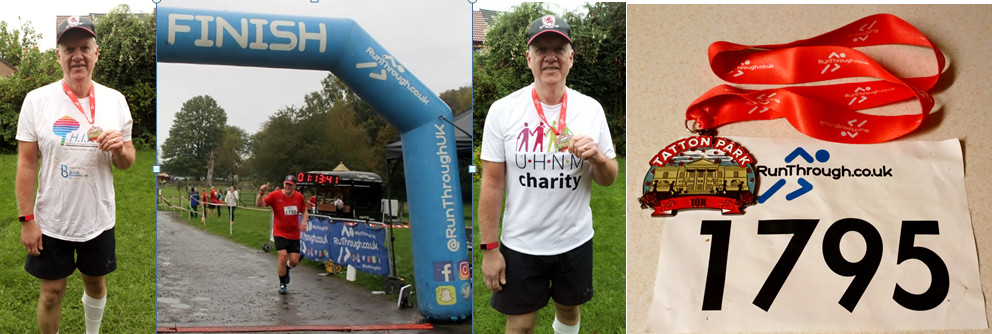
During the weekend that Eliud Kipchoge ran a marathon in under two hours, I managed to slowly jog 10k around Tatton Park in 1 hour 12 minutes and 23 seconds. Eliud could have done it in 28 minutes 32 seconds!

The real story, however, is not my running but that together we raised a lot of money for four charities. I decided to include Parkrun Forever, the charity which, along with corporate sponsors, allows Parkrun to be free for everyone to take part in.

The total sponsorship for the charities are:

Cheshire South Methodist Circuit
£1,230.00

HIP in Cheshire
£2,860.50

UHNM Charity (Royal Stoke Hospital)
£1,312.50

Parkrun Forever
£145.00

That’s a total of £5,548

Thanks to more than 65 of my family, friends, church fellowship and HIP members who donated. Your generosity is overwhelming!

I know the charities will be grateful for the funds and it will allow them to support the people they work with, or who are helped by what they do.

The on-line donation pages have now been closed and the funds passed to the charities.

Every blessing

Ian Skaife
November 2019


So Whats the Story?….. The Long Story

This is the longer story of the reason I am doing a sponsored 10k for three charities that you can read about in my last post So Whats the Story…? A 3-2-1 offer on a sponsored 10k.

During the Olympic summer of 2012 I was training for my first short triathlon, having been a ‘slow plodder’ for about 30 years of doing 10K’s and around 15 Half Marathons including five Great North Runs. I was never competitive and my motto was ‘when the going gets tough…..it’s time to slow down or even walk if needed’.

I woke up one Wednesday morning with a splitting headache and some numbness in my right foot. Putting it down to ‘man flu’ and an old back injury I worked that day but took the next one off. On Friday I woke up and could barely move my right side and the headache was excruciating. By the time we got to A&E I could barely stand unaided. A stroke was diagnosed, and I was put in a ward and pumped full of aspirin. On Sunday after a CT scan I was told that it could be a cancerous brain tumour and I was being sent to a specialist hospital 18 miles away. They confirmed that it wasn’t a tumour but a large amount of infection. They were not able to operate, as I had so much aspirin in my blood there was a danger that I would suffer a bleed in the brain. By Thursday my condition deteriorated, and they did an emergency biopsy. This didn’t go well and early the next morning I went for a second operation to drain the infection. Alyson was told that I might not make it, and when our two sons arrived from their homes in the south, they had what we now refer to as ‘the organ donation conversation’.

Memories of the next 24 hours are sketchy but when I arrived back on the ward from intensive care, I still couldn’t move my right side and although I understood what people were saying I couldn’t answer at all. The only words I managed were a tentative ‘yes’ (when I meant no) and no (meaning yes). Later I managed to speak a little but then it was mainly swear words which, as people who know me will confirm, I rarely use.

So began treatment involving two antibiotics intravenously five times a day every day. I was also put on anti-epileptic medication to prevent fitting, and antidepressants for my low mood. The days were endless, the restless nights even longer. I was struggling with tiredness and extreme confusion. Coming to a dead stop after my life as a busy IT Project Manager was hard. I wanted to be back at work but had to learn that in the brain business, days turn to weeks and weeks to months.

I tried to read newspapers and magazines but by the end of a paragraph I had forgotten what the headline was about. I had asked for my Bible to be brought in and that was even harder to read. I couldn’t even remember The Lord’s Prayer. My Bible was still a source of some comfort, although starting on Psalms was probably not my best idea. I do have a vivid memory of Carmen, a Columbian nurse singing quietly a hymn while she gently washed my back. I shared stories with other overseas nurses who, on seeing my Bible, talked about life ‘back home’ and what their faith meant to them.

I started intense physio and speech therapy. Being left-handed was a bonus as at least I could do some basic tasks. It took three people to get me out of bed using a hoist and either onto the toilet or eventually to prop me up in a chair.  What I couldn’t do was muster the words to ask to be put back, so often sat there frustrated for hours as people came in and out of my room.

Alyson visited me twice a day every day for the next 12 weeks. I owe her a debt that will never be paid. Church friends and close family helped relate my story each day to our wider circle. My brother and cousins drove mum and dad from their home 3 hours away. I barred any visitors other than close family at first, as I looked awful and couldn’t concentrate enough. When I relented our friends were faced with Ian who didn’t have any personality. The lights were on, but no-one was at home.

Then started daily visits from close friends, our sons, Alyson’s sister and brother, cousins. I couldn’t remember who had been from one day to the next – but I know that they all made me feel better – even if it didn’t always show on my face. Chocolates, grapes, biscuits and particularly ready-made custard were very welcome!

Work colleagues from the IT & Business Consultancy business I worked in visited and I was grateful for their support covering the projects I was supposed to be managing. Alyson’s employers Co-op Pharmacy were very understanding and allowed her all the time off with compassionate leave. The stress and worry meant that she was unable to work in any useful way.

Eight weeks in I needed a third operation as infection was still collecting in my brain. I had ‘drains’ fitted linked to bags on my shoulder – I looked like ‘Dracula’s Bride’ for a week or so.

This is a scan of my brain just before the operation on the left, and what a ‘normal’ brain looks like on the right – you don’t need to be medically trained to see the pools of infection and damage….

The result was a small improvement in all my symptoms; I managed to move a toe then bend my ankle.  I managed some ‘freedom’ with a wheelchair that I could push myself around the ward and, if Alyson came with me, to the café or even outside. Friends and family began to see some big changes in both my alertness and mobility.

Steve Ingrouille, the minister at my local Methodist church, came to visit and we had the strangest communion I have ever received sitting in a corner of the public restaurant. Steve did the complete service with the bread and wine used at my church the previous Sunday.
Alyson also had great support from church friends who rallied around to help and I believe that the prayers they gave aided my recovery. Val Mayers and our neighbours Stuart & Veronica Rhodes need a special mention. I continue to gain strength from my church fellowship and my faith.

My mood slowly improved and when mum visited me one Saturday as she left we hugged and she said ‘Love you son, keep getting better and see you soon’. These were the last words she said to me as the next day she had a heart attack and was put into a coma on a life support system for a week.  One Friday as I was taking my first steps unaided by physios I had a missed call on my mobile. It was my brother telling me that mum had died…she never got to see me walk again.

I was allowed out of hospital for one day to travel to her funeral 150 miles away and managed to stand using a frame to give part of her eulogy.

I had my laptop back by then to write and plan my ‘escape’ from the rehab hospital until my condition improved enough for Alyson to take me home in a wheelchair. The skilled consultants, surgeons, nursing team and physios had ‘fixed me’ – physically at least.

18 months of hard work started, to recover from my ongoing symptoms, regain my driving licence, and build my strength enough to stand on my own with a stick, and climb stairs. I did some part-time work in the IT Consultancy Business, helping the owners to sell the part of the business I was in. I knew about this before my illness but it meant me being made redundant. I then managed to get a little paid work with my church on finance and property.

Alyson went back to work as a pharmacy manager in a very busy community pharmacy attached to a surgery. This is an extremely demanding role with a team of around 20 to manage and unrealistic targets set. At least I was able to support her in this, being at home to look after practical things around the house, waiting for trades people, doing some of the household chores that until then had fallen mainly on Alyson. I was happy with a lower pace of life than before, and could rest when needed.

I had the hip replacement that I needed before going into hospital, and it was through this that I met Annette Turner, a brilliant physio specialising in hydrotherapy. When my consultant had signed me off in February 2013 he said it would be two years before we would know the lasting damage and implied this would be substantial. Annette convinced me that, whilst that was true, she could get me to the point where it might be that the only thing I couldn’t do was to move my little toe. That has proved to be the case.

In January 2014 I was encouraged by Beth Fisher, Service Manager from the Acquired Brain Injury service in Chester, to attend a support group who met for coffee. This is an amazing organisation who provide help for people with a brain injury to reduce the loneliness that can come from hidden symptoms, loss of confidence in social situations, along with memory issues and extreme fatigue. During the last few years this group has formed into a formal charity. I am now a trustee of Head Injured People in Cheshire.

Steve Price, an accountant who had been one of my project managers, had left to concentrate on his own business. In August 2014 he offered me the opportunity to work with him a few days a month to get out of his front room into an office,  taking on some people to help him.  I am eternally grateful to Steve and the team for the opportunity to work with them putting new systems, marketing material, social media, lots of new business processes in place as we grew. I became Compliance & Training Manager. (In April 2019 Steve and the rest of the team merged with another practice and he is now one of 5 directors in a company with 23 employees and a growing list of clients. I took the opportunity to retire).

I had another 18 months of physio and got to walk correctly and slowly, then six months later I decided to try running a few steps. I did a short route around our home in streets that I had used for training. It took me about 30 minutes to do a couple of miles with intense concentration on my foot placement and staying upright. I had to sleep for an hour afterwards. Fatigue is a lasting symptom of brain injury and several afternoons a week I sleep for 40 minutes, and each time I run I must sleep for around 50% longer than the time I take.

I don’t remember how I heard about Parkrun but in April 2016 I arrived at Delamere with my barcode and did the whole 5k without stopping. It was very emotional, and my account can be found at https://skatchat.wordpress.com/2016/04/.

Alyson used to come with me and walk the course before we started and meet me at the end but then two weeks before her 59th birthday she announced that she fancied running it. As someone who has asthma and have never run before I was amazed. She did her first run in 37 minutes, beat my PB the next week and after 5 more successive PBs she now runs around 30 minutes. She even fell over once and after dusting herself off for a short while still beat me by four minutes.

So the 100th Parkrun completed yesterday was an emotional one too, coming as it did on the 7th anniversary of mum’s death. Alyson did her 24th and our son Michael volunteered.  My brother Andrew did his 100th at Newcastle on the same day along with his son Thomas.

As we lost dad in 2016 and have received some money from their estate, it seemed a good time to celebrate my recovery and use their legacy to raise funds for the three charities that have helped me. So next weekend I will take on 10k at Tatton Park.

So Whats the Story?…..where I am now.

Reflecting on the past seven years, I genuinely feel that I am in a better place than before my brain injury. Sure, it has been a tough time and I wouldn’t want to inflict the stress and worry on my family that was some of our experience. Overall the positives are;

  • I am in a less stressful state than I was before – many people when they heard it may have been a stroke worried that it was due to pressure of work and church business that had caused it. I often say that my memory problems mean that I can’t remember what I am supposed to stress about
  • I feel that my faith has been strengthened, as it says in Psalm 40

    I patiently waited, Lord for you to hear my prayer. You listened and pulled me from a lonely pit full of mud and mire. You let me stand on a rock with my feet firm, and you gave me a new song a song of praise to you

    and when I hear the story in Luke’s gospel of the paralysed man whose friends prayed for him and took him to Jesus – I can really relate to that.

    But I want you to know that the Son of Man has authority on earth to forgive sins.” So he said to the paralyzed man, “I tell you, get up, take your mat and go home.” Immediately he stood up in front of them, took what he had been lying on and went home praising God.
    Everyone was amazed and gave praise to God. They were filled with awe and said, “We have seen remarkable things today.”

There is no substitute for confronting your own mortality and asking the real
questions of what your life is about…

  • I have been able to spend more time working for my local church on finance and property issues, to support the Leadership Team looking at new ways of working, recruiting some amazing lay workers to support our ministers and churches.
  • I have had more time to give to Alyson and our family. Supporting them through difficult times at work and being there to help with looking after her parents and supporting her when they died these past two years. Our two sons are in well-paid roles and have been able to buy their own homes. They too have benefited from their grandparents’ legacies, and by that I don’t just mean the financial ones.
  • We are fortunate to have built up enough savings to be comfortable in our retirement. I had several good jobs in companies with strong ethics and who made a difference to their employees and the patients/customers they served.  I have been able to help a friend build his business to repay his faith in me.
  • I work with some amazing people in the head injury charity and have met some truly inspirational survivors, who live in much more challenging after effects than mine. Head injury doesn’t discriminate on the basis of age, wealth, personal background, education or experience. I am fortunate that the relationships with family and close friends have survived – that is not always the case.

So as I look forward to enjoying some travel and a forthcoming pilgrimage to the Holy Land, I wonder what the future holds, and the next challenge we will face. I hope that I am up to the task but know that I will have a lot of support.

Thank you for reading my story.

Ian Skaife, October 2019

Theology Everywhere

Discuss theology today to transform tomorrow

verbalising

ruminations on life at fifty ... or so ...

Discover WordPress

A daily selection of the best content published on WordPress, collected for you by humans who love to read.

The Daily Post

The Art and Craft of Blogging

WordPress.com News

The latest news on WordPress.com and the WordPress community.