Coronavirus weeks 16 & 17 – will it all be over by Christmas?

Hi ho, hi ho, it’s off to work we go..

I couldn’t decide whether to title this blog ‘it will be all over by Christmas’ or the one I settled on. Unlike Boris Johnson and his government, on balance I decided to ‘trust the scientists’.  There are still too many unknowns to be sure. I acknowledge that the recent announcements were a ‘hope’ rather than an assertion, and one role of government is to ‘get the economy going’ in order to raise the funds needed to do all the spending needed, and there will be harm to health if there is mass unemployment and economic hardship.

The dilemma was summed up by Matt Pritchett’s cartoon in The Telegraph newspaper on Saturday.
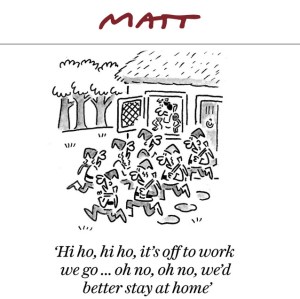
Alyson asked me how I felt about the announcement and I replied honestly that I was conflicted. On the day when the statistics on deaths and new cases were also thrown into confusion (or to be precise more confusion), this added to my uncertainty. I have looked at statistics in an earlier blog, and whilst the figure for ‘excess deaths’ produced by the ONS is a more reliable figure, I have stated the daily announced figures from the government briefings in each blog. I am no longer able to do that as they are no longer being declared. It seems that we have been counting as a ‘daily death’ in England if someone dies of any cause but had been tested positive in the last few months. The example used was somebody having a positive test in March and then dying from a heart attack in June. The effects of any ‘error’ in these figures may be a few thousand, and acknowledging that every death is tragic, but in the overall view it will make little difference.

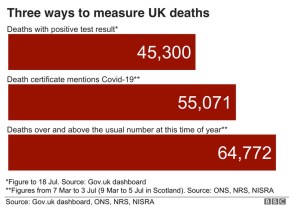
The best estimate we can manage is that the 7-day rolling average death toll is currently around 69 per day, slightly down on previous weeks. Average new cases have steadied off but are now rising slightly again to 621 per day.  The government has three ways of measuring total deaths with differing time periods as below.
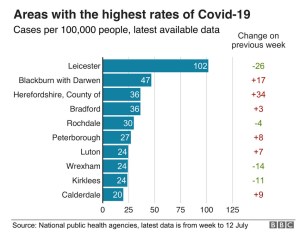
The other change recently, and one that is probably the way forward, is looking at much more localised figures, along with giving local authorities and public health managers the ability to put in effective measures – the idea of ‘local lockdowns’. I wrote a few weeks ago that local systems had been dismantled and now they will have more of a role to play. This is the current data on ‘areas of concern’.
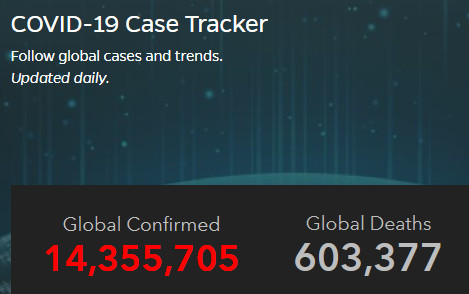
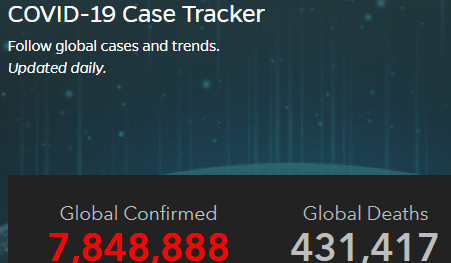
Before leaving statistics for this week, as I write the levels of coronavirus globally are still rising and the number of daily infections is the highest recorded so far with the WHO putting it at 259,848 with 7,360 more deaths. So while the situation in our country is levelling off, this still remains a global pandemic – a fact that we all need constantly reminding of. The Disasters Emergency Committee (DEC) appeal to help those around the world where Covid-19 is adding to poverty, famine, war and poor health provision is one example of people trying to help others in a practical way. It is good to see UKAid matching the donations as well.

New ways of working and a new economy.

Anecdotally, there is a reluctance to return to ‘normal work’ and particularly in office situations. This may be due to safety concerns, childcare or possibly that people are learning that there is more to life than commuting in crowded public transport, or sitting in a traffic queue. Whatever the reasons I do think there will be, to use a phrase from my last blog, ‘a reorientation’ of the world of work. People do want to spend more quality time with family, taking exercise outdoors, working remotely, and spending less on ‘stuff’ we accumulate. Endless ‘consuming’ of the world’s resources and damaging our environment are topics that will be higher on the agenda. These are complex and interrelated issues and some initial questions that need exploring and debating politically are;

  • Economically can we come up with a new model where value is derived from providing more ‘services’ and ‘experiences’ than from manufacturing things?
  • How will money flow from those providing such things and those paying for them?
  • Will there be sufficient tax income to enable government/society to provide essential services such as education, health and social care, and a ‘safety net’ for those unable to take part due to disability, health or social conditions?
  • Who will be the people/organisations willing to invest in these new ways of working/supplying?

I worry that it is all too easy for employers to simply ask people to work from home without providing the necessary environment for that to happen effectively.  Those, like us, who are lucky enough to have a large house with two rooms we can dedicate to be ‘offices’,  with good connectivity and equipment will be able to do more effective work. However, imagine being in a shared flat in the centre of a city where four or more 18-35 year-olds are trying to sit on a bed with a laptop for hours on end, not having enough bandwidth to download data or stream video, having to be ‘available’ for your ‘boss/supervisor’ whenever they choose. Possibly you will need to be close enough to travel into the office once a week/twice a month for face to face group meetings or to talk to clients/customers. You will be stuck in a no-win situation of neither being able to move to less expensive places to get on the property ladder, or having little time to take advantage of the social interactions needed to build up any sort of ‘team / business’ culture that separates good organisations from the merely satisfactory.

There could be upsides to this if planned effectively. If there is a collapse in the commercial property sector with large office blocks being freed up, then these could be re-purposed for affordable city living, and shops on deserted high streets in smaller towns could be converted to ‘work hubs’ where people could travel short distances to ‘hot-desk’ in comfortable offices with good connectivity, shared meeting spaces and good facilities. This would allow the separation of home from work that many desire, but still leave time to spend on leisure/social activities with friends and family. If I was a larger company wondering where my market was going, this is what I would be investing in.

Why the virus will be dangerous for a long time

The other aspect of the current situation that we need to resolve in this country is the suggestion (or is it a fact?) that the ‘virus is going to be with us for a long time’. Given there are countries across the world who have been through a very hot summer and also ones where there have been winters, it seems the virus is not affected by either. There were two snippets of news that I heard, but have not been able to research much at the time of writing, which are potentially worrying.

  1.  The virus is mutating (as all viruses like the flu one do) and the ‘second’ virus which mutated from the one originating in Wuhan is now the ‘dominant’ one and causing the current pandemic.
  2. Having antibodies from an infection of coronavirus is not a guarantee that you will be able to resist a second bout of infection – the antibodies are not ‘long-lasting’.

The two issues are interrelated, and both make it hard to produce an effective vaccine. There is no evidence that the mutation makes the virus more transmissible which is the other worry. We have been lucky in one regard that although the current version of the coronavirus is quite easy to catch, it only appears to seriously affect certain sections of the population, with many getting mild symptoms.

If we had taken more notice and put in systems and plans after previous outbreaks of MERS, SARS and Swine Flu, outcomes may have been better. We have had plenty of warnings. It is vital that we learn lessons as the real ‘doomsday scenario’ is that the next virus might be all of the following;

  • Very easily transmissible via contact or being airborne.
  • Able to last for a long time on many surfaces and in many environmental conditions.
  • Affect almost everyone who gets it in an extremely serious or deadly way.

The nearest we came to this was SARS which was quite hard to catch and cross borders, but spread to 26 countries and killed almost 10% of those who caught it . It was contained in a relatively small area of the world, and this is why wearing masks and contact tracing is more accepted in south Asia than in Europe or The Americas.  MERS was relatively short-lived and contained but with a death rate of around 35%. Both of them killed between 700-900 each. Swine flu in 2009 is thought to have killed between 123,000 and 200,000 globally, spreading to 214 countries in a year, but being a variant of the ‘flu’ virus many older people already had some immunity to it.

The so-called ‘second wave’ in the coming winter in  the UK will be due to a combination of a new variant of seasonal flu, added to coronavirus, and no effective vaccine for either.  In the good weather of the summer and autumn people are willing to meet outside or queue to get into shops, but imagine the effect of cold and wet conditions on our willingness to do those things. This is the reason leading members of the SAGE group continue to push hygiene measures and social distancing as effective measures ‘for many months ahead’.

Other news in the past two weeks.

  • A support package for performing arts and venues was announced and welcomed, but there are still many who will not survive and thousands of performers and technicians who rely on seasonal income are outside the scheme.
  • The environmental damage caused by careless disposal of billions of pieces of PPE that contain ‘single use plastics’ had added to the amount of micro-plastics in our oceans and on land. Much of the PPE should be classed as ‘clinical waste’ and incinerated but personal masks and gloves are being thrown away much like other litter. The increasing use of takeaway food from restaurants has added to this.
  • Wearing of face coverings in shops is to be compulsory from 24th July, but the police are not willing (quite rightly in my opinion) to enforce the new law which is more than guidance.
  • There doesn’t appear to have been a steep increase in new cases as a result of opening of pubs and restaurants and other shops.
  • There has definitely been an increase in traffic as junctions 16-19 of the M6 motorway near to us are back on the travel news with queues and accidents.
  • Gyms, swimming pools and beauty parlours can re-open.
  • Another example of ‘police brutality’ appeared on social media in England with a young white policeman kneeling on the neck of a black man. There were examples of young black couples being stopped and aggressively searched for driving in a new expensive Mercedes, and in another case for parking outside their house in a mainly white residential area.

How were weeks 16 and 17 for us?

Our main news from the past fortnight and the reason there wasn’t a separate blog for week 16 is that we have been on one of the holidays we booked last year.  A five-hour drive to a small National Trust cottage on the north Norfolk coast next to a disused windmill. It was very pleasant and great to be in a different and new place. Being self-catering and just the two of us it felt ‘normal’. Even for July the caravan park we were in was very quiet. We were not able to book a place to eat as the pubs were all booked up, and we did have to queue outside the small deli and convenience shop in the village. We walked miles of coastal path, went for two 6k runs and managed to keep social distances. We had a couple of ice creams, and ate pizza outside from a manor house with outside tables, we walked to one evening.
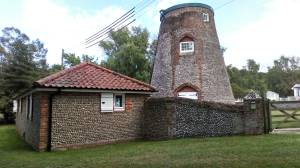
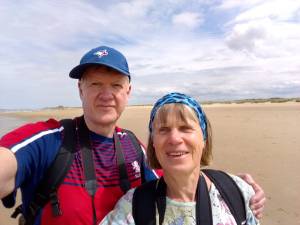
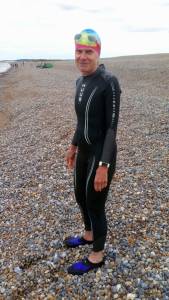
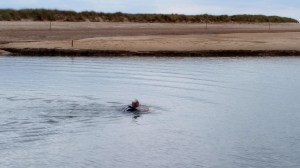
We visited several beaches which were busy with car parking but large enough to keep a decent distance and had clean and available toilet facilities. Alyson even managed to christen her new wetsuit with two swims in the sea, and on one of them she was joined by two grey seals sharing the same inlet.
Apart from having to plan stops on the way there and back – at a supermarket in Grantham on the way there and a farm cafe on the way back, our journeys were relatively straightforward. We noticed the extra traffic on the roads on our journey home last Friday as the official school holidays have started so it may be a different picture in the next few weeks.


I went to a meeting in the accountant’s office in Sale for a face to face project meeting on Wednesday 8th, and it felt strange but there were only nine of the usual 20+ people in so it was all very safe, and we managed to keep social distancing. It was much easier than holding a planning meeting via Zoom and sharing screens.

That evening I attended a church meeting via Zoom with 12 of us from across our district to look at grant funding applications. We decided that it worked so well, we would continue meeting this way in the future. It saves many of our group travelling for over an hour to an office so is ‘greener’, and we can get more people attending. It will be more pleasant than driving the narrow roads in Cheshire and Staffordshire on cold wet winter evenings.

David tried wearing his mask in a shop but declared himself feeling very claustrophobic so decided he would go shopping just once a week.

Michael has managed a few days in The Lake District in a remote cottage on his own and enjoyed early morning walks.

Stay safe everyone. 
Coronavirus week 12 – what I have (not) done…

Looking to a more just society…

Even though lockdown has been eased and we are allowed to do more things than before, my week has been dominated by planned activities that I have not done.

Alyson gave me a lovely thoughtful present to surprise me on my birthday in April. It was something that she knows I had looked at, but dismissed as probably too expensive and not fitting in with our plans at the time. This weekend should have been the ‘London Series’ of Major League Baseball (MLB) where teams from the US play a two-game series at the ex-Olympic Stadium, now the London Stadium and home to Premier League team West Ham United. The two teams due to play were the St Louis Cardinals and the Chicago Cubs, who play in the Central Division of the National League(NL) so it would be one game in a long-standing rivalry.

The 2019 series, the first one to showcase MLB overseas by playing in the UK, was another rivalry between the New York Yankees and the Boston Red Sox of the American League (AL) East Division. Some readers may know that I have been a supporter of another AL East team the Toronto Blue Jays since I first saw them in the early 80’s and have been to matches each time we have been to Toronto since, including last September. So, it would have been great to see a live game in London, but the virus put a stop to that.

I am sure more people would have been looking forward to the next thing I have (not) done this week – the Euro 2020 football championships. Friday would have been the first match in Rome where Turkey would have taken on Italy at 10pm UK time. Saturday would have seen Wales play and today England would have played Croatia at Wembley. I had put all the matches into the calendar on my computer which I do months before each major tournament in case people try to arrange church or charity meetings. Not that I wouldn’t go if they did, I just want to be able to inform them, and to have the chance not to do so!

The third activity I have (not) done this week like the 11 weeks before is my regular Saturday morning Parkrun at 9am in Delamere Forest. I have written about Parkrun before if you look back at posts, starting in April 2016 when I did my first run and first post, to February 2018 when I did my 50th, and last October when I did a sponsored 10k the week after completing my 100th. I really miss the run, the team of volunteers and other runners. During lockdown I have done a 5k run on Wednesday and a longer 6.1k on Saturday morning. The great thing is that I have come first every time, and today was my second fastest time of the 12 weeks.

However, the one thing I have (not) done and want to write about the most is an event I chose not to go to on Tuesday, despite being successful in my application to attend. We met up with Alyson’s sister and husband in Cannock Chase Forest park for a lovely walk and a ‘socially distanced picnic’ sitting either end of a felled tree. There were a lot of people around, but it was easy to keep a safe distance on the miles of paths. There was a takeout service from the cafe and there were plenty of Portaloo facilities which were clean and had plenty of hand sanitiser.

The event I chose not to go to was a Zoom conference with the Shadow Work and Pensions Secretary Jonathan Reynolds and other MPs and Labour Party members. It was to discuss policies that feed into the National Policy Forum consultation taking place this summer. The agenda looked an extensive one;

This policy discussion is on the subject of the future of social security after coronavirus and we would like to hear your thoughts and ideas on the questions below: 

  1. What has the crisis taught us about the role of social security in protecting the most vulnerable in society and the gaps in the current system?
  2. To what extent has the crisis changed public perceptions of social security? How can we build on any changes to ensure wider public support for the system?
  3. To what extent should social security be a universal entitlement available to all?
  4. How can social security support self-employed workers?
  5. What role can social security play in addressing inequalities and poverty in society?

Many of these were topics I wanted to write about when I started this blog and if you look back to the first one on the 5th April there is a section on Economics where I ask

  • How we use our wealth to best effect for what both main political parties agree should be ‘for the many not the few’.
  • How corporations, public bodies, small and medium businesses, wealthy individuals, and every individual supports each other.
  • Do we need a fundamental rethink and ‘reordering’ of past conventions?

So it would have been extremely interesting to have been in the session and one of the ‘breakout room’ where we would have had the opportunity to discuss in smaller groups with other MPs acting as leaders and Johnathan popping in to listen and answer questions.

The brief paper that we needed to read before attending the forum set out the problems with the current system, many of which were there before the crisis, but have been highlighted in recent weeks. It acknowledged the steps the present government has taken in the furlough, business rates, business loan and help for the self-employed, which have been unprecedented in recent times. The paper also pointed out the issues that need a fundamental rethink.

I admit to having no formal economic training and acknowledge that the taxation and benefits system for any ‘developed’ country is complex. A balance between ‘fairness’, ‘equality’, ‘incentive’, ‘reward’, ‘ethics’, ‘environment’, the fast-moving needs of the ‘labour market’ and dealing with factors arising from being an interconnected world and ‘globalisation’. But you don’t need to be any sort of expert to know that the present system is failing. It fails not just those in real poverty and need, but large numbers of working people who are claiming benefits and slipping into poverty as housing  and other costs rise at a time when wages are rising slowly.

To pick up on the current mood, the effects of the virus and ‘Black Lives Matter’, the present system already discriminates against the BAME community, those who we now call ‘heroes’ in low-paid but vital jobs, many of who are women, the disabled, young people coming out of education trying to get employment and into a home of their own. After the virus, these impacts will only increase.

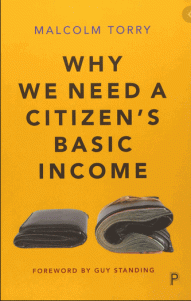
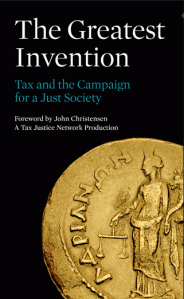
In mid-February I ordered the book below, prompted by a discussion we were having in one of our church study groups with Richard who worked at the local Credit Union. I had been reading the second one for the last year. Both have something to add to the conversation we would have had at the forum and for a policy fit for the 21st century.


Richard’s statement about what we could do to help those who he sees at the Credit Union was simple. ‘As one of the richest countries in the world, it’s time we paid everybody in the country a basic income’. The other book explains how our current taxation system is exploited by global corporations and wealthy individuals, using tax-havens and false reporting of money flows to avoid paying a fair share to support society. This can be to the point of criminality by those who setup the money markets to manipulate it in ways that even governments don’t understand, and for which there is little transparency. Radical change is needed considering the ideas in both books to reform the economy.

A Basic Citizen’s Income

There is not enough room to explain all the ideas around this and I suspect most people’s reaction would be ‘well it is a nice idea, but it will never work’.   The details need to be worked out after a full debate and explanation. The amount needs to be considered but the ‘simplicity’ of it, in my opinion, is unarguable.

Every citizen who reaches working age will receive a basic income for them to use as they wish.  It is unconditional and nonwithdrawable (with higher amounts for older people and smaller amounts for children). It will be paid by the government directly into people’s bank account on a regular basis with no means testing at all. This immediately cuts out whole swathes of bureaucracy or ‘red tape’ so disliked by many politicians, it allows citizens who live in the present world characterised as a ‘precariat’ of uncertain income and changing jobs frequently, quickly slipping into needing help. There would be no need for Universal Benefit as everyone would have some income and could build a ‘reserve’ to see them through short periods of unemployment or sickness (or lack of income caused by a situation like the present virus). It could, over time, replace the need to pay a state pension. It will give the ability to those who want to pursue higher education the means to subsidise that, those who want to setup a small business to do so, and those in work to help others less fortunate or to pool ‘unneeded income’ to give a hand up to other family members. All such income would be taxable.

It needs bringing in with another pillar of a fair society – education. I can already hear people suggesting that it is a recipe for ‘scroungers and wasters’. Children and families will be taught basic money management and the way the economy works. Banks would have to change their model to help people manage their money well, and stop them from getting into debt through bad choices.

There is not enough room in this blog to explain it all, but I hope the chapter titles in Malcolm Torry’s book will prompt you to think about it more;

  1. Imagine….
  2. How did we get to where we are now?
  3. The economy. work and employment
  4. Individuals and their families
  5. Administrative efficiency
  6. Reducing poverty and inequality
  7. Is it feasible?
  8. Options for implementation
  9. Pilot projects and experiments
  10. Objections
  11. Alternatives to a Citizen’s Basic Income

Tax and the Campaign for a Just Society

This is the subtitle of the second book I read a review in The Methodist Recorder and asked for it as a Christmas present. I have not read it all but the parts I have made me realise that the reason a universal basic income might not happen, is the people who setup our complex financial structures are also those who control and exploit it.  Although not formally setup until March 2003 the Tax Justice Network (TJN) has its roots in the almost total lack of research as to what lead to extreme poverty in Africa, South-East Asia and Latin America as money flowed out from these countries under the guise of ‘aid’ to the financial centres in Geneva, New York and London via a complex network of offshore companies and trusts located in secrecy jurisdictions. They exploited the fact that many of the countries they were ‘helping’ had poor governance and taxation systems and officials willing to be corrupted by the promise of wealth such people could only dream of.  One of the writers of the book has worked ‘on the inside’ and struggled with what he saw in terms of ‘transfer pricing’, tax havens and ‘illicit financial flows’ as part of a team working for accountants Deloitte Touche and as Economic Advisor to the States of Jersey and alongside the Organisation for Economic Cooperation and Development (OECD). He witnesses what he calls the ‘dark arts of tax havenry’ and relations with Hong Kong, Jersey, London, and Singapore. Every time he questioned something with senior people, lecturers for his degree or powerful people in government, it was side-stepped and he realised he had wandered into an ‘economic blind spot’. TJN is now an established organisation working with partners in the charity sector and other likeminded organisation to campaign for transparency and information and changes to the global economic system. Not easy when you have the full weight of large financial institutions funding lobbyists and vested interests.

Again, there is not enough space here to write in full, but the book is in the form of individual articles/papers written by a variety of authors. I urge you to read some of them and here is a selection;

  • What is necessary is possible
  • Pinstripe Outlaws
  • The Africa Question: Where Do All the Profits Go?
  • Tax Justice and the Oil Industry
  • Tax Competition: A case of Winner Takes All?
  • Revealed: How Multinational Companies Avoid the Taxman
  • Making the Link:  Tax, Governance and Civil Society
  • The City of London: A State Within a State
  • Harnessing Land Value as a Green Tax
  • How Much Should the Rich Pay in Taxes
  • Didn’t they notice?
  • Human Rights and Just Taxation
  • Public Duty, Private Gain: Professional Ethics and Tax

The one highlighted in red I found the most shocking as it exposes the City of London as the largest enablers of tax havens in the world. In four short pages written 11 years ago it explains why it is unlikely that any UK Government will agree to such a radical policy as transparency in tax avoidance, and how the narrative against a citizens income could be stopped in its tracks by ‘those who have the real power’.

Other news this week

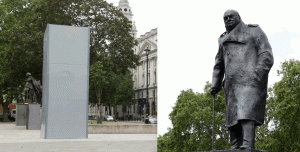
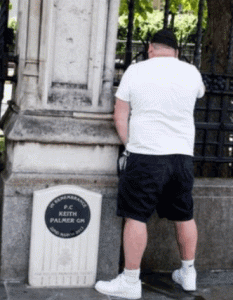
  • The Black Lives Matters protests continued and after the toppling of Edward Colston’s statue last week and the graffiti daubed on Winston Churchill’s in Parliament Square, a debate started on which others should be removed. This, like most topics I have written about, is why education is so important. The historical context of our ‘famous’ people and the benefit to society needs to be explained and the flaws of whatever size or nature drawn out. In some cases this could lead to public statues being placed into museums and others to have information that gives both sides of the stories. None of this should take focus away from what we need to do now and in the future to change society for the better.
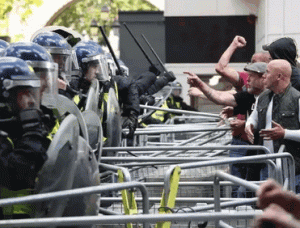
    There is no doubt that the violence on Saturday by so called ‘protectors of the statues’ was nothing more than extremist thuggery and anarchists and aggression towards the police. Many of the young men involved are clearly missing the chance to fight other football hooligans in the (not) Euro 2020 Championships.

  • I admit to being taken aback when one of my ‘local heroes’ Captain James Cook’s statue in Whitby as well as those in Australia. In the several books I have read of Cook’s life story it is clear that he is an example of someone from Middlesbrough born to a labourer who worked his way up from farmhand, to shop assistant, to junior sailor in the merchant navy, and became a senior captain in the Admiralty and who led surveys of large parts of the then ‘undiscovered continents’ and routes between them. These were ‘different times’ but Cook was known to treat his crews ‘relatively well’ and never lost one from the diseases of the time.  He is honoured in his hometown with schools and the major hospital named after him. The other parkrun I sometimes do when I am in the north east starts just outside the Captain Cook Birthplace Museum in a park in Marton next to the place where he was born in what was at the time little more than a shack and is no longer there. The cottage the family is supposed to have lived in when they moved to Great Ayton was moved to Melbourne in Australia in 1934.
    I completely understand the objection by indigenous first nation Australians that James Cook ‘discovered Australia’ and the suggestion by them that 26th January the ‘Australia Day’ national holiday should be renamed ‘Invasion Day’/ ‘National Day of Mourning’ / ‘Survival Day’ and the colonial nature of the planting of the flag on Australian soil by Co0k’s fleet that day should be set in historical context.

    But as far as being involved in the slave trade, there is nothing of that in Cook’s story that I have read, but it is true that he killed Maori warriors on arrival in New Zealand and proceeded to subdue the then self-governing people, misunderstanding their initial ‘welcome’ as one of a threat to his ship and crew. Similarly an incident of kidnapping a king on Hawaii that lead ultimately to Cook’s death was a tragic episode.
  • The protests in the US continued and another unarmed black man was shot  by a white policeman. Another name added to the ever growing list.
  • Education has been to the fore again this week. A government that put a lot of energy into the building of new hospitals and getting retired medical staff to return, appears unwilling to do a similar thing for our schools. There is no sign of building temporary classrooms or taking over unused public buildings or exhibition centres to setup places to help the generation that is missing out on six months of formal education, particularly those with no facilities at home. A straw poll of retired teachers I know shows that some might be willing to go back and help in the short term with classes to make up for lost time. As someone who left teaching 34 years ago I am not sure my ‘skills’ are up to the job or my subject knowledge of Chemistry and Mathematics!
  • The official number of total deaths announced at the daily briefings continued to fall gradually as measured by the 7-day average. The figures for Wednesday to Saturday were 151, 202, 181, 36 and on Sunday the total stood at 41,698.
  • The 14-day quarantine for people arriving at airports was introduced but other than airlines complaining there was little news on the effectiveness and no numbers on how many people had been followed up or fined.
  • In the coming week ‘non-essential’ shops who have put social distancing measures and are self-declared ‘Covid Secure’ can re-open.
  • As I write Boris Johnson, pushed by some Conservative MPs are looking to reduce the social distancing from two metres. It seems ironic that many who were in favour of ‘taking back control’ from the EU are now quoting many countries from who are using shorter distances than we are. It would be interesting to know if their views would be the same if a declaration by the EU that all member states should adopt a distance of one metre had been given when we were still part of the bloc and operating a ‘different standard? I am not sure how those retailers who have already spent millions of pounds (much of it grants from local government) on reorganising layouts and putting signage in, will feel when the advice changes again in three weeks as hospitality starts opening.
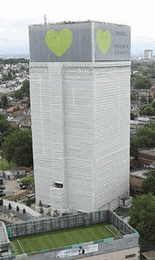
  • Today is also the third anniversary of the Grenfell Tower disaster. We saw the tower covered in screening as we drove through London last August. It was a larger example of the covered statues this weekend. At the time there was much talk about how the lower paid and largely ethnic minority key workers who live there had been forgotten by the wealthy borough next door. Three years on this seems to have been dropped from the agenda. Sound familiar? This and the violence in the centre of London makes me less optimistic that we will ‘learn the lessons’ and start being kinder to each other. 

So how has week 12 been for us?

Apart from our walk in Cannock Chase Forest, Alyson has continued daily walks and I joined her for one on Friday which was also the anniversary of her mum’s death 12 months ago. We walked on a footpath through fields of corn and stopped between the showers to listen to the sounds of birds singing. The sadness of the anniversary was tempered by feelings of gratitude that this time last year we didn’t have to cope with a pandemic, and the associated issues of visiting care homes, organising the funeral, and sorting the sale of the family house in the north east.

Alyson took another trip to the garden centre to buy a yellow rose to plant as a reminder of her mum who loved roses and the colour yellow. The garden is starting to look a blaze of colours as other plants flower and grow.

The birdlife in our garden continues to become more varied and this week as Alyson was exercising on the bike in our conservatory she saw a buzzard land briefly, and today a green woodpecker visited. The buzzard probably explained the headless body and scattered feathers from a blackbird we found on Monday.

With the announcement of ‘household bubbles’ where single person households can pair with others without social distancing and even stay overnight, we asked our son David if he wanted to travel from Bath to see us. He declared himself ‘happy in his own bubble’! He has managed to go for an open water swim and some more rowing.

Zoom coffees have continued and I attended my weekly streamed service from Methodist Central Hall, thankfully not affected by the violence just outside in Parliament Square. I am not sure that any statues of our founder John Wesley are on the ‘hitlist’ of those for removal, but like all of us his life was not without flaws. There is a statue in what was a British Colony of Georgia in the southern states of America. In 1736 John and his brother Charles travelled to the newly formed parish Savannah, as Anglican High churchmen with the primary aim of evangelising to the Native Americans. This was not successful and an incident with a young lady who he had a failed relationship with, and then banned from taking communion did not go down well.

Nevertheless, John Wesley went on to found a movement that, as as I written before, was a reforming one with social principles and members who were key in the Trade Unions and Labour Party. I try to live by his rules on wealth which sparked my interest in the two books in this blog. Those rules were;

Gain all you can. Save all you can. Give all you can.

Stay safe and let’s see what the next seven days brings. Two things are certain;

  • we will (not) be rushing to join the queues in the shops that are opening.
  • Alyson will definitely (not) be watching the restart of live sport in the form of Premier League and Championship football!


Theology Everywhere

Discuss theology today to transform tomorrow

verbalising

ruminations on life at fifty ... or so ...

Discover WordPress

A daily selection of the best content published on WordPress, collected for you by humans who love to read.

The Daily Post

The Art and Craft of Blogging

WordPress.com News

The latest news on WordPress.com and the WordPress community.