Coronavirus week 18 – the long wait for a vaccine

Will it be the scientists or anti-vaxxers who stop us getting a vaccine?

For the first time in the last 18 weeks of lockdown I found myself agreeing with Boris Johnson. He was visiting a GP surgery in London to promote the importance of flu jabs in the upcoming winter. Referring to the opponents of vaccinations he called them ‘nuts’. Ever since (the then doctor) Andrew Wakefield persuaded many parents 20 years ago not to give their children the measles, mumps and rubella (MMR) vaccine following some ‘research’ linking it to autism and inflammatory bowel disease (IBD), the use of vaccines has been called into question. 

Researching the claims by (now struck off doctor) Wakefield I learned the following facts from the General Medical Council (GMC) fitness to practice hearing of 2006 published in 2010.

  • A good study will include many participants, and Wakefield’s study included only twelve children.
  • Wakefield lied in the Lancet paper when he wrote that the participating children were referred independently after being diagnosed with IBD or other major gastrointestinal issues. In fact, many of the children were chosen specifically by Wakefield, and others were recruited with the help of the same lawyer who was paying him to conduct the study.
  • Even before publication of the study, Wakefield was working on patenting his own version of a measles vaccine, which he would sell at a great profit as a supposedly “safe” alternative to the MMR vaccine. The father of one of the children in Wakefield’s study was a cofounder of the planned business that would market this product.

The problems caused by Andrew Wakefield were in the news last August. Children who didn’t get vaccinated as their parents listened to him and not their doctors were now students, and an outbreak of measles was happening leading to serious side effects. The UK along with other parts of Europe has lost its status of being ‘measles free’.

The cofounder of Microsoft, Bill Gates and his wife Melinda are an example of people who have acquired enormous wealth, but are trying to use that to help others. They have been victims of terrible social media attacks and conspiracy theories as a result of pledging literally billions of dollars to vaccination programmes for children. They are partners of Gavi a global alliance of the WHO, UNICEF,  The World Bank and donor countries with the aim of funding vaccination programmes for children in all areas of the world. This will improve health, prevent needless deaths and lead to less poverty. In June a little-reported summit of world leaders was hosted by the UK and pledged over $8billion over the next five years to the programme.
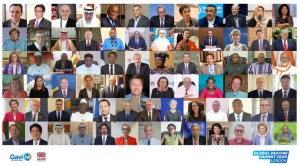
The UK can be proud of being the largest donor pledging £330million a year. As Bill Gates said at the time

To beat the COVID-19 pandemic, the world needs more than breakthrough science. It needs breakthrough generosity. And that’s what we’re seeing today as leaders across the public and private sectors are stepping up to support Gavi – especially Prime Minister Johnson. When COVID-19 vaccines are ready, this funding and global coordination will ensure that people all over the world will be able to access them.

In recent weeks Russia (who pledged no new money in addition to the $4milion per year share from a previous campaign) have been accused by the UK of trying to steal scientific secrets on the development of a Covid-19 vaccine. China, who also only pledged $4million per year, are still being accused as a possible source for the current outbreak. 

To be clear, the pledges are for vaccinations of all types and not just Covid-19. Since 2000 over 760 million children have been vaccinated against polio, pneumococcal disease, typhoid, MMR, meningitis and rotavirus (that causes diarrhoea). However, the lockdowns in various parts of the world and the WHO advice to temporarily suspend vaccination programmes, to prevent people from spreading Covid-19, could lead to an estimated 6,000 children dying every day from lack of protection that vaccination provides. It’s a terrible dilemma for many countries’ health systems.

Their personal $1.6 Billion pledge hasn’t stopped the conspiracy theorists putting false information out about Bill & Melinda Gates, accusing them of wanting to use the programme for mass sterilisation to control world population, and even implanting a microchip as part of the programmes, to track everyone in the world.

This week DHSC announced that eligibility for the programme of flu injections for the coming winter has been extended to 30 million people in an attempt to prevent the NHS being overwhelmed by a flu pandemic and a second wave of Covid-19. We have had years of creating vaccines for seasonal influenza which is a slightly different strain each time, but even these aren’t always fully protective, but can lessen the severity of symptoms and reduce the rate of infection. 

We have never succeeded in getting an effective vaccine against any of the coronaviruses. Even with about 150 programmes to develop one and almost 25 starting human trials, there are questions to be answered  before getting one. Here are seven according to an article I read this week.

  1. Is the vaccine safe? Early results suggest that there can be mild side effects from the vaccines, but more worryingly these can we worse in those more likely to be affected by the actual virus – the elderly and those with comorbidities. It is possible that a vaccine could make the disease worse in those who have it already.

  2. Does the vaccine work? The general view is that it is unlikely to be completely effective and Professor Chris Witty has said that at least 50% would be a good result.

  3. Will protection from a vaccine fade over time? There was some excitement when the vaccine being developed at Oxford produced the type of reaction expected, but it could be that this fades after a few weeks or months. However, there is also a theory that some element of ‘immune memory’ could result that helps the next similar infection.

  4. Can we mass-produce it? Whilst the UK Government claims to have pre-ordered 100 million doses and be investing £150 million in new production facilities, there will be a long timescale. Some vaccines need to be stored in specials conditions such a low temperatures before being given. This could also be a challenge both in transportation and worldwide in countries with poor facilities and health systems.

  5. When will we really have a vaccine?  Are we talking about when we have a proven vaccine after clinical trials, when it is approved by regulators, when we have enough to give it to key workers in clinical settings and then those at greatest risk, or when we have enough to inoculate the whole world?
    There is a danger that if supplies are strictly limited only those who can afford it, or have the political leverage to get it will be treated. This will only exacerbate conditions in the rest of the world who can’t afford it – and the virus will be around for even longer.

  6. Once we have a vaccine, will people want to get it? So we come back to the anti-vaxxers or even those who are just cautious. In a recent poll about one in five Americans said they don’t plan to get a coronavirus vaccine, while half said they would. The rest were unsure. The US has a system where people need to pay or have insurance, so even in the richest country in the world cost could be a barrier.

  7. What about booster shots? It is likely that any vaccine could need more than one dose to maintain effectiveness, so all the points about cost and organisation of healthcare systems come back into play.

There was an appeal for volunteers to take part in the clinical trials for vaccines produced by Oxford University and Imperial College London, so I thought I might offer – but although I am fairly fit and healthy I am over 55 so that was the end of that.

Vaccines aren’t the only treatment and this week again there have been trials of a new therapy based on a protein called interferon beta that have shown promising results when given as an inhaled dose. This was previously shown to have been effective for the treatment of SARS.

Other news this week.

  • A couple of months ago when the government was recruiting 25,000 people to train up to ‘track and trace’ contacts of those who had a positive test for the virus, there were newspaper stories of them having so little to do that they were watching Netflix movies. A story emerged this week that could have been interpreted in a way that could have suggested these people were making their own work. It was an ‘international’ story too.
    The English NHS ‘test and trace’ system has been outsourced to a US company that uses call centres based in Scotland.  Eight of the Scottish workers there tested positive for coronavirus, meaning that the Scottish system, called ‘test and protect’, had to get involved to trace their contacts – you couldn’t make it up!
  • In an interview on the anniversary of taking over as leader of the Conservatives and moving into 10 Downing Street, Boris Johnson admitted that there were some ‘open questions’ to be answered about the handling of the crisis in relation to timings of lockdown and protecting care homes. There was a less than generous video doing the rounds on social media claiming that as the virus was spreading across the world Boris missed several COBRA meetings, was uninterested in briefings and more interested in throwing a party to celebrate ‘getting Brexit done’.
  • Whilst the school holidays had started and some people were enjoying time in Spain, on Sunday morning all four UK governments brought back measures for people returning from the country to isolate for 14 days on their return. Despite FCO advice that travel to the Balearic and Canary Islands was still allowed, and only that to mainland Spain was not recommended, people returning from the islands still had to isolate. Such measures had been on the cards, but the suddenness and extent caused some controversy with many people again unsure of their holiday insurance situation. Many will also lose money as not all employers will be sympathetic to them taking more time away from work.
  • The number of cases is still falling very slowly with average daily deaths at 64 by the end of the week, down 8% from last week. The number of daily cases was averaging 662, which is up over 6% from last week. We are definitely plateauing but possibly to a sustainable level to live with as a trade off for an economic recovery.  Total deaths reported for the outbreak was 45,752.
  • At the same time as gyms and swimming pools are allowed to open, the government was trailing an old idea of getting doctors to focus on reducing the levels of obesity in the country. This is one of the key factors that makes people particularly susceptible to severe symptoms of Covid-19, as well as being bad for general health. Laws on advertising junk food will be brought in and GPs will be allowed to prescribe 12-week health plans and exercise.

How was week 18 for us?

It was back to work for me with planning for the project I am doing with the accountants in Manchester. The pressure is on to complete the first stages of the system in the next three months. We are not planning to be away on holiday any time soon so this should be manageable.

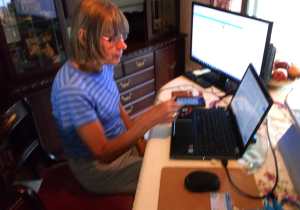
Alyson continued to come close to getting a first shift with NHS 111 pharmacy advice service. She had more technical problems but at the end of the week all appeared sorted and this is a photo of her ‘mobile call centre with a laptop with connection to the NHS systems, two screens, a smartcard and a mobile phone system that allows her to call patients using an NHS number.
In the week more sports opened up, I was pleased to be able to follow some Major League Baseball (MLB) as the team I support the Toronto Blue Jays started a shortened season in empty stadiums. As the only team in MLB outside the US, the Canadian authorities would not give them permission to play home games in Toronto as it would mean them crossing the border to play away games and US teams crossing to play at Rogers Centre in Toronto. Right up to Opening Day on 23rd the team had no base, but then it was decided to play games at their minor league team’s base in Buffalo in New York State. Their first series was away in Florida, so they need to get the stadium ready for the first home series, which was to be next weekend but has been put back until 11th August.
My other sports team, Middlesbrough football club managed to survive in the Championship on the last day of the season on Wednesday – ironically away at Sheffield Wednesday. Two teams previously managed by World Cup winner Jack Charlton, whose funeral was the day before.

Keep safe everyone and let’s see what the next week brings.

I am thinking about stopping this blog for a few weeks as the situation in the UK appears to be in a steady state.
Coronavirus weeks 16 & 17 – will it all be over by Christmas?

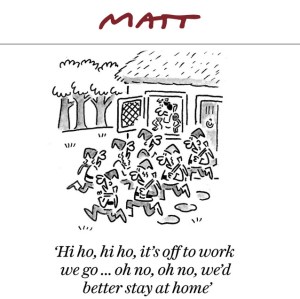
Hi ho, hi ho, it’s off to work we go..

I couldn’t decide whether to title this blog ‘it will be all over by Christmas’ or the one I settled on. Unlike Boris Johnson and his government, on balance I decided to ‘trust the scientists’.  There are still too many unknowns to be sure. I acknowledge that the recent announcements were a ‘hope’ rather than an assertion, and one role of government is to ‘get the economy going’ in order to raise the funds needed to do all the spending needed, and there will be harm to health if there is mass unemployment and economic hardship.

The dilemma was summed up by Matt Pritchett’s cartoon in The Telegraph newspaper on Saturday.

Alyson asked me how I felt about the announcement and I replied honestly that I was conflicted. On the day when the statistics on deaths and new cases were also thrown into confusion (or to be precise more confusion), this added to my uncertainty. I have looked at statistics in an earlier blog, and whilst the figure for ‘excess deaths’ produced by the ONS is a more reliable figure, I have stated the daily announced figures from the government briefings in each blog. I am no longer able to do that as they are no longer being declared. It seems that we have been counting as a ‘daily death’ in England if someone dies of any cause but had been tested positive in the last few months. The example used was somebody having a positive test in March and then dying from a heart attack in June. The effects of any ‘error’ in these figures may be a few thousand, and acknowledging that every death is tragic, but in the overall view it will make little difference.

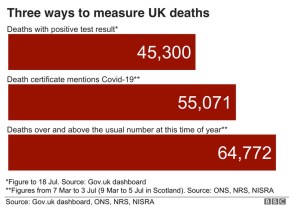
The best estimate we can manage is that the 7-day rolling average death toll is currently around 69 per day, slightly down on previous weeks. Average new cases have steadied off but are now rising slightly again to 621 per day.  The government has three ways of measuring total deaths with differing time periods as below.

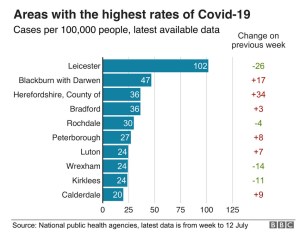
The other change recently, and one that is probably the way forward, is looking at much more localised figures, along with giving local authorities and public health managers the ability to put in effective measures – the idea of ‘local lockdowns’. I wrote a few weeks ago that local systems had been dismantled and now they will have more of a role to play. This is the current data on ‘areas of concern’.
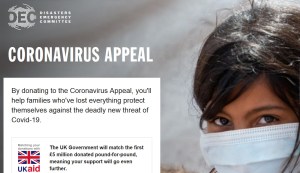
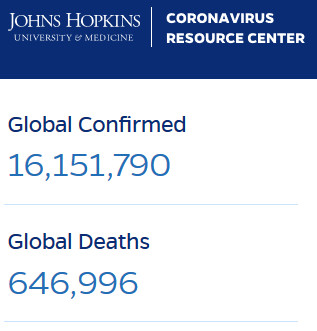
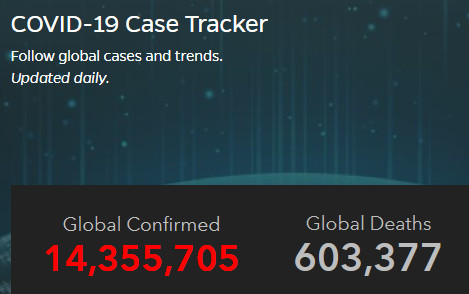
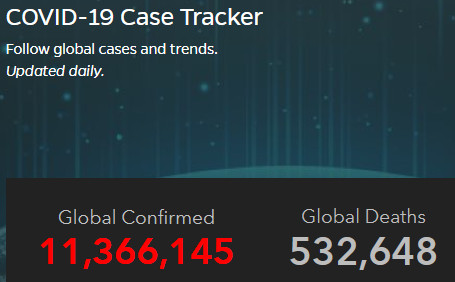
Before leaving statistics for this week, as I write the levels of coronavirus globally are still rising and the number of daily infections is the highest recorded so far with the WHO putting it at 259,848 with 7,360 more deaths. So while the situation in our country is levelling off, this still remains a global pandemic – a fact that we all need constantly reminding of. The Disasters Emergency Committee (DEC) appeal to help those around the world where Covid-19 is adding to poverty, famine, war and poor health provision is one example of people trying to help others in a practical way. It is good to see UKAid matching the donations as well.

New ways of working and a new economy.

Anecdotally, there is a reluctance to return to ‘normal work’ and particularly in office situations. This may be due to safety concerns, childcare or possibly that people are learning that there is more to life than commuting in crowded public transport, or sitting in a traffic queue. Whatever the reasons I do think there will be, to use a phrase from my last blog, ‘a reorientation’ of the world of work. People do want to spend more quality time with family, taking exercise outdoors, working remotely, and spending less on ‘stuff’ we accumulate. Endless ‘consuming’ of the world’s resources and damaging our environment are topics that will be higher on the agenda. These are complex and interrelated issues and some initial questions that need exploring and debating politically are;

  • Economically can we come up with a new model where value is derived from providing more ‘services’ and ‘experiences’ than from manufacturing things?
  • How will money flow from those providing such things and those paying for them?
  • Will there be sufficient tax income to enable government/society to provide essential services such as education, health and social care, and a ‘safety net’ for those unable to take part due to disability, health or social conditions?
  • Who will be the people/organisations willing to invest in these new ways of working/supplying?

I worry that it is all too easy for employers to simply ask people to work from home without providing the necessary environment for that to happen effectively.  Those, like us, who are lucky enough to have a large house with two rooms we can dedicate to be ‘offices’,  with good connectivity and equipment will be able to do more effective work. However, imagine being in a shared flat in the centre of a city where four or more 18-35 year-olds are trying to sit on a bed with a laptop for hours on end, not having enough bandwidth to download data or stream video, having to be ‘available’ for your ‘boss/supervisor’ whenever they choose. Possibly you will need to be close enough to travel into the office once a week/twice a month for face to face group meetings or to talk to clients/customers. You will be stuck in a no-win situation of neither being able to move to less expensive places to get on the property ladder, or having little time to take advantage of the social interactions needed to build up any sort of ‘team / business’ culture that separates good organisations from the merely satisfactory.

There could be upsides to this if planned effectively. If there is a collapse in the commercial property sector with large office blocks being freed up, then these could be re-purposed for affordable city living, and shops on deserted high streets in smaller towns could be converted to ‘work hubs’ where people could travel short distances to ‘hot-desk’ in comfortable offices with good connectivity, shared meeting spaces and good facilities. This would allow the separation of home from work that many desire, but still leave time to spend on leisure/social activities with friends and family. If I was a larger company wondering where my market was going, this is what I would be investing in.

Why the virus will be dangerous for a long time

The other aspect of the current situation that we need to resolve in this country is the suggestion (or is it a fact?) that the ‘virus is going to be with us for a long time’. Given there are countries across the world who have been through a very hot summer and also ones where there have been winters, it seems the virus is not affected by either. There were two snippets of news that I heard, but have not been able to research much at the time of writing, which are potentially worrying.

  1.  The virus is mutating (as all viruses like the flu one do) and the ‘second’ virus which mutated from the one originating in Wuhan is now the ‘dominant’ one and causing the current pandemic.
  2. Having antibodies from an infection of coronavirus is not a guarantee that you will be able to resist a second bout of infection – the antibodies are not ‘long-lasting’.

The two issues are interrelated, and both make it hard to produce an effective vaccine. There is no evidence that the mutation makes the virus more transmissible which is the other worry. We have been lucky in one regard that although the current version of the coronavirus is quite easy to catch, it only appears to seriously affect certain sections of the population, with many getting mild symptoms.

If we had taken more notice and put in systems and plans after previous outbreaks of MERS, SARS and Swine Flu, outcomes may have been better. We have had plenty of warnings. It is vital that we learn lessons as the real ‘doomsday scenario’ is that the next virus might be all of the following;

  • Very easily transmissible via contact or being airborne.
  • Able to last for a long time on many surfaces and in many environmental conditions.
  • Affect almost everyone who gets it in an extremely serious or deadly way.

The nearest we came to this was SARS which was quite hard to catch and cross borders, but spread to 26 countries and killed almost 10% of those who caught it . It was contained in a relatively small area of the world, and this is why wearing masks and contact tracing is more accepted in south Asia than in Europe or The Americas.  MERS was relatively short-lived and contained but with a death rate of around 35%. Both of them killed between 700-900 each. Swine flu in 2009 is thought to have killed between 123,000 and 200,000 globally, spreading to 214 countries in a year, but being a variant of the ‘flu’ virus many older people already had some immunity to it.

The so-called ‘second wave’ in the coming winter in  the UK will be due to a combination of a new variant of seasonal flu, added to coronavirus, and no effective vaccine for either.  In the good weather of the summer and autumn people are willing to meet outside or queue to get into shops, but imagine the effect of cold and wet conditions on our willingness to do those things. This is the reason leading members of the SAGE group continue to push hygiene measures and social distancing as effective measures ‘for many months ahead’.

Other news in the past two weeks.

  • A support package for performing arts and venues was announced and welcomed, but there are still many who will not survive and thousands of performers and technicians who rely on seasonal income are outside the scheme.
  • The environmental damage caused by careless disposal of billions of pieces of PPE that contain ‘single use plastics’ had added to the amount of micro-plastics in our oceans and on land. Much of the PPE should be classed as ‘clinical waste’ and incinerated but personal masks and gloves are being thrown away much like other litter. The increasing use of takeaway food from restaurants has added to this.
  • Wearing of face coverings in shops is to be compulsory from 24th July, but the police are not willing (quite rightly in my opinion) to enforce the new law which is more than guidance.
  • There doesn’t appear to have been a steep increase in new cases as a result of opening of pubs and restaurants and other shops.
  • There has definitely been an increase in traffic as junctions 16-19 of the M6 motorway near to us are back on the travel news with queues and accidents.
  • Gyms, swimming pools and beauty parlours can re-open.
  • Another example of ‘police brutality’ appeared on social media in England with a young white policeman kneeling on the neck of a black man. There were examples of young black couples being stopped and aggressively searched for driving in a new expensive Mercedes, and in another case for parking outside their house in a mainly white residential area.

How were weeks 16 and 17 for us?

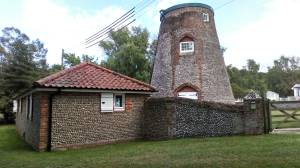
Our main news from the past fortnight and the reason there wasn’t a separate blog for week 16 is that we have been on one of the holidays we booked last year.  A five-hour drive to a small National Trust cottage on the north Norfolk coast next to a disused windmill. It was very pleasant and great to be in a different and new place. Being self-catering and just the two of us it felt ‘normal’. Even for July the caravan park we were in was very quiet. We were not able to book a place to eat as the pubs were all booked up, and we did have to queue outside the small deli and convenience shop in the village. We walked miles of coastal path, went for two 6k runs and managed to keep social distances. We had a couple of ice creams, and ate pizza outside from a manor house with outside tables, we walked to one evening.
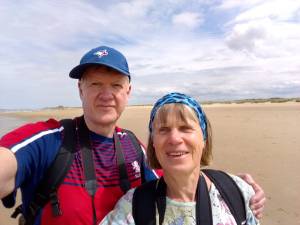
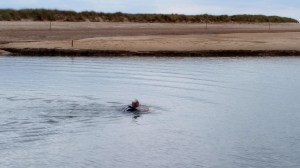
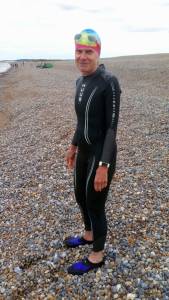
We visited several beaches which were busy with car parking but large enough to keep a decent distance and had clean and available toilet facilities. Alyson even managed to christen her new wetsuit with two swims in the sea, and on one of them she was joined by two grey seals sharing the same inlet.
Apart from having to plan stops on the way there and back – at a supermarket in Grantham on the way there and a farm cafe on the way back, our journeys were relatively straightforward. We noticed the extra traffic on the roads on our journey home last Friday as the official school holidays have started so it may be a different picture in the next few weeks.


I went to a meeting in the accountant’s office in Sale for a face to face project meeting on Wednesday 8th, and it felt strange but there were only nine of the usual 20+ people in so it was all very safe, and we managed to keep social distancing. It was much easier than holding a planning meeting via Zoom and sharing screens.

That evening I attended a church meeting via Zoom with 12 of us from across our district to look at grant funding applications. We decided that it worked so well, we would continue meeting this way in the future. It saves many of our group travelling for over an hour to an office so is ‘greener’, and we can get more people attending. It will be more pleasant than driving the narrow roads in Cheshire and Staffordshire on cold wet winter evenings.

David tried wearing his mask in a shop but declared himself feeling very claustrophobic so decided he would go shopping just once a week.

Michael has managed a few days in The Lake District in a remote cottage on his own and enjoyed early morning walks.

Stay safe everyone. 

Coronavirus week 15 – the fine line between hope and crisis…

Did we go too soon?

Most of the week has been spent anticipating the 4th of July or ‘super Saturday’, ‘Independence Day’ when the pubs, restaurants and hairdressers were allowed to reopen. Also self-catering cottages, campsites and some B&B’s along with theme parks. We were waiting an announcement on which countries people will be allowed to visit without the need to quarantine on return. There were some concerns from scientists that we were going too far too fast.

For all of the above there were some who took it as a green light to start now. Airlines had passengers off to Spain, France, Greece and whole host of other places where they had second homes or were planning to be away for many weeks. Such people clearly had enough money to ‘self-insure’ against any eventuality. Street or ‘block parties’ continued and some pubs were open early. By the time Saturday came there were camera crews and reporters ready to capture the inevitable response to cutting a bit of hair or downing a pint.

The reports appeared to be mainly positive, but watching the crowds in Soho roaming the streets on a sunny afternoon there didn’t appear to be much social distancing going on there.  As a reporter from the Associated Press put it

John Apter, chair of the Police Federation, who was on patrol in the southern England city of Southampton, said it was a busy shift, one that saw officers having to deal with naked men, “happy” drunks as well as “angry” drunks. He said the shift “managed to cope” but it was “crystal clear” that those who have imbibed one too many cannot, or won’t, socially distance.

I don’t usually use swear words but that last sentence is one to which my friend Gareth from the head injury charity might reply ‘no sh*t Sherlock!’.

A few days earlier the authorities decided that one place that the pubs and hairdressers would not be opening was the city of Leicester. Due to data showing the infection rate rising alarmingly in some post codes  a ‘local lockdown’ was imposed. Many words were written about the possible causes, some speculating that the ‘hundreds’ of local small garment factories in tiny buildings that continued working were the main reason. Others said that it was the fact that the city is home to many people of Asian heritage where the culture is to live together in multi-generational households, some in areas of deprivation. It is well-known that two of the groups more susceptible to infection are minority ethnic and the elderly.

I am weary from hours of attending the Methodist Conference along with 300 others on Zoom, voting by virtually raising our hands or completing  on-screen polls. I am emotionally drained by listening to speakers on so many topics that needed our action. They all seemed so relevant. We were diverted from our agenda on the first morning by several urgent ‘notices of motion’ that altered proposed resolutions around equality diversion and inclusion (EDI). I admit to being a little annoyed, but as speaker after speaker from the LGBTQI+, transgender, black and ethnic groups, those with disabilities both visible and hidden, spoke of injustice, hatred and, even worse – indifference, I couldn’t help but be determined that action is needed.

This is about justice and inclusion and the need to work more as a church to celebrate difference. Again I was challenged to look at the EDI learning kit – but it is so much more than that. It is easy to think that living as we do in a predominately ‘white European’ town, that I am not racist. But that falls into the example heard in church so many times, ‘well we don’t have any minority ethnic people in our church so we can’t be accused of being racist’! I would now be tempted to ask, so how many disabled, homosexual or ‘gender fluid’ members are in your church or even your circuit? Is the membership or attendance representative of the area you live in?

This focus on EDI may have influenced some representatives to elect our first BAME President elect for 2021. Rev Sonia Hicks also happens to be a woman. She has great experience having served as a Circuit Superintendent in three connexions: Britain, the Methodist Church in the Caribbean and Americas and the Methodist Church in Ireland (MCI). Sonia is quoted as saying;

As a Black person born in the UK, it is a great privilege to serve the church family I love in this new way. I will do all I can to honour this choice of the Methodist Conference and enable British Methodism to celebrate our God-given diversity.

Not for the first time, the Conference elected two women to the top posts as Sonia will be joined as Vice President for 2021 by Barbara Easton, a secondary head teacher from the West Midlands.

Next up at conference was Sam Monaghan, chief executive of our charity that provides services and care homes or living in the community Methodist Homes (MHA).  They have been very visible on our news programmes as a case study for the problems in care homes. 400 residents have died so far. It was obvious that care homes were forgotten initially. I was in tears as Sam recounted the story of those losses and that of three members of staff. Our district team decided there and then that as well as EDI, MHA would be one of our priorities for the year. One of our group with homes nearby said that some church members had commented that it is more expensive to live in them. That’s partly because they are an organisation that pays its care workers the ‘real living wage’, decided by the Living Wage Foundation, rather than the national (minimum) living wage set by our government – something to celebrate not complain about.

After the main session of conference finished for the day attended (via Zoom again) a ‘fringe event’ about how our ‘bank’ Central Finance Board (CFB) were deciding which oil companies to divest themselves from, on the advice of the Joint Advisory Committee on Ethical Investment (JACEI) of which the Methodist Church is a member. There was some ‘controversy’ that we were still investing in three oil companies who were not meeting the measures set by the Paris Agreement on climate change. CFB explained that reduced returns and loss of income had to be balanced with a judgement about the companies ‘moving in the right direction’. There were also difficulties in the metrics of how to judge the companies. Change costs money, and whilst change needs to be worked through and company’s encouraged, it won’t happen overnight ( I know we don’t have time here, but I believe that science and technology will play a large part in solving climate change – it just needs investment and a push).

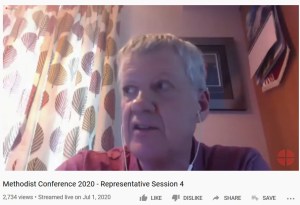
We spent many hours the next two days discussing long reports on important projects and issues for our church, but as time went on I got more worked up about the young people of our church who we call ‘3-generate’ pushing hard on the climate issue, and asking for CFB to overturn their decision to keep the three oil companies. This came to a head in a debate when, despite warnings from our treasurer and others that the loss of income and costs of doing so would be many hundreds of thousands of pounds and our own independent pension scheme trustees might decide to ‘disinvest from our own bank’ to seek better returns elsewhere, a notice of motion was agreed to overturn the decision. I resolved that I would speak up on the subject. Having spent many hours preparing carefully what I would say, by the time I was called to speak it was the very last part of the final session and due to overrun I had to quickly cut what I wanted to say from three minutes, to two and then one. I nearly didn’t speak but had ‘promised’ out treasurer that I would. At the last minute my printer also ran out of ink. I was very weary and tired so, instead of putting one negative point and one positive suggestion, I stumbled my way through one minute of the negative before being cut-off mid-sentence. I was shattered and devastated. The clip is on YouTube as the sessions are up there. This is a screenshot of me making my ‘speaking debut at conference’, looking distracted by trying to read what I am saying off the other screen next to my laptop.

It has only been seen by 2,734 people (mostly watching live at the time), and as far as I can tell no more since. Fortunately it is only up there until 1st August so not many more will view it!

Other news this week

  • As well as final details of the releasing the lockdown, the prime minister announced the ‘big spend’ infrastructure projects to get the UK moving again, a boost to the economy, and providing work for many of those workers who have lost their jobs in the last four months. This led to the inevitable calls to cancel the HS2 rail project to save money and the environment. People against this often quote that there is no need for people like us in Crewe to get to London 20 minutes sooner than we do now, particularly with more people working from home in the future. My response is that HS2 is not about speed but capacity. It is to get more freight off the roads and onto rail. To develop the current system to add another line or so next to current ones will take much longer, be even more disruptive and be more expensive. Just imagine the number of ‘back gardens’ you would have to destroy and the stations, bridges and signalling that would need to be altered. There are already lots of delays from upgrading the present system to current standards, not much of which does anything for capacity, but is making up for decades of underspending.
  • The list of countries we are able to travel to without going into isolation was published at the end of the week. There were 50+ on there but some confusion as some did not want a ‘reciprocal arrangement’ whereby we are able to travel to them.
  • We had one last ‘clap for the NHS’ to celebrate the 72nd anniversary of setting up the organisation. It was supposed to be for five minutes at 5 o’clock on the 5th, but there were only a few households out near us and certainly not for the full time.
  • The figures for deaths and cases kept falling, but were beginning to ‘flatten’. The average Monday to Friday official deaths were 124 this week down from 152 last. Daily cases are averaging less than 900 now. The total at the end of the week was 44,220 and average new infections are just over 500 per day.

How was week 15 for us?

Well the NHS finally appear to have got their act together and, using the new terminology, Alyson was ‘on-boarded’ on Thursday. She received her updated NHS email address on Friday, and has spent the weekend doing some final training on the system. Alyson completed the other modules around safeguarding and GDPR. Hopefully the last portion of the training will be done this week and she can arrange to choose some sessions from the roster in coming weeks.

During my time at conference Alyson did some Nordic walking at Delamere Forest having not done any since before lockdown. Normally she is part of a group but felt safe enough to go on her own and really enjoyed it. On Friday I needed to clear my head, so we spent a pleasant afternoon walking the forest tracks for 90 minutes.

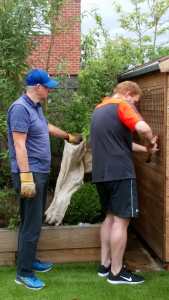
Saturday saw us forming a ‘bubble’ with Michael as we went to his house to help put up a trellis for his climbing rose on the side of his shed. Alyson took the photo below and titled it ‘danger Skaife and son at work’. As I wrote a few weeks ago I am not known for my DIY skills and have not passed any on to my sons. It was a successful afternoon as Michael only hit his thumb half a dozen times with the hammer putting in the metal staples!

Michael had gone into his office in the centre of Manchester for the first time in more than 12 weeks to setup a new colleague with the IT equipment needed to work from home. He said it felt very strange with the added element of social distancing.

I will be going into an office on the outskirts of Manchester this week in order to meet Steve the director of the accountants I am doing the project for. This was the result of a Zoom meeting when I presented my report to the directors and it was agreed that rather than me try to go over all the systems and project plan remotely, it would be more efficient to be in the office, either side of a large table and share the various systems on a large screen on the wall. It will feel strange, but the company has spent a great deal of time putting ‘Covid-secure’ measures in so I am certain it will be as safe as it can be.

When I attended the weekly live-streamed service at Methodist Central Hall Westminster, I was confronted by my disastrous speech on Wednesday again. Three of the main participants had been at the conference and Rev Paul was part of the main organising technical team, and the person who probably pressed the button to let me ‘into the room’. Anthony, a local preacher and rep from the London District, had spoken well to another ‘notice of motion’ to persuade conference to do more about EDI.

Sunday was the first anniversary of Alyson’s mum’s funeral. Again we reflected on how different things were then. Not only the social distancing and the ability to at least hold some sort of tea and meet friends and relatives, but the weather a year ago was very warm too.

Stay safe, and we will see if the easing means we cross the fine line back over to the crisis side and a ‘second wave’.

Theology Everywhere

Discuss theology today to transform tomorrow

verbalising

ruminations on life at fifty ... or so ...

Discover WordPress

A daily selection of the best content published on WordPress, collected for you by humans who love to read.

The Daily Post

The Art and Craft of Blogging

WordPress.com News

The latest news on WordPress.com and the WordPress community.