Life & Death – Coronavirus week 10 – taking things one day at a time

Week  10 in daily format.

I usually start these blogs at the end of the week but decided today that I will try doing a ‘daily’ note. This will allow me to capture my thoughts in real time and my mood in relation to events around the crisis. I will review and correct some grammar and shorten sections prior to publishing, but the essence of the days won’t change.

Monday 25th May – ‘I have never been so angry..’

Having made a determined effort in last week’s blog not to write much about Dominic Cummings, the story of his 260 mile trip to Durham, and Boris Johnson’s ‘defence’ of his actions at Sunday’s daily briefing, I woke up this morning quite angry. Not about the actions of the senior advisor, but more that I was so distracted by the whole thing that I missed a huge section of the blog which I had planned to cover.

Sunday 24th May was, for Methodists like me a special day. It is called  ‘Aldersgate Sunday’ formerly ‘Wesley Day’. As the web site for the Methodist Church in Great Britain explains;

In May 1738, John unwillingly attended worship at a Moravian ‘Religious Society’ meeting on Aldersgate Street in London. It was during this service that he felt his “heart strangely warmed”, as he experienced God’s love in a most personal and life-giving way. Until then he had known God in his mind, but not in his heart. Now he understood the value of a personal experience of God that would bring assurance of salvation to the believer.

This year the 24th fell on a Sunday so that made it even more relevant. Not so reluctantly as John Wesley, I attended a streamed service from Methodist Central Hall in London, just over two miles from Aldersgate Street in the City of London.  It was a wonderful service with over 1,500 watching. It was also the last service of their minister Rev Dr Martyn Atkins, former President of the Conference who was ‘retiring’ or as we call it ‘sitting down’ after over 40 years of service to his church. He was what we call ‘one of Mr Wesley’s preachers’, who had been ‘stationed’ in various places across the country as ministers in our denomination are called to be ‘itinerant’, usually staying in one place for around 10 years and then moving to another ‘appointment’ .

The penultimate service I attended in church before they were closed for lockdown was at Methodist Central Hall on 1st February. We were down in London for a visit and, never having been there, I decided to go for the Sunday service. It is an impressive place, built from the donations of one million Methodists, including members of my mum and dad’s families. Martyn was preaching and gave a challenging message about putting on the ‘armour of God’. I received a blessing and was anointed with oil by one of the Deacons at the end of the service. I  managed a few words with Martyn as we had briefly met a couple of years previously. It was in a small room at one of our closed churches, repurposed as a second-hand bookshop raising funds for the museum of Methodism at Englesea Brook Chapel, which is in our circuit between Crewe & Alsager. I was dropping some books off and Martyn was chatting to our Superintendent minister who worked there on his days off. Martyn had written an article for the ‘Methodist Recorder’ that came out that day and which was a challenge to modernise, and I told him it was thoughtful and a great piece. Martyn didn’t remember the conversation but knows the bookshop as he is a great collector of books, and said he would be going there a lot in the future as he and his wife are moving back to Derbyshire, less than an hour away from Alsager.

So, my anger was about not mentioning all that in last week’s blog.

However, the anger referred to in the heading of this section is my wife Alyson’s. Having never been ‘political’ before, she found the email address of our local MP this morning and wrote to him to express her anger at the situation over Dominic Cummings and her disappointment at the way Boris Johnson has handled it. I don’t think Alyson will mind me saying that her natural inclination is not to vote Labour. As a pharmacist and frontline worker who has seen the effects of coronavirus on her patients she wanted her MP to know. He is Dr Kieran Mullan who worked in the accident & emergency department prior to becoming our local MP for the conservatives and has gone back to work some shifts. It will be interesting to see if she gets a reply.

Neither of our moods was improved after the two press conferences that evening. The extraordinary lengthy one with the special advisor in which he showed no regrets but tried to explain why he could make special arrangements for his family. Followed an hour later by one with Boris Johnson. No one, particularly the journalists, was listening to details of how lockdown was to be eased by opening of shops and secondary schools in mid-June. Everyone wanted to keep talking about Mr Cummings. As the day ended the special advisor was still in place, left to be judged in the court of public opinion.

I sat and wrote my own email to Dr Mullan MP.

Tuesday 26th May – hey ho, hey ho, it’s back to work we go..

When the prime minister told the country two weeks ago to get back to work, I didn’t think it applied to me. I was enjoying my semi-retirement, time with Alyson, the warm weather and helping my church and the charities I am involved with. However, at 9.30am I found myself attending a Zoom ‘Monday Morning Meeting’ (moved due to yesterday’s Bank Holiday) with 18 of my new colleagues at an accountancy practice in Manchester.

My friend Steve had asked me back to do another systems project for his new company. If Alyson and I had been managing to take all the holidays that we had planned, there was no way I could have said yes. Truth be known I had some doubts about my ability but after a couple of meetings and 1-2-1’s my interest, and not a little ‘excitement’, was back. It took most of my day, and I had foregone the usual early morning exercise.

Meanwhile Dominic Cummings was still in his job, despite one ministerial resignation and a ‘revolt’ of 30 MPs and literally thousands of similar emails like mine to local MPs. It was left once again to the BBC ‘s Newsnight presenter Emily Maitlis in her opening ‘monologue’ to sum up as follows

Dominic Cummings broke the rules. The country can see that and it’s shocked that the government can’t. The longer ministers and the prime minister tell us he worked within them, the more angry the response to this scandal is likely to be.  He was the man remember who got the public mood, who tagged the lazy label ‘elite’ on those who disagreed. He should understand that public mood now; one of fury, contempt and anguish. He made those who struggled to keep the rules feel like fools and has allowed many more to feel they can flout them. The prime minister knows all this, but despite the resignation of one minister, growing unease from his backbenchers, a dramatic early warning from the polls, deep national disquiet, Boris Johnson has chosen to ignore it. Tonight we consider what this blind loyalty means about the workings of ‘Number Ten’. We do not expect to be joined by a government minister but that won’t stop us asking the questions.

Wednesday 27th May

Today was a warm one and started with my weekly 5k ‘local Parkrun’ which I have been doing as the usual Saturday morning one, I have done since 2016, has been suspended as part of the lockdown measures. We ate all three meals outside on our patio table and were delighted to see a pair of young goldfinches on our feeders.

The numbers of Conservative MPs asking for Dominic Cummings to  be sacked was over 40, and the prime minister was before a committee of senior members of parliament from all political parties. Their questions were supposed to be on his performance in the new parliament which started in December. However, they too concentrated a lot on his special advisor and what effect it might have in getting the message over for the rest of the pandemic.

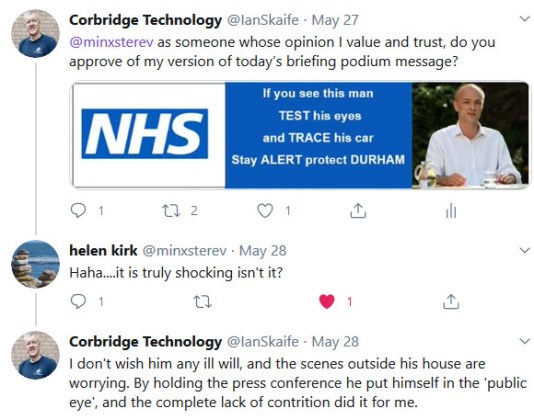
Health secretary Matt Hancock tried to distract from the Cummings story by changing the sign on the podium at the daily press conference announcing the NHS test and trace strategy to help ease the lockdown. He was ambushed by the video question from a member of the public asking if everyone who had been fined for travelling to arrange childcare would have the money refunded. Perhaps taken aback by the questioner being,  as he so tweely described him, ‘a man of the cloth’, he desperately searched for an answer and promised to take it back and ask the treasury. The next day the answer came back – ‘no’.

At 9pm I logged onto the American businessman Elon Musk’s SpaceX website to watch a live stream of his Falcon 9 reusable rocket taking men into space in a Dragon spaceship that sits on top and carries astronauts Bob Behnken and Doug Hurley. It will dock with the International Space Station (ISS) and then return to earth. This was the first time since 2011, and it was cancelled with 17 minutes to go due to storm clouds. I looked forward to the second try on Saturday.

The virus touched this event when a photo of people watching the launch from a road bridge nearby caused a social media storm around social distancing and accusations that the picture in USA Today was an old one. I read an account on the paper’s blog that showed the picture from 2011 and you can see not quite so many  people, and some in the today’s one wearing masks.
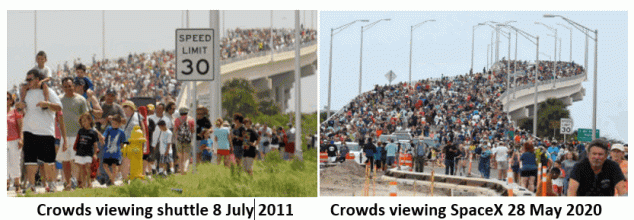
We have watched the launch of a small rocket from a beach nearby the Kennedy Space Centre during a visit in 1994, so can understand the interest of locals in such a massive event.

Just before turning off my laptop to go to bed I made a sign parodying the one on  the daily briefing podium. Having done so, I almost deleted it immediately, worrying if such a thing was ok. I posted it on Facebook and Tweeted it to Rev Helen Kirk, our own Chair of District or ‘woman of the cloth’!

Thursday 28th May

The tactics seemed to work as the prime minister’s special advisor was not the top headline on news bulletins. My ‘funny’ podium sign was retweeted by Helen and liked on Facebook, so guess it was ok. This was the exchange between Helen and me.
When we had a coffee via Skype with friends David & Janis it was something they were annoyed about. Janis knows the road to Barnard Castle where the now infamous ‘test drive’ was taken and thought it unsuitable as a check for the type of journey back to London.

It was another very warm day and we had meals outside and did more work on the garden.

The evening briefing, after the cabinet had done their legally required 3-weekly review, brought news of another ‘easing’ of the lockdown measures. From next Monday we will be able to meet in groups of six in a garden or outside space, some non-essential shops, outdoor markets and car show rooms can open from the 8th of June.  Premier League matches would start from 17th June behind closed doors. Boris Johnson stated that he wanted to ‘draw a line’ under the Cummings affair and move on ‘as the country wanted’. Journalists had other ideas and asked more questions about the ‘illegal trip’, even trying to involve the Chief Scientist and Chief Medical Officer in the questions. There were questions about how people might hold ‘socially distancing barbecues’ in their gardens, and what if someone wanted to use a toilet in the house. Scotland, Wales and Northern Ireland announced different measures from England, just to add to the confusion.

The evening brought the tenth and final clap for carers. It was well supported and loud on our street, but it felt like the right time to end it.

Friday 29th May

We had planned to get up very early, have breakfast, drive to Delamere Forest, and see if we could manage a walk without getting too close to other people. We arrived at 8.45am and walked to a small isolated lake surrounded by some beautiful yellow orchids. It was not too busy with people, but there was a lot of litter from visitors over recent days. We resolved to take bags and collect it if we came again. We saw a lot of birds, went on a rope swing under a tree, and walked the parkrun course.  We arrived home by mid-morning and sat in our warm garden for lunch.

Alyson commented during the walk that it seemed odd to be in such a peaceful place surrounded by life when there were thousands of people in hospital fighting for their lives. I said that most days were like that, but it had been heightened in the last three months.

Rishi Sunak, Chancellor of the exchequer announced an extension of the furlough scheme and support for the self-employed until October.  It was at a slightly lower rate and employers were going to contribute towards the costs. Employees can go back part-time under the scheme.

We watched the last of the daily  BBC Two ‘Springwatch’ reports. It has been a joy to see all the birds nesting and trying to survive. Insights into nature, and a new section of ‘mindfulness’ where they show 90 seconds of pictures with no commentary. We have had river valleys, woodlands, seaside, and tonight’s was lakes and mountains. Wonderful.

This was followed by the satirical program Have I Got News For You, and we were back to Dominic Cummings again. The fun (laced with real anger) they had with the story reached new levels of satire. Apparently there is a Durham slang of ‘that’s a load Barney Castle’ meaning a pathetic excuse. It originates from medieval saying based on a siege in the castle. As one famous columnist is fond of saying ‘You couldn’t make it up!’.

Saturday 30th May

Another bright and sunny day. I got a new PB for my new regular ‘local parkrun’ and like every other week I finished in first place! Alyson was back on the frontline working a morning shift in a community pharmacy. It was again one where she felt safe with one patient at a time.

Two members of the Scientific Advisory Group on Emergencies (SAGE) broke ranks to voice concern about easing lockdown restrictions too early, risking a second wave and peak of infections. There was a worry that having announced on Thursday that people could meet up in larger groups for a barbecue in gardens, some would start early with the forecast sunny weekend. Our neighbours had two families together in their garden with little evidence of social distancing, and on Alyson’s afternoon walk she saw a group of youths playing a football game.

I watched the SpaceX mission finally take off to the ISS at 8.22pm. It was a spectacular event.

Sunday 31st May

Harold Wilson, labour prime minister in the 1960’s is quoted telling lobbyists before a general election, when it wasn’t looking good, ‘a week is a long time in politics’. He won the election with an increased majority. Well, it is a week since the papers and television were full of stories and accusations about a trip to Durham. It felt at the time like Mr Cummings would be sacked, especially after another day trip to Barnard Castle came out. Boris Johnson decided to try to ride out the storm, pushback on any questions, and focus on getting the next steps of easing restrictions out. It appears to have worked. The news today was of opening schools and some shops tomorrow, and the overnight announcement that those who have been ‘shielding’, and locked in their own homes for the last ten weeks are to be allowed out for walks in the local area but still not to go to shops. They can meet up with one person from another household in the open air but must maintain social distancing. As the virus is around less than it was the chances of infection have gone from 1 in 40 at the start of their self-isolation to 1 in 1,000 now.

This Sunday in the church year is Pentecost (what used to be called Whitsun), the anniversary of the formation of the early church and the day the first ‘sermon’ was preached by Simon Peter after the coming of the Holy Spirit. Watching the service streamed from Methodist Central Hall, preacher Rev Howard Mellor reminded us that the disciples had been effectively in ‘lockdown’ for coming up to 50 days waiting for the next stage in their work.  The image with tongues of fire raining down reminded me both of the fires burning in the US from the protests over the killings of the unarmed black man George Floyd by a white policemen in Minneapolis, and the power of the burning of kerosene and liquid oxygen that took the two NASA astronauts towards the ISS. The US riots had spread to many more cities overnight with more fires and looting. There was little social distancing going on there or at the protests in central London.

I watched the live stream of the docking manoeuvre on SpaceX’s web site as the Dragon-2 spacecraft gently attached to ISS. Despite the seemingly ‘slow and careful’ way the two vehicles came together; we were reminded by the commentator on the video that the two vehicles were travelling at 7.66km per second or over 17,000 miles per hour. As I watched the spaceship close in ‘slowly’ for the last 20 metres between the two vehicles which took just over a minute, they travelled over 300 miles or the distance from Crewe to Land’s End! All at 260 miles above the earth. Over 1.3 million people were watching live on-line.   Docking happened at 3:16pm and the alarm on my phone went off. It is set to remind me of the famous Bible verse John 3:16. My mind went back to the time last November when I stood on steps on top of the Hulda Gate up to the temple at the centre of the ancient city of Jerusalem. Our guide told us that when astronaut Neil Armstrong stood on them he said

I am more excited stepping on these stones than I was stepping on the moon.”

It was seeing earth from the Apollo spacecraft and from the moon that reinforced Armstrong’s belief in something larger than humanity. He had been brought up in a Methodist family and on return from the moon he gave a speech in front of the U.S. Congress in which he thanked them for giving him the opportunity to see some of the grandest views of the Creator.

The final daily briefing of the week gave the figures for deaths on Saturday as 113 compared to 215 on Friday and 324 on Thursday. The total of deaths at the end of week 10 was 38,489.

We shared a weekly family Zoom with the boys. David was happy to be back on the river Avon after his second session of solo rowing from his club in Bath. He had also managed a short swim as he capsized his single-seater boat!  Michael had been walking in Delamere again.

Alyson has arranged for a friend from her ‘knit & natter’ group to come around tomorrow and sit in our garden to share a coffee. We are planning to meet up with her sister and husband for a walk somewhere between our home and theirs in Coventry.

Next week I am planning to look at a single issue related to the pandemic, perhaps the future of the health and social care services, or the costs of repaying the huge financial debts the government support has built up.

Keep safe.


Life & Death – Coronavirus week 9 – easing the lockdown

We’re all in this together, again?

As I start this week’s account on Saturday afternoon, I wanted to resist commenting on the incident of government advisor Dominic Cummings trip to his parents’ home in Durham. But having just done so, I will leave it to the mainstream media, and the numerous self-appointed political commentators on social media, to report the story to what appears to be its inevitable conclusion as more details come out. It certainly appeared that the Transport Secretary, Grant Shapps had been ‘thrown under the bus’ at the daily briefing.

Instead I will confess that, however people have interpreted the ‘rules/guidance’ both during lockdown and now, we too have stretched them, or to be correct ‘broken them’. I confess to ‘excusing myself’ about driving faster than 70mph on the motorway on the basis that almost everyone else does, and to drive at exactly 70 or below puts us in danger from all the other ‘idiots’ who are speeding. There always appears to be a ‘get out’ clause if you judge it to be right in your own mind.

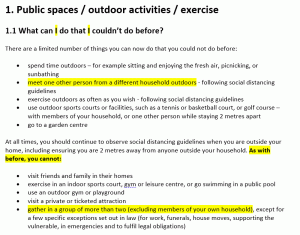
This week Alyson and I took advantage of the new guidance to drive outside our local area to a country park near Northwich. It was Alyson’s birthday and she was desperate to go for a walk somewhere else, and it is a place we have been birdwatching.  It is a 42-mile round-trip and it felt very strange to be driving even for half an hour. It felt very familiar as we queued in a traffic jam through roadworks over a closed bridge to get to the park. The car park was quite full and as we ate our picnic we wondered whether to come straight home. We didn’t need to pay & display as the machine was covered, presumably to avoid people touching the buttons, and everyone appeared to be keeping social distancing. The park is very large, so we walked to the birdwatching screen at the end of the lake. It was a sunny day and it appeared that there were family groups sitting alone enjoying the fresh air. We managed to pass other people with at least the required two metre gap. When we got to the bench seats at the screen which are about 15 metres long the only other person there, sat on the end, was our son Michael. He lives only two miles from the park, and I had text him to suggest he went as a birthday surprise for his mum. It worked, and Alyson was really pleased to see him. We chatted for a few minutes as he was on his lunch break from working at home. He looked healthy and happy. Alyson said afterwards that she just wanted to give him a hug. I ventured that Michael didn’t feel the same way! Have you spotted it yet? The current government guidance for this phase of easing the restrictions state;

I have highlighted the parts that make clear we broke the rules. Two of us met one other person outside our household to make a group larger than two. We excused ourselves as I sat two metres from Alyson and four from Michael and it ‘felt ok’. A lot of people will have done similar things over the weeks, using their own ‘excuses’. I know people who happen to have walked past their parents’ house with their child on their daily walk and stood at the end of the drive to talk to them, then later extended this by going through a garage (always keeping themselves two metres apart) to sit on chairs in the back garden and chat to grandparents. And if the young child who doesn’t understand social distancing happens to take a toy over to his grandparents, it doesn’t harm anyone else…. I have seen people who walk a dog in the morning and then the evening, presumably reasoning that it doesn’t do any harm.

There has been much discussion, some with a lot of hindsight, as to whether the lockdown was ‘too late’. It may have saved more lives, but even on the weekend of the 21st March, two days before lockdown was announced by the prime minister, I was emailing the owner of the lovely cottage in the north east we were staying in about renting it again the following weekend. I reasoned that it was so remote we could easily ‘self-isolate’, go for walks in the early morning from the door onto deserted moorland, take all the food we need, drive there and back on one tank of fuel etc etc. In the end we decided not to, which when we heard the ‘rules’ was the right thing. I even held out until the very end, that our week in Lanzarote could go ahead. 

I have re-watched two issues of BBC’s Question Time from March and even ten weeks on there are some things that are now shocking. On 6th March after the first death in the UK when there were 100 cases, health secretary Matt Hancock said that the majority of people will get minor symptoms and a few will need some extra care. There was laughter in the audience when a panellist talked about elbow bumping instead of handshaking, and another joked about not being able to find toilet roll. To be fair there was worry about older people and those who might not be able to go to work and claim sick pay. Matt Hancock said that the evidence was that large-scale sporting gatherings outside were not places where widespread infection spreading would happen.  It was in the ‘containment phase’ where the message was only people with symptoms had to self-isolate.  Professor John Ashton, former head of public health in north west England was on the panel on the 13th March, the night after the Liverpool v Real Madrid match at Anfield. His accent gave him away as a Liverpool fan, but he had stayed away, frightened that the virus had come to Merseyside and spread through the bars before and after the match. I watched this live and, like host Fiona Bruce, remember getting quite cross at what seemed a hysterical reaction when he started shouting about wasting four or five weeks already. 

The daily briefings had started,  but in my opinion there was no appetite for a full lockdown and if it had been imposed at the start of March compliance would have been much lower. Ironically, if it had happened and after two weeks ‘only 100 people a day’ were dying, people would have said ‘it was all a hoax and businesses are going to the wall so let us go back to work and school’. It is also clear that there were not enough tests available as we seemed pleased to be testing 2,000 a day.

For me, this week has been a rollercoaster of hope. One day I hear that the cases may be falling quickly and caught a clip on the radio of a scientist who believed that in a few months the virus would just die out. I started checking the booking sites for the holiday cottage in the north east. The next day there was talk of the virus being ‘with us for years, and life would never get back to normal….’.

It does seem that there is cause for hope. You don’t need to understand much about the way viruses spread to know that if there are no cases in your local population, it can’t spread. The origins of it may have been transmission from a mammal to humans, but that doesn’t happen spontaneously on suburban estates in the UK. New Zealand earlier in the week and Guernsey on Saturday released lockdown completely. They are both islands that have managed to almost full close their borders, and done lots of testing and tracking. New Zealand has a population of 4.82 million and only 21 deaths and on several days in the last three weeks no new cases, despite carrying out an average of 4,400 daily tests. Guernsey, a very small island with a population of 67,000 had no new cases for 22 days. There were pictures of families actually hugging grandparents. Shocking! But to repeat myself, you can’t catch the virus from someone who hasn’t got it. They have been developing ‘household bubbles’, firstly just two then last week putting 2+2 to make four households that don’t have to maintain social distancing. This very simple 3-minute video explains the approach;

This could be the way the UK government(s) decide to go. Let’s stay optimistic.

Test, Test, Test! or Education, Education, Education?

When the head of the World Health Organisation was asked for a message to countries fighting to control the spread of Coronavirus Pandemic in early March, his answer was very clear ‘Test, test, test’. It does seem that those countries who had a good testing regime allied to a system to do contact tracing, asking people who had the virus to isolate themselves, have managed to control the spread.

Former prime minister Tony Blair at the ‘New Labour’ Party Conference at Blackpool in 1996 gave a speech about his top three priorities if they were able to form the next government. He said ‘Education, Education, Education’.

Following on from last week’s blog, these two phrases have collided as the country tries to start ‘the new normal’ with schools being asked to start opening to more pupils. Teaching unions met with scientists and data has been published and discussed. There is still some uncertainty and natural concerns, specifically around the ability to do local testing and tracing. If we wait for a vaccine or 100% guarantees of no risk we will never get schools open. But with a combination of good risk assessments, the ability for schools or local authorities to determine phased opening in conjunction with parents, no sanctions for parents not wanting to send their children back, and exemptions for ‘vulnerable’ children and adults, backed with local testing hubs, it could work. We might even decide to ask parents to form ‘household bubbles’ based on the friends of very young children so that they can hug and go to each other’s houses to play. Some schools will wait two weeks which is the current time for infection rates to halve.

Other news this week

  • The daily death count continued to fall even when ‘all situations’ were taken into account. The last four daily totals of 338, 351, 282 and 118 and the total of 36,793 appears to be a steeper decline than previous weeks.
  • We clapped for carers for the 9th week on Thursday. I was pleased to learn that Dutch-born Londoner Annemarie Plas responsible for starting this initiative, suggesting that this coming week should be the last and tenth time. This will allow us to stop, reflect on the sacrifice and set a date in the future to remember again, perhaps annually. This will stop it going on and on and simply petering out gradually.
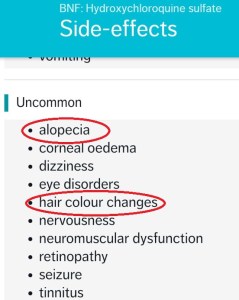
  •  President Trump was causing concerns again with his announcement that he had been taking the anti-malaria drug hydroxychloroquine for two weeks. This is not a recognised prophylactic for the virus causing problems now, and even the US Food & Drug Administration (FDA) warn against its use. Being a pharmacist, Alyson has access to the online British National Formulary (BNF) of UK recommended drugs. She posted two pictures of the list of side effects on social media. I have highlighted two particular ones that President Trump should be aware of:
    More worrying than President Trump’s personal medication was a warning from the White House’s coronavirus taskforce member Dr Anthony Fauci that new localized outbreaks were “inevitable” as mitigation measures are relaxed, leading to the need to put in place a further lockdown. Given the dependence of the world’s economy on that of the US, however much we wish it didn’t, the decisions of the administration are vital to the rest of us.
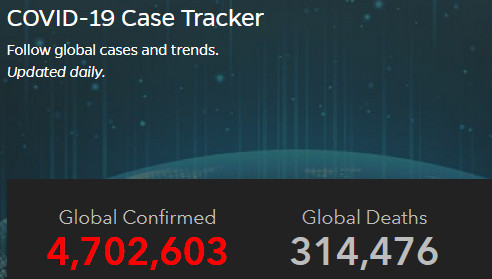
  • Airlines, travel agents, hotels and others in the tourism sector gave stark warnings of the economic effects on their businesses. Hertz Global Holdings Inc the US car hire firm, and Specialist Leisure Group, which owns coach company Shearings, both collapsed into administration. US business magazine Forbes stated;

Hertz was just another victim of the pandemic, people will say. It’s easy to blame the company’s misfortunes, as well as the other corporate casualties, on the pandemic. The reality is a different story. The failures of Hertz and the others have more to do with their own arrogant inertia and inability to recognize the fast-changing trends and a refusal to adapt their business models accordingly.

This is a narrative we will come back to when the whole economic story of the crisis is analysed. Some companies have been ‘found out’ by the pandemic while others have adapted in an economic equivalent of the evolutionary principle of ‘survival of the fittest’.

How has week 9 been for us?

We are conscious of the fortunate position we are in with regard to holidays. We have managed to get a full refund on our Lanzarote holiday, moved an Easter cottage and another Cottage in Ross-on-Wye, both with family, to the same weeks in 2021. This week the travel company moved a very expensive cruise in Norway to 2021, along with an upgrade and £45 credit.

We have been taking part in a UK Biobank project for over 12 years. They are a major national and international health resource, and a registered charity, with the aim of improving the prevention, diagnosis and treatment of a wide range of serious and life-threatening illnesses – including cancer, heart diseases, stroke, diabetes. We have been scanned, had blood taken and completed endless questionnaires on lifestyles. This week I received an email from them on behalf of Professor Sir Patrick Vallance, UK Government Chief Scientific Adviser. I volunteered to send a sample of my blood monthly for six months to be tested for coronavirus antibodies. The project will help the scientists track the course of the infection across the population.  As well as us ‘oldies’ aged 40-69 they needed some younger adults, so I sent invites to Michael and David.

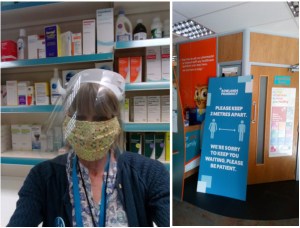
This week I was very proud to wave Alyson off back to the ‘frontline’. It did feel a little like sending her off to war, as she set out with her mask, visor and hand gel to work a shift at a local community pharmacy. She had been desperate to play her part, but as she has a condition that would class her as vulnerable, she wanted to wait until safer conditions were in place. There was no way that she was going in at the start of the crisis with busy branches overwhelmed by customers and lots of other people working there. Her Saturday morning session was at a small local branch with screens between the customers and counter. You can see below pictures of some measures. There was only one other member of the team working so social distancing was easy to maintain. We have had a chat about her wishes should she contract Covid-19 and need to go into ICU.

Alyson also had an alarm on her phone go off as part of the local volunteering force. It was to call a lady recently discharged from hospital to check she was ok in terms of shopping, medication, loneliness and mental wellbeing. All was fine and she didn’t need to pass them on to anyone else.

Keep safe everyone and let’s see what the next week brings.


Life & Death – Coronavirus week 8 – assessing risks, dividing the country

Tell us what we are supposed to be doing, don’t ask us to use common sense….

Looking back with the benefit of ‘2020 hindsight’ the week started with what Boris might have called ‘an inverted pyramid of confusion’ with lots of unanswered questions following his Sunday evening address to the nation.  The well-trailed/leaked message of ‘we’re coming out of lockdown’, the ‘meat of the story at the top’ was followed by the fragmented uncertainty of what was actually said, and the shrinking detail of how that would work – the narrowing at the bottom of the pyramid.

‘Stay at Home’ was replaced with ‘Stay Alert’ and we were told that ‘coming down the mountain is sometimes harder than going up’. He announced a government plan to ‘ease the lockdown’ in the next few months. Some of the measures had been widely trailed in the media in a way that I don’t fully understand. All journalists have their ‘sources’ and back-door channels into government departments. Indeed it seems that some cabinet ministers are happy to ‘leak’ when it suits them, or perhaps to gain an advantage in the game of getting more power by a higher profile. The problem was that some people were waiting to hear that they could see more family members, start planning a late summer holiday or going for a beer at a pub that has an outside garden or space.

What we heard instead was ‘go back to work tomorrow’, ‘from Wednesday we can go out more, sunbathe or play sports’, ‘schools and some shops will be opening at the start of June’, ‘hospitality being open from 4th July’.  The new alert system was underpinned by scientific advice and monitoring of the now infamous ‘R-number’. Monday morning brought more confusion when ministers didn’t appear to have details on some of the ‘rules’ and how they would be applied. Could we meet mum and dad in the park or was it only mum (presumably while dad sat in the car and waited his turn next). The situation was not surprising as the more detailed 60-page official document was not published until later on Monday and news programmes were full of traffic jams and crowded tube trains as the ‘rush back to work’ started.

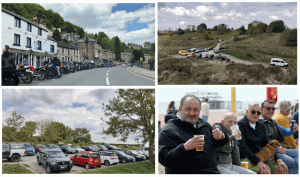
By this weekend crowds were taking advantage of the warm weather to travel long distances to beauty spots in the countryside and on the coast. Some interviewed for the evening news expressed surprise at the number of people there and the lack of social distancing. 

I mentioned a couple of weeks ago the need for careful planning of how workplaces could open with ‘social distancing’ and ‘re-engineering’ of processes. Any business or workplace that had wasted the last seven weeks of the lockdown and wasn’t planning how the changes could happen prior to the announcement, can’t complain if they fail in the future. Talking to Steve, an accountant friend of mine, about how his small business customers were coping, he said there were two groups; those who had panicked and taken short term decisions, and those who had changed. He mentioned restaurant businesses who had turned into takeaway services and were now making more money as they didn’t realise just how much customers liked their dishes. We agreed that the ‘good’ well-run businesses who treat their teams well will come out of this stronger.

Trade Union Leaders were calling for their involvement in helping businesses get back working in a safe way. They have many trained ‘Health & Safety Reps’ that can help companies and reassure their members that safe-working practices are in place. Although the TUC had been on a conference call with the Prime Minister on Sunday evening, no mention of help from the unions was made by ministers in the daily round of the breakfast news media organisations. The phrase ‘it is just common sense’ was often used. The government did produce some detailed guidance on workplace changes, staff shifts, social distancing and deep cleaning measures for eight areas of work from manufacturing, offices, restaurants etc. But I repeat, most businesses should have been thinking about these things before this week.

Wednesday was the day we could all begin to get out more and play sport, but we decided to stay home and see if the beauty spots, parks and garden centres became crowded with people, as had been the concern when it was announced. It was a mixed picture and the mood was captured by a cartoon in one of the newspapers of a golfer playing a round on his own whilst his wife took a towel to sunbathe in the bunker. On seeing the queue of 30 or more customers to get into a garden centre we decided that we weren’t that desperate to get some more plants for our garden.

Parents, teachers, and their unions were raising concerns about how social distancing would be in place for reception, year one and year six classes, the first designated to go back. For some it was literally a matter of ‘life and death’ with some parents accusing ministers of treating them and their children as ‘guinea pigs’ for an experiment and saying that they definitely wouldn’t be sending their children back until schools were ‘100% safe’. Of course there is no such thing as 100% safe statistics were quoted on the risk of being injured in a car journey or playing in a park. There is also a risk of harm if younger children see parents in a state of terror about letting them out for the ‘virus to get them’. We watched an interview with a head teacher from the UK and a teacher in a primary school in Denmark that had been open for a few weeks and put in place measures to help. They put the children in small groups of 4-5 and played a game whereby they had to keep away from the other groups in the school. Washing hands at the start and end of the morning and afternoon became a physical education (PE) class where children lined up two metres apart and did various exercises such as squats, jumps, stretches as they moved closer to the sinks and after washing their hands they went back to the classroom to do a paper exercise. The UK head teacher appeared to take an interest and be willing to learn some lessons from this. The Danish teacher stated that when they opened less than half the parents sent children but after two weeks it was over 90%.

Of course we shouldn’t forget that teachers and schools have been open during the lockdown, doing frontline work and teaching smaller numbers of key worker’s children. They will have learnt something from this experience. Some of the larger ‘Academy School Groups’ that have estates departments have been planning for opening and doing individual risk assessments for their varied buildings. Some head teachers in primary schools are not trained in risk assessments. This is not a criticism, it’s just not their job which became clear when they panicked about how to keep 4-year olds apart, and not to be terrified of teachers wearing masks and full PPE! They may be great teachers, but they also need help from local authorities and others. We have to hope that the large academy groups only motivation is education of their pupils but, as with some of the larger businesses in the commercial sector, it is possible that their Chief Executives are more concerned with lost profit than with the safety of their employees.

Speaking to Chris, a friend who has a daughter that teaches primary school children in a relatively deprived areas locally, I asked his view. He said he could understand the unions asking for guarantees on safety as that is their role. His daughter has identified vulnerable pupils who should be in already but haven’t been coming. Some of her children are not capable of being controlled in the way people would expect and their hygiene habits are poor as the result of the environment they live in. She is not worried about catching the virus as she is young, but Chris is concerned about her, as there is still much we don’t know about how the virus affects children.

The Danish comparison was being used as a ‘positive example of what could be done’ by the same ministers who said it was wrong to compare the way we handled the crisis, compared to other countries who appeared to be doing better. Is it that Danish schools and parents have a different relationship than ours?

As I write teacher unions and leaders have met with government scientific advisors, and doctors have backed the proposed way forward for a controlled opening in June. Anne Longfield the children’s commissioner for England has demanded that the two sides stop squabbling and get on with reopening ‘in the interests of children’, the many disadvantaged of whom had been away from education for too long.

The schools issue was just one area this week that shone a light on the growing division/diversion of the way the crisis is being dealt with both between the countries of the UK and within the regions of England. I wrote last week that Scotland, Wales, and Northern Ireland were sticking with the ‘Stay at home’ message. This week the elected mayors in Manchester & Liverpool went on record about the support they and their councils were being given from London. The Greater Manchester Mayor, Andy Burnham wrote two newspaper articles bemoaning the short notice they were given of the proposed ‘back to work’ message and not having the financial package given to the London Mayor to provide the extra public transport to maintain social distancing. The allowances given to local authorities to deal with the crisis had gone from ‘spend what you need, and we will reimburse you, to ‘we need to be sharing the cost’. It needs to be stated that he was a former Labour MP for Leigh, one of the constituencies that changed to Conservative in the December election. So the following statement needs to be read in that context.

For a government elected on votes in the north, and promises to “level-up”, it is surprising how quickly it has reverted to the default, London-centric mode in this crisis. Last Sunday’s package certainly felt more suited to the south than to the north.

His article refers to another issue I heard on Friday that seems to mark a change in approach. Many homeless people have been taken off the streets and put into hotels with a grant from central government. That funding is being withdrawn and put back onto the local authorities, many of whom have also had a large cut in the funding to give local support during the emergency. It seems that the poorest areas are having the largest cuts.

One of the most deprived areas in the country and one often shown on news bulletins is our ‘home area’ around Middlesbrough in the north east. Alyson & I lived and went to school in one of the more affluent areas from the ages of two and five. The area of Brambles Farm shown in Friday’s bulletins is one we know well and is where Alyson’s mum worked in a bookmakers. The interview with a mum and her child about the cost of living and the need to access support and foodbanks was a stark reminder of areas of poverty in our country. 

Today’s statistics from the NHS show the following;

  • The North East region has the highest infection rate in the country with 358 people per 100,000
  • Within the region Middlesbrough is fourth highest for infection rates at 451 per 100,000
  • The James Cook University Hospital that serves the area is in the top third of deaths in the country with 316 to date.
  • One day in the last week there were 24 new cases in London and 4,000 in the north east and Yorkshire.

The regional mayor had been resisting the reopening of parks despite the pleas of an MP who is a member of the government and one who is the Labour MP for Middlesbrough.  He is, however, in favour of reopening schools unlike his counterpart in nearby Hartlepool.

Other news this week

  • The daily death rates appear to be on a downward slope with today’s figure of 170 bringing the total to 34,636. But this week we had a figure of 50,000 for the ‘excess deaths’ for the period to 1 May.
  • Following the extensive coverage of the track and trace app on the Isle of Wight there has been little news on how the trial is going. I looked up the local newspaper and all it said was that less only about 33% of the population had downloaded it. Michael & David told me on our Zoom call tonight that the source code for the app had been released and there were lots of comments about functionality and not connecting with phones nearby. As per the blogger’s prediction last week there is talk of moving to the decentralised version of the app.
  • Tuesday 12th May was International Nurses Day and fell this year on the 200th anniversary of Florence Nightingale’s birthday. Florence died a recluse after many years of a ‘mystery disease’ which some scholars now think could have been partly related to post-traumatic stress disorder (PTSD). Much more is known about this today, and it could be that her reluctance to talk about the 21 months without a break looking after the injured soldiers in appalling conditions during the Crimean War, 30 years previously, was the cause. Many today are asking that our NHS workers and others on the frontline receive PSTD counselling in the coming years.
  • Belly Mujinga a Victoria Station ticket office worker died after being spat at on the day before the lockdown by a man claiming to have coronavirus, falling ill with Covid-19 two days later and dying in hospital a week after that. It is a shocking story.
  • The question I submitted to the group who choose ones from the public to the daily briefing didn’t get picked, but somewhat surprisingly one about the possibility of in the future of having a ‘Universal Basic Income’ (a subject I want to cover in a later blog) did, but was dismissed outright by business secretary Alok Sharma MP, who again was happy to use other countries as reference as ‘it had been tried and shown not to work’.

Thoughts at the end of week 8.

This week we were due to be on a cruise in Norway from Bergen to Kirkenes and back, on a small cargo boat calling at many ports and sailing up some of the very scenic fjords. A ‘first world’ problem I know, but we are some of the many trying to get a refund or rearrange for next year.

This week is designated Brain Injury Awareness Week and in the charity I am a trustee for it would be one of our main awareness and fundraising times. I wrote and hosted a Zoom quiz for our members to replace the events we would have had. It was a fun time of sharing. It has also been Christian Aid Week and the door to door collection I sometime do was cancelled. It raised over £8 million across the UK last year. I shared the preparation and hosting of another quiz for which we asked for a donation. We had 16 ‘screens’ with about 25 people joining in. This week’s appeal is to help victims of coronavirus in parts of the world less able to cope and where Christian Aid have projects. I encourage you to donate.

The advice this week from the government was to start wearing face coverings in some enclosed spaces such as on public transport and shops. Alyson had used a design from You Tube to sew some cloth ones for us all. We posted two each to Michael and David and I wore one for the first time to go to our small local Tesco. I only had it on for about 45 minutes, but that was long enough for me to have some understanding of how uncomfortable it must be to wear one for a ten to twelve-hour shift. And that is without the rest of the PPE needed to treat patients in ICU.

I read a blog from an academic at Swansea University who was recruiting people willing to take part in a ‘CoronaDiaries’ project looking at how people react in the crisis. I have been accepted onto the project so these blogs will be converted to PDF and stored in an archive for future researchers to use.

As usual on Sunday I attended a streamed service from Methodist Central Hall in London. The sermon and prayers related to a passage in Matthew chapter 5 where Christians are called to change ‘from  just being, to doing’. This struck me as particularly apt for the events of this week, as did our prayer,

may the poor be enriched, the bereaved comforted and the hungry filled.

Keep safe, stay alert, manage the risk and let’s try to ease the lockdown.

Life & Death – Coronavirus week 7 – preparing for the ‘new normal’

Using technology for good – to help us ‘ease the lockdown’.

In terms of the coronavirus pandemic, week 7 was one in which we all speculated on what Boris would announce during his ‘address to the nation’ on Sunday by way of a ‘road map’ for lifting the restrictions. Lots of documents were ‘leaked’ and guidelines for certain businesses were published on the .gov.uk web site.

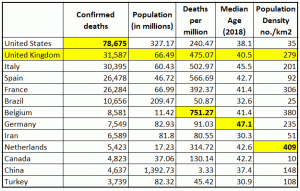
At the start of the week daily death totals (now in all situations) didn’t appear to be falling as quickly as many had hoped, but the last two days’ figures of 346 and 269 were lower, even for a Bank Holiday. By Sunday evening the number of lives lost was 31,855. On a purely numerical measure the UK is second to the US in terms of total deaths. There were more discussions on international comparisons. I have written in previous weeks about statistics and the difficulty of comparing countries. Factors such as the age profile, ethnic mix, housing density in cities, poverty and whether a country is an international ‘transport hub’ need to be considered.

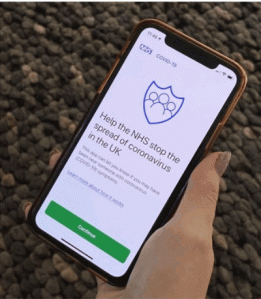
Another topic that took up a lot of time during news bulletins and daily briefings was the launch of a ‘Track Test Trace’ (TTT) application for mobile phones. This is an example of ‘using technology for the good of society’.

On a basic level everyone who downloads the app to their smartphone can collect data about close contact with others who have the same app. If someone shows symptoms of infection by coronavirus they complete some details on the app and a central server sends a message to all of the people they have been in contact with over recent days informing them of steps they need to take. As with all ‘technology’ and especially programmes or apps, things are not so simple as I explain below.
My life using information technology for almost 40 years could be the subject of another blog. Even though one of my sons, now in his 30s, recently called me a ‘dinosaur’ for asking what I considered a reasonable question about how he implements systems in the complex world of on-line and mobile banking apps, I think my knowledge of the principles still stands me in good stead. I am proud of showing him and his brother before they got to secondary school, that there was more to computing than the games they played on our Atari console. This probably helped set them on the way to the complex systems they are responsible for now.

So I asked our two sons their professional opinion on the planned NHS TTT app development, its data usage and architecture. I read some articles with concerns around privacy, and the two departments party to it, the NHS and the intelligence agency GCHQ, not having a good track record with implementation of IT projects. GCHQ is all about surveillance so is the app as much about location as it is tracking the proximity of nearby devices?

Their reports were that most countries are going with an app produced by two of the largest technology companies, Google and Apple joining forces. They are promising an approach where all the data is stored ‘locally’ on the users device which also sends messages to the relevant contacts if required. No central data is held on individuals. Their  ownership of the two operating systems that all smartphones use, means they can maximise the efficiency of the Bluetooth file transfer exchanges and minimise the use of battery power on the devices.  It is this deep technical knowledge that may cause other countries, including the UK, problems in developing their own. 

An example of the problem is that in its standard form Google and Apple restrict apps from broadcasting Bluetooth constantly, as this has been exploited by companies connecting and sending targeted advertising. This means that most apps only broadcast if they are running in the ‘foreground’ or looking at it. If your phone is locked or you are not actively using the app there is a danger that some interactions will not be registered. There is some debate as to what counts as an ‘interaction’ is it that you are close to someone for a certain time such as five minutes, or just when you pass by on the street?

Michael found an article referring to a petition by developers to the French government demanding that there is complete openness on privacy, asking for published details of exactly what sort of data is collected, how it is used and when it will be destroyed after use. This is part of the ‘privacy v health’ debate around such applications. The UK government wants to use data to track the areas the virus is spreading.  David’s ‘research’ concentrated on battery life and foreground running. He says that with Bluetooth there is something called  “Received Signal Strength Indication” to determine distance between devices, but it’s not particularly accurate. This probably means there will be a lot of false positives, and even cases where it’s picked up a neighbour’s signal through a flat or house wall.

Whatever the pros and cons of the privacy debate, my concerns are about the practicalities of the system.

  • What incentive is there to report symptoms when people get them?
  • Alternatively what stops someone maliciously reporting symptoms if they are so minded just to cause a nuisance?
  • Is there a necessity for a positive test before the messages get sent and if not won’t the ‘false positives’ cause a lot of unnecessary disruption?
  • Given that a lot of people will go to a supermarket once a week, many ‘contacts’ will take place. The consequence is that one or two customers getting symptoms can lead to many supermarket workers having to isolate. Similarly, one supermarket worker getting symptoms could lead their fellow workers and hundreds of customers isolating. The result, after a few days, could be no supermarkets open and no customers going in.
  • Most transmission currently seems to be taking place in hospital and care home settings where there are lots and lots of ‘contacts’, so I am not sure how practical it is to use the app in those areas. Most medical staff take care not to contact people at home or outside the work situation anyway.

The biggest problem with the TTT system is the same as with the current hard lockdown. If there is a large minority who don’t engage or download the app, and they are the ones responsible for being lax on other ways of controlling the spread of the virus, they will still be responsible for causing some ‘needless’ cases and deaths.

We await the results of the Isle of Wight larger scale test but given that we have been told the app will be available to us ‘by the middle of the month’ there doesn’t appear to be much time to analyse how the system is working.

Readers of this blog know I love an initialism, so the last word goes to the writer of a blog three days ago suggesting countries trying to develop a (deep breath..) Pan-European Privacy-Preserving Proximity Tracing app or PEPPPT, will find themselves changing course and adopting the Apple-Google model. He predicted that by the end of the month the UK will have done so.

Is the change in message another sign that we are in for a long haul?

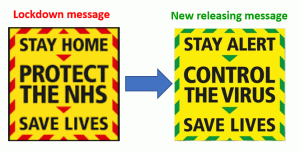
If today’s papers are to be believed Boris’s ‘address to the nation’ this evening will change the message we have been used to seeing as illustrated below.

The not so subtle change from red to green along with a ‘traffic light system’ for alert levels suggest to me that we are in for a period of trying changes, and if they don’t work putting restrictions back on. If, as has been trailed in the press, there are a whole variety of ways that businesses, workplaces, schools and social situations will change, then confusion (and some anger and worry) could be widespread.  The words of epidemiologist Professor Peter Horby interviewed on The Andrew Marr Show stood out to me. He is chair of  New and Emerging Respiratory Virus Threats Advisory Group or NERVTAG – sorry folks it is too lovely an acronym to ignore.  He stated

the virus is not like a storm or hurricane where we batten down the hatches until it has passed by, and then emerge into the sunshine and it has gone. It’s still out there and most of us have not had this virus, so if we get this wrong it will very quickly increase across the population and we will be back in a situation of crisis. So we have to be incredibly cautious about relaxing the measures.

NERVTAG told the government that getting the relaxation wrong could lead to a figure of 100,000 deaths in the UK. We still don’t know the proportion of the population who have had covid-19, but if the professor is correct there might be a lower but steady number of deaths for many more months yet.

The fact that the extra Nightingale Hospitals haven’t been closed is probably a sign that the politicians expect if not a ‘second wave’, then a lot more cases. As well as balancing privacy vs health for the new tracking app, there is even more pressure to balance health vs the economy. 

Finally, on Sunday evening we listened to Boris address the nation. He set out the way the five ‘alert levels’ would be set by monitoring the R-level by an advisory group. He set out timescales for now, the end of May, end of June when certain parts of the economy such as construction, manufacturing, garden centres, shops, and eventually limited hospitality would restart.

He encouraged anyone who can’t work from home to return to work tomorrow, and from Wednesday encouraged everyone to take more exercise and play sport with their family.

However, the main ‘confusions’ straight after the announcements were;

  • How people, who the prime minister said should go ‘back to work’ if they could the next day, would get there given limited public transport.
  • The other nations of the UK have announced that they are sticking with the ‘old message’ about staying at home. Scottish First Minister Nicola Sturgeon even asked the UK government not to run the information ads in Scotland. In Wales where you can’t drive for exercise, people from England could get fined for driving to the Brecon Beacons for exercise. Do Welsh workers need to drive to England if their employer decides that they need to work?
  • The detailed instructions for all sorts of workplaces have not been set out, so it is uncertain how that might look.

We will see what happens in the coming week with clarification and further statements to parliament on Monday, and questions from the public in the daily briefings.

Other news this week.

  • VE Day was celebrated in a ‘socially distancing’ way on Friday 8th May. The 75th anniversary was a special one and street parties held, and old-time songs sung. An evening concert held at Buckingham Palace featured a ‘virtual duet’ with Katherine Jenkins and Dame Vera Lynn of the wartime favourite ‘We’ll Meet Again’. One lady told the story that on the original VE Day she and her sister had to ‘socially distance’ and sit on a separate table as they had mumps, and she didn’t think that 75 years later she wouldn’t be able to join in a street party due to social distancing again.
  • In last week’s blog I wasn’t having a go at radio DJ Chris Evans specifically over his fundraising efforts. I listen to Virgin Radio’s Breakfast Show most mornings and Chris and his team try to spread joy and positivity in these difficult times.  He has also been party to raising literally tens of millions of pounds during his time at Radio 2 and Children in Need auctions and events. Chris by his own admission comes from ‘humble roots’, found fame and has had his well-documented ‘excesses’. But he tries to see the best in people and teach others lessons he has learned.  The message from last week was that our much-needed public services should be properly funded by us all and not rely on the charity and voluntary sectors.  Chris, his family and many celebrity friends have now raised in excess of £1 million from two auctions of memorabilia, and his son Noah over £100,000 by sleeping in a den in the garden. This money will go to producing more than 220,000 sets of scrubs for the NHS workers. 
  • On Friday transport minister Grant Shapps gave news of a £2billion scheme to encourage us to cycle or walk to work. For people travelling on public transport to maintain social distancing then they need to run at about 10% capacity. 
  • Other countries started to ease their lockdowns and in Germany Chancellor Angela Merkle allowed all shops to reopen, pupils are gradually returning to classes, and the Bundesliga – the country’s top football league – will restart next weekend. Initial signs are not promising as the dreaded R-number, a measure of the number of people each confirmed patient infects – moved to above 1.

Thoughts at the end of week 7

We continue to enjoy good health and the warm weather meant we ate a few meals outside. Alyson planted more seeds and worked on the garden. I managed to put the last shelf up in our shed in under an hour!

After finishing Terry Waite’s book Alyson has started the one by John McCarthy and Jill Morrell ‘ Some Other Rainbow‘ that documents the same time and similar events. We have been watching some more ‘culture’ on YouTube with recorded performances of Shakespeare and ‘Frankenstein’ by The National Theatre.

At today’s live stream service from Methodist Central Hall, Rev Martyn Atkins talking about being ‘salt and light’ referenced a talk he had heard where a student illustrated Christians being all shapes and sizes of candle, some battered, some old, some coloured – but all shining as a light to others. Something we are called to do at this time. One of his daughter’s friends when she was frightened would ask her dad to ‘turn off the dark’! We needed to use the battered candle I display some Sunday evenings to remember our carers as we had a power cut on Saturday evening.

We have had the usual Zoom meet up with friends and family. The week coming up is both Christian Aid Week and Brain Injury Awareness Week, so I have two ‘Zoom quizzes’ to prepare and host.

Alyson is hoping to get back to ‘frontline’ work by helping the NHS 111 Service and doing calls to patients who have been referred to a pharmacist for advice. She has been training and is waiting on information on how to setup a ‘call centre’ from her study – i.e. our spare bedroom.

I am a follower of a blog by the wonderful modern poet Brian Bilston and if you have never seen his work I can recommend you looking him up. He has produced some thought-provoking work over these last few weeks and I leave you with one of my favourites;

On Leaving the House and Encountering Another Human Being

I’m sorry I dived into the bushes.
It’s not personal, you understand.
You happened to walk in my direction
and my nerves got the upper hand.

I’m sorry I screamed when you came near me.
Don’t take my angry shrieks to heart.
Idiomatically, let’s stay in touch –
and physically, six feet apart.

Apologies if it seems like you repulse me,
that I recoil when you come near.
In other times, we might have spoken,
shared a joke or had a beer,

or waltzed together down the footpath,
perhaps we may yet still one day.
But just for now, embrace the margins
and wave to me from far away.

© Brian Bilston’s Poetry Laboetry
 
 
Keep safe everyone and remember, ‘We’ll meet again some sunny day’.
 

Life & Death – Coronavirus week 6 – light at the end of the tunnel.

Two narratives, but which do you believe?

This week’s total deaths has risen quite sharply as it now includes all deaths in the community (including care homes) and not just hospitals. At the end of the week the UK total is 28,446.

As I have gone through the last few weeks in this series of blogs, I note down topics that interest me and jot them down on my computer with some initial thoughts.  On the Saturday I just start to write my blog and usually an idea comes to the fore, sometimes I write too much or go off in a particular direction and have to scrap large sections or keep them for another time. Often I am up against my own ‘deadline’ of Sunday evening and end up ‘rushing’ the last part.   As I sit here this Saturday I am conflicted.

I have one narrative of the week’s events and my thoughts which some would describe as the ‘mainstream view’ as reported by the BBC and some on-line articles or extracted from large circulation newspapers. This view is dubbed by users on social media as ‘MSM’ or Mainstream Media.  MSM as a term is often used in a pejorative sense as either left- or right-wing bias, depending on the political view of the person passing comment. In that sense it could be described as ‘balanced’ given that some agree, and some disagree. Coronavirus has taken over from last year’s key word ‘Brexit’ as a topic that divides the nation. The division appears not to be the same extent, but there are plenty of people asking hard questions of the government, and much finger-pointing at individuals or institutions/organisations who they consider don’t represent their particular viewpoint or stance.

I am also preparing this weekend for our Bible study group on the sayings of Jesus from the Gospel of Luke, under the title ‘A New Society?’. One of the main reasons I value my faith is the way that Jesus offers a ‘counter-cultural’ challenge to the accepted norm, and is not afraid to take the issue to the ‘powerful’ in society. As it says in the introduction of the book we are using:

Roman, Greek and Hebrew societies were heavily stratified. Fine, if you were a healthy wealthy, educated, well-mannered, pure-blooded male of noble descent and free citizenship; beneath that you were second class or worse all the way down to worthless slaves at the bottom…Samaritans and Gentiles were scum, the poor, the sick and the deformed, the tormented, well, they must have offended God so you avoided them; prostitutes and tax collectors were beneath contempt.

Jesus not only ignores these divisions but takes special delight in raising the status of the poor…..all may come irrespective of their status. The parable of the great banquet reveals that the self-satisfied will be excluded while the poor needy, the rejects of society, will be welcomed in.

Jesus came to abolish the man-made divisions of race, sex and class.

My second version of the review of the week takes is an alternative more ‘radical’, some would say political angle.

The ‘accepted/acceptable’ view…

The week started with Boris Johnson giving a speech on the steps of Downing Street, addressing the nation on his health and the possible steps that would be taken. Apart from being a little breathless he was full of his usual optimism and stressing words and phrases like ‘good’, ‘amazing’, ‘can-do’, heroes and ‘pressing on’. He said that the government were working ‘full-tilt’ to protect the NHS and save lives. He mentioned that it had been 50-50 at one point but that he was back to lead. The analogy he used was of having been in an alpine tunnel to avoid the peak and we could see the bright sunshine and the green pastures at the end of the tunnel.

Lots of people said he was the best communicator that the government have, and it was good to see him back. Things would get better and later in the week he would announce the next steps.

On Tuesday we had a special one minute’s silence to remember the heroes who had died at work in the NHS and care sectors.

Boris didn’t appear at Prime Ministers Questions on Wednesday when Keir Starmer asked searching questions of Dominic Raab. The press and social media were full of posts stating it was good that ‘the other lot’ hadn’t won the December election, and imagined the chaos that a Labour party, led by Jeremy Corbyn, would have made of the current crisis. We learned that Boris and Carrie had a baby boy and Boris had been by their side all the way through. Again, there was great rejoicing and congratulations and many political opponents wished them well.  MPs across the spectrum suggested this joyous occasion would give a lift to the country.

Meanwhile Captain Tom, the war hero, managed to raise over £30 million for NHS charities in time for his 100th birthday. He got an honorary promotion to Colonel along with his card from the Queen and 120,000 from members of the public. Boris recorded a special message. Keeping the war theme going he had a flyover from the RAF of two WW2 fighter planes.  Tom was even number one in the music chart. Tom has inspired many other people to raise funds for the NHS and Virgin Radio DJ Chris Evans held a ‘garage sale’ of a huge amount of expensive memorabilia and items from his self-admitted ‘excess times’ over the last 25 years. This raised just short of £500,000. The money will be going directly to the ‘Scrubs Glorious Scrubs’ who are coordinating the voluntary efforts from seamstresses making much-needed scrubs for NHS frontline staff or, the ‘heroes’.

The daily briefings continued and there was focus on the promised 100,000 daily test target which, by a huge effort and extending the range of people who could get the test, was met when 122,000 were done on Thursday 30th.

That evening Alyson and I joined in the weekly ‘clap for carers’ with most of the people on our street. Drums, pots and wooden spoons, hooters, whistles were used. We talked in slightly derogatory terms about those who have not been out for any of the five times we have done it.

The daily briefings feature a new section whereby members of the public could write or record a question to be put to the briefing. This was welcomed as often these questions cut through the ‘gotcha’ questions often put by the press to try and catch ministers out or show up errors or misjudgements. The first one from Lynne in Skipton simply asked, ‘When will I be able to cuddle my grandchildren, who I am missing terribly’. The minister said he understood the question but reinforced the need to ‘continue with the measures in place’.

When the journalists tried to ask about PPE and a BBC Panorama programme that exposed a shortage in the national stockpile, and an emergency exercise from 2016, the minister said he didn’t believe any of that and that we just needed to carry on.  The press wanted to know more about the R-number and what value it needed to be for lockdown to be released. Professor Whitty was asked when we would learn the lessons of what had gone wrong. He said that would happen, but you don’t start in the middle of trying to focus on fighting the current crisis. When asked why our death total seems to be so much higher than the other European countries and second in the world, he pointed to what he described as a brilliant article in The Guardian by a professor of statistics on the difficulty of comparing countries.

Jeremy Hunt, former Health Secretary was very defensive when asked about the lack of PPE and ventilators. He said that President Macron had apologised for the lack of preparations but that he didn’t think Matt Hancock should and ‘now is not the time for the blame game’.

Rishi Sunak, Chancellor of the Exchequer was praised for putting in place a compensation scheme for the families of NHS and other frontline staff who had died as part of their duties dealing with Covid-19 patients. He also increased the guarantee for business loans from 80% to 100%. The week before he announced help for charities including foodbanks. On Saturday, a package of £76million to support vulnerable children, victims of domestic violence and modern slavery who were ‘trapped’ at home during lockdown. Pharmacies, who had previously been given £300Million to help with extra stock and deliveries, were to use consultation rooms as save havens for victims of domestic violence.

The ‘alternative/critical view’…

I can only imagine the Daily Mail headlines if Boris was the head of a taxpayer funded project managing an emergency caused by not taking the advice of experts from a few years before. Finding out that he had now fathered at least six children during two marriages and one extra marital affair, was not married to his current partner and had to deny several other similar allegations. He wrote a piece for The Spectator  in 1995 where he attacked single mothers saying it was “outrageous” that married couples “should pay for ‘the single mothers’ desire to procreate independently of men”. Not only that but in two months he had taken several weeks paid sick leave from his £150,000 a year job, and now was going on paid paternity leave. He went to his paid for country mansion set in 1,000 acres of Buckinghamshire countryside for a couple of weeks.  His bluff and bluster of a ‘Churchillian’ speech with its talk of light at the end of a tunnel might have been turned on him, and the question asked, ‘are you sure it’s not just an express train coming towards us…’?

The NHS is not a charity and should be fully funded by the government, the clue is in the name. It shouldn’t need Captain Tom or celebrities to get the general public to raise money for it during a ‘special season’. Of course there may well be a need to have a few ‘extras’ like toys/video games for the children’s wards or special luxury equipment for people in rehab or entertainment packages, but not vital equipment or PPE.  Well done Captain  Tom – only another £320million to go in order to fulfil the Brexit bus promise of £350million for the NHS for a week. It needs long-term guaranteed funding.

The NHS staff aren’t ‘heroes’ they are professional trained people who are willing to treat people in a system that has been underfunded and cut during 10 years of austerity.  Some of the work they do is extremely stressful.

Some people are asking the question whether, once this is all over will the government be willing to continue to give the funding needed, and will those people who gave their donation to Captain Tom still be happy if they have to pay an equivalent amount of increased National Insurance every year? Will celebrities who earn tens or even hundreds times more than a nurse or senior doctor be willing to buy less ‘trinkets’ and support their heroes?

Certainly the pharmacy contractors, something I know a little about, will have their £300Million ‘gift’ (actually a loan) clawed back out of future payments. The sunk cost of all the PPE and extra staff they have had to take on and the small profit lost from reduced counter sales, will not be recovered. No doubt they will have to go back to providing unfunded services for quite some time yet.

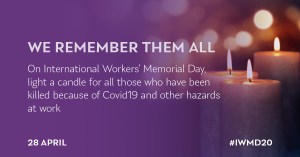
The minute’s silence last Tuesday was on the annual International Workers Memorial Day. An initiative setup by trades unions worldwide to fight for safe working for people whose employers make them work in dangerous conditions or with hazardous substances. The 28th of April is officially recognised by the UK government as a day of remembrance around the world. So should we have an official act of remembrance on the 28th of April every year, not just 2020?

Now is the time to be challenging the government on how it was that emergency supplies of PPE were not replenished after Exercise Cygnus in 2016. Now is the time to make sure the government sets up a suitable commission to investigate and learn the lessons.  A good question to the daily briefing might be;

If now is not the time to start learning the lessons of this crisis, is now the time to commit to setting up a wide-ranging independent group to look at it and report 6 months after the crisis is declared by the WHO to have ended. And is now the time to commit to ‘getting done’ all the recommendations and to fund them whatever it takes?

Those ‘Masters of the Universe’ the bankers, who don’t appear to have changed much since they were supported after the 2008 market crash, will continue to control the supply of much needed loans. Some managed to bring forward their bonuses paid early, despite the Bank of England asking them to delay. Despite being given huge guarantees by the government (again) they will charge huge fees and take a lot of security from the owners of small businesses.

Returning briefly to Jesus, there was a time when people wore badges emblazoned WWJD, meaning ‘What would Jesus do?’ I think the first thing Jesus might have done was to ask the question ‘who are the people that will suffer most from this crisis and the long-term aftereffects?’ He might have decided the following priority list;

  • Take the homeless off the streets and put them all in hotels not currently being used for tourists, give them health screening and mental health support.
  • Before panic buying, make sure the supermarket stocks of food and necessary essential supplies go to foodbanks.  Or better still, miss out the food banks and give £5,000 to every person or family with less than £1,000 of savings in the bank, along with guaranteed delivery of essential food and other items for the duration of the crisis.
  • Guarantee a payment of the average weekly wage to anyone on a zero hours or part-time flexible contract.
  • Provide support to the people who care for our most vulnerable people in care homes or their own homes.
  • Make sure every child living in a poor household is taken to school every day, given a full education, access to technology and two free meals.
  • Pay for all the care needed to support children or adults with a range of special needs for the duration.

Only after that has been done and ‘maximum effort’ has been given to them, and others identified as in danger of potential harm, can civil servants start to plan and implement the type of support package given by the treasury early in this crisis.

So, which narrative would you choose to believe…?

Thoughts at the end of week 6.

The relatively wet weather has confined us indoors. Alyson has been reading Terry Waite’s book Taken on Trust, sewing masks for us all and going for long walks every day.

I have had many more Zoom meetings and took part in an online quiz for Christian Aid. I have two quizzes to write in the coming week. I attended my weekly streamed service from Methodist Central Hall.

We had a family Zoom with 15 of us who should have been at a large house in Ross on Wye for the weekend.

Alyson practiced her skills as a home hairdresser on me with clippers and special scissors I had bought from Amazon.

I managed to put another shelf in my shed and am confident I can now do the last one in under an hour!

Stay safe everyone.


Theology Everywhere

Discuss theology today to transform tomorrow

verbalising

ruminations on life at fifty ... or so ...

Discover WordPress

A daily selection of the best content published on WordPress, collected for you by humans who love to read.

The Daily Post

The Art and Craft of Blogging

WordPress.com News

The latest news on WordPress.com and the WordPress community.